How does search engine optimization (SEO) improve online visibility

Your online presence is crucial in today’s digital world, and search engine optimization (SEO) plays a vital role in enhancing your visibility to potential customers. By optimizing your website and content for search engines, you can increase your chances of ranking higher in search results, making it easier for people to find you online. This leads to more organic traffic, greater brand awareness, and ultimately, more opportunities for your business to grow. Let’s explore how SEO can help improve your online visibility and drive success in the digital landscape.
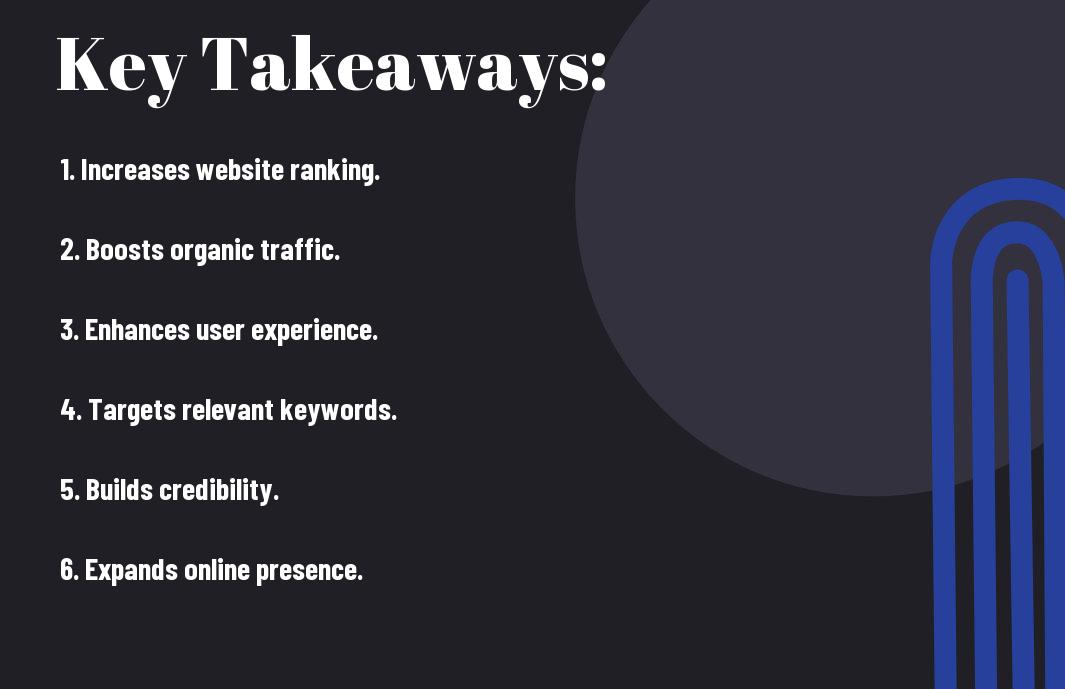
Key Takeaways:

  • SEO increases website ranking: By optimizing your website for search engines, you can improve its visibility and increase your chances of appearing on the first page of search results.
  • Higher organic traffic: Implementing SEO strategies such as keyword optimization, link building, and improving site speed can attract more organic traffic to your website, leading to increased visibility.
  • Better user experience: SEO involves creating high-quality content, improving website usability, and optimizing for mobile, which can enhance the user experience and encourage visitors to stay longer on your site.

The Importance of Online Visibility

For businesses operating in today’s increasingly digital world, online visibility is paramount. The way consumers search for products and services has shifted towards the online sphere, making it crucial for businesses to have a strong presence on the internet. Your online visibility determines how easily potential customers can find you when they are searching for information related to your industry.

The Rise of Digital Marketing

The advent of digital marketing has transformed the way businesses promote their products and services. The convenience and accessibility of the internet have led to a surge in online shopping and research. As a result, businesses need to adapt their marketing strategies to meet consumers where they are – online. By investing in SEO to improve your website’s visibility on search engines, you can ensure that your business remains competitive in the digital landscape.

Why Businesses Need Online Presence

On top of the shift towards online consumer behavior, having a strong online presence also builds credibility and trust with potential customers. When someone searches for a product or service that you offer and finds your website among the top search results, it signals to them that your business is reputable and authoritative in its field. This can significantly impact their purchasing decisions and increase the likelihood of them choosing your business over competitors.

Need a compelling reason to invest in your online presence? Consider this – statistics show that the majority of consumers conduct online research before making a purchase decision. By optimizing your online visibility through SEO, you are ensuring that your business is front and center during these crucial research moments, increasing the chances of converting leads into loyal customers.
What is Search Engine Optimization (SEO)?

Definition and Purpose

For many people, SEO can seem like a mysterious concept, but it’s actually quite simple. Search Engine Optimization (SEO) refers to the process of making your website more visible and attractive to search engines like Google. The main purpose of SEO is to improve your website’s ranking in search engine results pages (SERPs) so that you can drive more organic traffic to your site.

How Search Engines Work

Search engines work by using complex algorithms to analyze and index millions of websites on the internet. When a user enters a search query, the search engine scans its index and presents the most relevant and authoritative results. SEO helps your website become more visible to search engines by optimizing various elements such as keywords, meta tags, and backlinks to improve your site’s relevance and credibility.

Search engines evaluate websites based on various factors such as content quality, mobile-friendliness, and website speed. By optimizing these factors through SEO practices, you can increase your chances of ranking higher in search results and attracting more organic traffic to your site.

How SEO Improves Online Visibility

Now, let’s examine into how Search Engine Optimization (SEO) can enhance your online visibility. If you’re wondering why SEO is crucial for your online success, take a moment to read our blog post on Why is Search Engine Optimization Crucial for Online Success. SEO is your key to unlocking the potential for your website to reach a wider audience and climb the search engine rankings.

Keyword Research and Optimization

Any successful SEO strategy starts with in-depth keyword research and optimization. By identifying relevant keywords that your target audience is searching for, you can tailor your website content to match these queries. Optimizing your content with these keywords helps search engines understand the relevance of your pages to specific search terms, ultimately improving your website’s visibility in search results.

Quality Content Creation

Online, content is king. High-quality, informative, and engaging content not only attracts visitors to your website but also keeps them there longer. Search engines favor websites that consistently produce valuable content, rewarding them with higher search result rankings. Your content should be not only optimized for search engines but also crafted to resonate with your audience, establishing your brand as a trusted source of information in your industry.

The creation of quality content is a fundamental aspect of SEO that cannot be overlooked. By providing valuable and relevant content to your audience, you not only improve your chances of ranking higher on search engine results pages but also build credibility and trust with your visitors. Do not forget, content that answers questions, solves problems, and offers insights is more likely to be shared and linked to by other websites, further enhancing your online visibility.

Technical SEO: Website Optimization

Research shows that technical SEO is paramount for maximizing your website’s visibility. This aspect of SEO focuses on optimizing your website’s infrastructure to improve factors like site speed, mobile-friendliness, and overall user experience. By ensuring that your website is technically sound and easily accessible to both users and search engine crawlers, you can significantly enhance your online visibility and user engagement levels.

It is vital to pay attention to the technical aspects of SEO to ensure that your website is easily navigable, loads quickly, and delivers a seamless user experience. Search engines prioritize websites that are well-structured and perform efficiently, making technical SEO a critical component of your overall SEO strategy. Implementing technical optimizations can help boost your search engine rankings and drive more organic traffic to your website.

Increasing Website Traffic

Organic Search Results

The key to increasing website traffic lies in optimizing your online presence to rank higher in search engine results. Organic search results are unpaid listings that appear based on their relevance to the user’s search query. By focusing on SEO strategies such as keyword optimization, quality content creation, and backlink building, you can improve your website’s visibility and attract more organic traffic.

Local SEO and Google My Business

On a local level, local SEO and Google My Business play a crucial role in driving traffic to your website. Local SEO helps businesses appear in localized searches, especially important for brick-and-mortar stores or service providers targeting a specific geographic area. By creating and optimizing your Google My Business profile with accurate information, images, and customer reviews, you can enhance your visibility in local search results.

Search engines like Google prioritize local businesses in their results, especially for users searching for products or services near them. By having an updated Google My Business listing with correct business information and engaging with customer reviews, you can establish trust and credibility with potential customers in your area.

Mobile-Friendliness and Page Speed

Businesses often overlook mobile-friendliness and page speed as factors that impact website traffic. Mobile-friendly websites are designed to provide an optimal user experience on mobile devices, which is crucial considering the growing number of users accessing the internet via smartphones and tablets. Additionally, page speed is a critical ranking factor for search engines, as faster-loading pages improve user experience and reduce bounce rates.

With the majority of internet users accessing websites through mobile devices, having a mobile-friendly website that loads quickly is important for retaining visitors and increasing traffic. By optimizing your website for mobile users and ensuring fast page loading times, you can improve user experience and attract more visitors to your site.

Enhancing User Experience

User-Friendly Website Design

Designing your website with the user in mind is crucial for a successful SEO strategy. A clean and intuitive layout, easy navigation, and fast loading speed all contribute to a positive user experience. When visitors can easily find what they are looking for on your site, they are more likely to stay longer and engage with your content, signaling to search engines that your website is valuable.

Content Relevance and Authority

With content relevance and authority, you can establish your website as a credible source of information in your industry. By creating high-quality, informative content that addresses the needs and interests of your target audience, you not only attract visitors but also earn their trust. Search engines prioritize websites that regularly produce valuable content, boosting your chances of ranking higher in search results.

Content is the cornerstone of SEO success. Ensuring that your content is relevant, original, and authoritative can significantly impact your website’s visibility in search engine results. By optimizing your content with relevant keywords and providing valuable information to your audience, you increase the chances of attracting organic traffic and establishing your website as a go-to resource in your niche.

Internal Linking and Navigation

Navigation is key to helping users and search engines explore your website efficiently. By incorporating internal links that connect related content within your site, you enhance the user experience by offering additional relevant information and guiding them through your content. This not only keeps visitors on your site longer but also helps search engines understand the structure and hierarchy of your website, improving its overall visibility.

User-friendly internal linking and navigation can also improve your website’s SEO by distributing link equity throughout your pages, boosting the authority of your content and enhancing the crawlability of your site for search engine bots. By focusing on creating a seamless browsing experience for your visitors, you can enhance user engagement and increase the likelihood of higher search engine rankings.

Measuring SEO Success

Unlike What Is SEO – Search Engine Optimization?, measuring the success of SEO efforts is crucial for understanding the impact of your strategies. By monitoring various metrics, you can determine the effectiveness of your SEO campaigns and make informed decisions to improve your online visibility.

Google Analytics and Tracking Tools

The utilization of tools like Google Analytics allows you to track the performance of your website, including traffic sources, user behavior, and conversion rates. By analyzing this data, you can identify which SEO tactics are driving the most traffic and conversions, enabling you to refine your strategies for optimal results.

Keyword Ranking and Conversion Rates

An imperative aspect of measuring SEO success is monitoring keyword rankings and their impact on conversion rates. By tracking the keywords that drive the most organic traffic and conversions, you can prioritize these terms in your content and optimization efforts to enhance your online visibility and attract high-quality leads.

Google Analytics provides valuable insights into the correlation between keyword rankings and conversion rates, helping you understand the keywords that resonate most with your target audience and drive the most significant results for your business.

ROI and Cost-Benefit Analysis

CostBenefit Analysis is another critical component of measuring SEO success. By evaluating the return on investment (ROI) of your SEO initiatives compared to the resources and time invested, you can determine the profitability of your efforts. Understanding the cost-benefit ratio helps you allocate resources effectively and focus on strategies that yield the highest returns.

For instance, you can compare the cost of SEO tools and services with the increase in website traffic, leads generated, and conversions achieved. This analysis enables you to justify your SEO budget and optimize your strategies for maximum impact on your online visibility and revenue.

Final Words

With this in mind, you now understand the crucial role that Search Engine Optimization (SEO) plays in enhancing your online visibility. By optimizing your website’s content and structure according to search engine algorithms, you can significantly improve your chances of appearing higher in search engine results pages. This increased visibility not only drives more organic traffic to your site but also helps in building credibility and trust with your target audience.

Q: How does search engine optimization (SEO) improve online visibility?

A: SEO improves online visibility by optimizing a website’s content and structure to make it more appealing to search engines. This includes using relevant keywords, creating high-quality content, improving website speed, and earning backlinks from reputable sources. By following best practices and adhering to search engine guidelines, a website can rank higher in search engine results pages (SERPs) and attract more organic traffic.

Q: What are some key benefits of implementing SEO for online visibility?

A: Implementing SEO can lead to increased website traffic, higher conversion rates, improved brand credibility, and better user experience. By appearing higher in search results for relevant keywords, a website can reach a wider audience and attract potential customers who are actively searching for products or services. SEO also helps to build trust with users and establish a strong online presence in a competitive digital landscape.

Q: How can businesses track the effectiveness of their SEO efforts for online visibility?

A: Businesses can track the effectiveness of their SEO efforts by using tools such as Google Analytics to monitor website traffic, keyword performance, and conversion rates. They can also analyze ranking positions in search engine results pages (SERPs), track backlinks, and measure engagement metrics such as bounce rate and time on site. Regularly monitoring and analyzing this data allows businesses to identify areas for improvement and adjust their SEO strategies to maximize online visibility.


What is the role of social media marketing in internet promotion

Many businesses overlook the significance of social media marketing in their internet promotion strategy. In today’s digital age, your online presence can make or break your brand. With the power of social media, you have the opportunity to reach a vast audience, engage directly with potential customers, and build a strong online reputation. By understanding the role of social media marketing and utilizing it effectively, you can elevate your internet promotion efforts and take your business to new heights. Let’s explore into the importance and impact of social media in promoting your brand online.

Key Takeaways:

  • Increased visibility: Social media marketing plays a crucial role in increasing the visibility of a business online, helping in reaching a wider audience.
  • Engagement and interaction: It allows businesses to engage with current and potential customers, build relationships, and create a community around the brand.
  • Driving website traffic: By sharing valuable content on social media platforms, businesses can attract more visitors to their website, ultimately increasing their chances of converting leads into customers.

The Rise of Social Media

The Evolution of Online Platforms

With the advent of the internet, online platforms have evolved significantly over the years. From basic websites to dynamic social media platforms, the internet has transformed how we communicate and engage with each other. Social media has emerged as a powerful tool that enables individuals and businesses to connect, share information, and build relationships in real-time.

The Growing Importance of Social Media in Marketing

Growing alongside the evolution of online platforms is the increasing importance of social media in marketing strategies. Social media platforms provide a unique opportunity for businesses to reach their target audience, engage with customers on a personal level, and build brand awareness like never before. In today’s digital age, having a strong social media presence is crucial for businesses looking to stay competitive and connect with consumers in a meaningful way.

Understanding the intricacies of social media marketing can help you leverage these platforms to promote your brand, drive traffic to your website, and ultimately increase your online presence. By creating compelling content, engaging with your audience, and staying current with social media trends, you can harness the power of social media to elevate your internet promotion efforts.

Defining Social Media Marketing

What is Social Media Marketing?

One necessary aspect of internet promotion is social media marketing. If you’re seeking further insights into this topic, you may want to explore The Role of Social Media in E-Commerce Marketing. This marketing approach involves leveraging social media platforms to connect with your audience, build your brand, increase sales, and drive website traffic.

Key Components of Social Media Marketing

Marketing through social media includes various components such as content creation, engagement with followers, social media advertising, influencer partnerships, and analytics to measure performance. These elements work together to create a cohesive strategy aimed at achieving your marketing goals.

Social media marketing is not just about posting content; it’s about building relationships with your audience, listening to their feedback, and adapting your strategies based on their interactions. By understanding the key components of social media marketing, you can craft a strong online presence and effectively promote your brand.

Benefits of Social Media Marketing

Marketing on social media platforms offers numerous benefits for promoting your brand online. It allows you to reach a wider audience, engage with potential customers in real-time, and gather valuable insights into consumer behavior. Furthermore, social media marketing helps boost brand visibility, drive website traffic, and increase sales conversion rates.

Media By incorporating social media marketing into your internet promotion strategy, you can effectively enhance your online presence, connect with your target audience on a personal level, and ultimately drive business growth. Whether you’re a small business or a large corporation, social media marketing can play a crucial role in expanding your reach and establishing a significant digital footprint.

The Role of Social Media in Internet Promotion

Keep Social Media Marketing In 2024: The Ultimate Guide handy as you navigate the world of internet promotion. Social media has become a powerhouse for businesses looking to promote their products or services online. Building brand awareness is a critical component of any successful marketing strategy. Through social media platforms, you can reach a vast audience, engage with potential customers, and establish your brand’s presence in the digital landscape.

Building Brand Awareness

Awareness is the first step in capturing the attention of your target audience. By creating compelling content, sharing valuable information, and interacting with users on social media, you can increase brand visibility and recognition. Consistency in posting and staying authentic to your brand voice will help foster trust and loyalty among your followers.

Generating Leads and Conversions

For businesses, generating leads and conversions is the ultimate goal of internet promotion. Social media provides a direct line of communication with your audience, allowing you to drive traffic to your website, capture leads through targeted ads and content, and ultimately convert those leads into customers. By analyzing data and insights from your social media campaigns, you can optimize your strategies for maximum conversions.

Media: To truly harness the power of social media in generating leads and conversions, it’s crucial to tailor your content to resonate with your target audience. By understanding their needs, preferences, and pain points, you can create personalized campaigns that drive engagement and encourage action.

Enhancing Customer Engagement

Media: In today’s digital age, customer engagement is key to building lasting relationships and fostering brand loyalty. Social media offers a platform for direct communication with your customers, where you can respond to inquiries, provide personalized support, and gather feedback to improve your products or services. By creating a two-way dialogue with your audience, you can humanize your brand and create meaningful connections that drive customer loyalty.

To take full advantage of social media in enhancing customer engagement, prioritize prompt and personalized responses to your audience. By actively listening to and engaging with your customers, you can build a loyal community that advocates for your brand and drives long-term success.

Social Media Platforms for Internet Promotion

Facebook: The Most Popular Platform

On Facebook, you have access to the largest audience of any social media platform, making it a powerful tool for internet promotion. With over 2.8 billion active users worldwide, you can reach a diverse audience to promote your products or services. The platform offers various tools like targeted advertising, engaging posts, and insightful analytics to help you connect with your target market effectively.

Instagram: Visual Storytelling

On Instagram, you can showcase your brand through visually appealing content, making it ideal for storytelling. With over 1 billion monthly active users, Instagram allows you to engage with your audience through photos, videos, stories, and reels. By utilizing hashtags and collaborating with influencers, you can increase your brand’s visibility and promote your products or services to a younger demographic.

With its focus on visual content, Instagram offers a creative platform to express your brand’s personality and connect with your audience on a more personal level. By sharing behind-the-scenes glimpses, user-generated content, and interactive stories, you can build a loyal following and drive traffic to your website or online store.

Twitter: Real-time Engagement

Platforms like Twitter enable real-time engagement with your audience, making it an crucial tool for internet promotion. With its fast-paced nature and character limit, Twitter allows you to share quick updates, promotions, and interact with customers instantly. By using hashtags, retweets, and replies, you can increase your brand’s visibility and drive traffic to your website.

Promotion on Twitter is all about staying current and engaging with trending topics to capture your audience’s attention. By monitoring conversations, participating in Twitter chats, and sharing valuable content, you can position your brand as an industry leader and drive conversions effectively.

LinkedIn: Professional Networking

Social Media

LinkedIn is the go-to platform for professional networking and B2B internet promotion. With over 700 million members, LinkedIn offers a unique opportunity to connect with industry professionals, showcase your expertise through articles and posts, and build valuable business relationships. By joining relevant groups, participating in discussions, and sharing thought leadership content, you can establish your brand as a credible authority in your field.

Effective Social Media Marketing Strategies

Content Creation and Curation

Now, when it comes to effective social media marketing strategies, content creation and curation play a vital role in engaging your audience. With compelling and relevant content, you can capture the attention of your followers, leading to increased visibility and brand awareness. Strive to create content that not only promotes your products or services but also provides value to your audience, such as informative blog posts, how-to videos, or engaging infographics.

Paid Advertising and Sponsored Content

Content strategies on social media are not limited to organic posts. Paid advertising and sponsored content are effective ways to reach a larger audience and target specific demographics. By investing in paid ads, you can boost your posts to reach users who may not already follow your account. Additionally, sponsored content collaborations with influencers or other brands can help increase your reach and credibility.

A strategic approach to paid advertising involves identifying your target audience, setting a budget, and monitoring the performance of your ads to optimize results. By utilizing the targeting options available on social media platforms, you can ensure that your content reaches the right people at the right time.

Influencer Partnerships and Collaborations

The power of influencer partnerships and collaborations on social media should not be underestimated. The authenticity and influence that influencers hold over their followers can greatly benefit your brand’s visibility and credibility. By partnering with influencers whose values align with your brand, you can tap into their loyal following and reach a broader audience.

The key to successful influencer collaborations lies in finding influencers whose audience matches your target market. By building genuine relationships with influencers and allowing them creative freedom in promoting your brand, you can create authentic and engaging content that resonates with their followers.

For instance, you can invite influencers to take over your social media accounts for a day or participate in a joint campaign to leverage their reach and engagement. Keep in mind, the goal of influencer partnerships is not just to reach a larger audience but to build trust and credibility with consumers through authentic endorsements.

Measuring Success in Social Media Marketing

Not sure how to measure the success of your social media marketing efforts? Don’t worry, we’ve got you covered! Setting clear goals and objectives is the first step in determining the effectiveness of your social media campaigns.

Setting Goals and Objectives

Setting specific and measurable goals is crucial in assessing the impact of your social media marketing. Whether your aim is to increase brand awareness, drive website traffic, or generate leads, clearly defining your objectives will provide you with a roadmap to gauge success.

Tracking Key Performance Indicators (KPIs)

Social media platforms offer a plethora of analytics tools to track key performance indicators (KPIs) such as engagement rates, click-through rates, and conversions. By monitoring these metrics, you can assess the performance of your content and campaigns in real-time, allowing you to make data-driven decisions to optimize your strategy.

With a myriad of KPIs to choose from, focusing on the ones that align with your objectives is vital to effectively measure success. By honing in on metrics that directly impact your goals, you can gain valuable insights into the effectiveness of your social media marketing efforts.

Analyzing Data and Insights

Success in social media marketing lies in the ability to analyze data and glean actionable insights from your metrics. By delving into the analytics provided by social media platforms, you can identify trends, audience preferences, and areas for improvement.

To truly understand the impact of your social media marketing, you must go beyond surface-level metrics and explore into the nuances of consumer behavior. By harnessing the power of data analytics, you can refine your strategy and continuously enhance your online presence.

Conclusion

Now, you have a better understanding of the vital role that social media marketing plays in promoting businesses on the internet. By utilizing platforms like Facebook, Instagram, Twitter, and LinkedIn, you can reach a larger audience, engage with customers, and drive traffic to your website. Through strategic content creation, targeted advertising, and consistent interaction with your followers, you can build brand awareness and increase your online presence.

Recall, social media marketing is not just about posting content; it’s about creating a community around your brand and fostering relationships with your audience. By staying active and adapting to the ever-changing digital landscape, you can leverage the power of social media to boost your internet promotion efforts and achieve your business goals.

Q: What is social media marketing?

A: Social media marketing is a form of internet marketing that involves creating and sharing content on social media platforms to achieve your marketing and branding goals.

Q: How does social media marketing contribute to internet promotion?

A: Social media marketing plays a crucial role in internet promotion by helping businesses increase their online presence, build brand awareness, drive website traffic, generate leads, and engage with customers.

Q: What are the benefits of using social media marketing for internet promotion?

A: The benefits of social media marketing for internet promotion include reaching a larger audience, targeting specific demographics, increasing brand loyalty, improving search engine rankings, and providing valuable insights for future marketing strategies.

How can content marketing enhance a brand's online presence

With the digital landscape becoming more crowded, standing out online is imperative for any brand. By focusing on strategic content marketing, you can elevate your brand’s online presence and capture the attention of your target audience. Your carefully crafted content can establish your brand as an authority in your industry, build trust with your customers, and ultimately drive more traffic to your website. Let’s explore how you can leverage content marketing to make a lasting impact in the digital world.

Key Takeaways:

  • Establishes credibility: Consistent and high-quality content helps position a brand as an expert in its industry, building trust with the audience.
  • Improves search engine visibility: Creating relevant and optimized content can help improve a brand’s SEO, leading to higher rankings on search engine results pages.
  • Engages target audience: By delivering valuable and engaging content, brands can attract and retain their target audience, ultimately increasing brand awareness and online presence.

The Power of Content Marketing

Building Trust with Consistent Quality Content

Consistent quality content is the cornerstone of any successful content marketing strategy. By delivering valuable and relevant information to your audience on a regular basis, you can build trust and credibility with your readers. When you consistently provide high-quality content that addresses their needs and interests, you demonstrate your expertise and commitment to their success.

Establishing Authority through Thought Leadership

Content marketing allows you to position your brand as a thought leader in your industry. By creating and sharing insightful and innovative content, you can showcase your expertise and establish credibility among your target audience. When you consistently produce high-value content that educates, inspires, and engages your readers, you can become a trusted source of information and guidance.

Powerful thought leadership content not only helps you attract and retain customers but also differentiates your brand from competitors. By sharing your unique perspective and expertise, you can influence industry trends, shape discussions, and drive meaningful conversations within your niche.

Amplifying Online Visibility

Search Engine Optimization (SEO) Benefits

Online, utilizing content marketing can significantly enhance your brand’s visibility through Search Engine Optimization (SEO) benefits. By creating high-quality, relevant content that incorporates strategic keywords and provides value to your audience, you can improve your website’s ranking on search engine results pages. This increased visibility can drive organic traffic to your site and help you reach a wider audience.

Increased Website Traffic and Engagement

Optimization of your content for search engines not only boosts your online visibility but also leads to increased website traffic and engagement. When your website ranks higher in search results, more users are likely to click through to your site, leading to a surge in traffic. This influx of visitors presents an opportunity to engage with your audience, showcase your brand’s offerings, and ultimately convert these visitors into loyal customers.

Plus, the more traffic and engagement your website receives, the more credibility and authority your brand builds online. Search engines recognize popular and engaging websites, further boosting your visibility and attracting even more visitors to your site.

Crafting Compelling Content

Your Elevate Your Digital Presence with Content Marketing strategies can significantly enhance your brand’s online visibility. Crafting compelling content is imperative to engage your audience and build a strong online presence that resonates with your target market.

Identifying Target Audience and Their Needs

For your content to be effective, it is crucial to identify your target audience and understand their needs. Research your audience demographics, preferences, and pain points to create content that addresses their specific challenges and provides value. By tailoring your content to meet the needs of your audience, you can build a loyal following and increase engagement with your brand.

Creating Engaging Headlines and Intros

With attention spans dwindling in today’s digital age, captivating headlines and intros are vital to hooking your audience from the start. Your headlines should be compelling and concise, offering a glimpse of what the content entails. Intros should be engaging, drawing the reader in and setting the tone for the rest of the piece. By creating powerful headlines and intros, you can pique curiosity and encourage readers to probe deeper into your content.

This section will probe into various strategies and tips to help you craft headlines and intros that captivate your audience and compel them to keep reading. Engaging headlines and intros are the gateway to drawing your readers into your content and making a lasting impression.

Leveraging Content Distribution Channels

Now, to truly enhance your brand’s online presence, you need to leverage various content distribution channels. According to Content Marketing Strategy: Elevate Your Brand’s Online Presence, social media platforms can offer maximum reach for your content. Whether it’s Facebook, Instagram, Twitter, or LinkedIn, these platforms allow you to engage with your audience in real-time, share valuable content, and build a community around your brand.

Social Media Platforms for Maximum Reach

On social media, you can tailor your content to suit the preferences of each platform’s users. Visual content tends to perform well on Instagram and Pinterest, while informative articles and industry news find a home on LinkedIn. By utilizing a mix of content types and engaging with your audience through comments and messages, you can significantly increase your brand’s visibility and credibility.

Email Newsletters and Subscription-Based Content

Reach your audience directly in their inbox by utilizing email newsletters and subscription-based content. Email marketing allows you to provide personalized content, exclusive offers, and updates to your subscribers. By building a subscriber list and consistently delivering valuable content, you can nurture relationships with your audience and drive traffic back to your website.

Content sent through email newsletters tends to have higher conversion rates compared to other channels. By focusing on creating engaging and relevant content for your subscribers, you can turn them into loyal customers and brand advocates.

Guest Blogging and Influencer Partnerships

Email guest blogging and influencer partnerships allow you to tap into new audiences and establish credibility within your industry. By collaborating with influencers or contributing guest posts to popular blogs, you can leverage their existing follower base and reach a wider audience. This not only exposes your brand to new potential customers but also helps you build authority and trust within your niche.

For instance, partnering with a well-known influencer in your industry can help you gain instant credibility and access a large pool of potential customers. By creating valuable content together and promoting it across various channels, you can significantly boost your brand’s online presence and establish yourself as a thought leader in your field.

Measuring Content Marketing Success

Unlike 10 Content Marketing Strategies Proven to Boost Your Digital Presence, measuring the success of your content marketing efforts is crucial to understanding what is working and what needs improvement. Setting Key Performance Indicators (KPIs) is one way to track and measure the effectiveness of your content marketing strategy.

Setting Key Performance Indicators (KPIs)

One of the first steps in measuring the success of your content marketing is to establish clear KPIs. These indicators should align with your overall business goals and objectives. Whether it is website traffic, conversion rates, social media engagement, or lead generation, defining measurable KPIs will help you gauge the impact of your content.

Tracking Website Analytics and Engagement Metrics

Marketing your content effectively involves analyzing website analytics and engagement metrics. By tracking metrics such as bounce rate, time on page, click-through rates, and social shares, you can monitor the performance of your content in real-time. For instance, you can identify which pieces of content are resonating with your audience and optimize future content based on this data.

Conducting Regular Content Audits and Refining Strategy

Setting a regular cadence for conducting content audits is vital for refining your content marketing strategy. By evaluating the performance of existing content, identifying gaps, and aligning your content with the preferences of your target audience, you can continuously improve the effectiveness of your content marketing efforts.

Regularly reviewing your content strategy and making adjustments based on performance metrics will help you stay ahead of the competition and ensure that your content remains relevant and engaging to your audience.

Overcoming Common Content Marketing Challenges

Producing High-Quality Content Consistently

All brands face the challenge of consistently producing high-quality content that engages their audience. The key to overcoming this hurdle is to establish a content creation process that ensures you maintain a steady stream of relevant and valuable content. You can achieve this by developing a content calendar, conducting regular keyword research, and setting clear guidelines for your content creators to follow.

Managing Content Creation and Distribution Resources

Distribution of content is just as important as creation, but it can be challenging to manage resources effectively. By utilizing tools such as content management systems and social media scheduling platforms, you can streamline the process and ensure that your content reaches your target audience in a timely manner. Additionally, outsourcing certain tasks to freelance writers or digital marketing agencies can help alleviate the burden on your internal team.

Managing content creation and distribution resources involves coordinating efforts across various channels and platforms to maximize the impact of your content. It requires careful planning and coordination to ensure that your content is consistently delivered to the right audience at the right time.

Adapting to Algorithm Changes and Platform Updates

High-quality content is important for maintaining visibility online, but staying on top of algorithm changes and platform updates can be a daunting task. To navigate this challenge successfully, you need to stay informed about industry trends, monitor changes in algorithms, and be prepared to adjust your content strategy accordingly. By keeping a close eye on analytics and user engagement metrics, you can quickly adapt to changes and continue to drive traffic to your brand’s online platforms.

Understanding the evolving landscape of algorithms and platform updates is crucial for ensuring that your content remains relevant and visible to your target audience. By staying informed and agile, you can effectively navigate these challenges and continue to enhance your brand’s online presence.

To wrap up

Ultimately, content marketing is a powerful tool that can significantly enhance your brand’s online presence. By creating valuable and relevant content that resonates with your target audience, you can establish your brand as a thought leader in your industry and build trust with your customers. Consistently delivering high-quality content through various online channels can help you increase brand visibility, attract new customers, and ultimately drive business growth.

Bear in mind, content marketing is not a one-time task but a continuous effort that requires creativity, consistency, and strategic planning. By investing time and resources into developing a strong content marketing strategy, you can effectively showcase your brand’s unique voice and personality, connect with your audience on a deeper level, and ultimately stand out in a crowded online marketplace. So, embrace the power of content marketing to elevate your brand’s online presence and unlock new opportunities for success.

FAQ

Q: How can content marketing enhance a brand’s online presence?

A: Content marketing can enhance a brand’s online presence in several ways:

  • Generating high-quality and relevant content helps increase organic traffic to the website.
  • Regularly publishing valuable content can improve search engine rankings and visibility.
  • Creating engaging content increases brand awareness and fosters customer loyalty.
  • Sharing content on social media platforms can reach a wider audience and drive traffic back to the website.

Q: What are the key benefits of content marketing for building a brand’s online presence?

A: Some key benefits of content marketing for enhancing a brand’s online presence include:

  • Establishing thought leadership and credibility in the industry.
  • Building a community of engaged and loyal followers.
  • Increasing brand visibility and recognition across various online channels.
  • Driving more inbound traffic and leads to the website.
  • Improving overall brand reputation and authority online.

Q: How can businesses effectively leverage content marketing strategies to boost their online presence?

A: Businesses can effectively leverage content marketing strategies to boost their online presence by:

  • Defining clear goals and target audience to create relevant and engaging content.
  • Consistently updating and promoting content across multiple online platforms.
  • Utilizing SEO tactics to optimize content for search engines and improve visibility.
  • Engaging with the audience through comments, feedback, and social media interactions.
  • Measuring and analyzing the performance of content to make data-driven decisions for future strategies.

What are the best practices for email marketing campaigns

Many successful email marketers know that crafting effective email campaigns requires attention to detail and a thoughtful strategy. In this blog post, you will discover the best practices for creating compelling email marketing campaigns that engage your audience and drive results. From crafting attention-grabbing subject lines to segmenting your email list for targeted messaging, incorporating these practices into your email marketing strategy can help you achieve your business goals.

Key Takeaways:

  • Segment your email list: Divide your subscribers into smaller groups based on demographics, interests, or purchase history to send more targeted and relevant content.
  • Personalize your emails: Use your subscriber’s name and customize content based on their past interactions with your brand to increase engagement and conversion rates.
  • Test and optimize: Experiment with different subject lines, send times, and content formats to learn what resonates best with your audience and continuously improve the performance of your email campaigns.

Setting the Foundation

Defining Your Target Audience

Your email marketing campaign’s success hinges on knowing who your target audience is. Foundation This step is crucial because understanding your audience allows you to tailor your content and messaging to resonate with them. Consider demographics, behavior patterns, preferences, and pain points of your target audience to create personalized and engaging email campaigns that deliver value and drive conversions.

Crafting Compelling Subject Lines

Defining Crafting an enticing subject line is key to getting your emails opened. Your subject line is the first impression you make on your audience, prompting them to either open or ignore your email. Another Keep it concise, clear, and compelling. Personalization, humor, a sense of urgency, and intrigue are some strategies you can use to increase open rates. A/B testing different subject lines can help you determine what resonates best with your audience.

Building Effective Email Content

One key component of a successful email marketing campaign is building effective email content that engages your audience and drives results. Here are some best practices to consider when creating content for your emails.

Writing Engaging Headlines

Content: Your email’s subject line is the first thing your recipients see, so it needs to be attention-grabbing and compelling. Make sure your headlines are concise, clear, and relevant to the content of your email. A catchy headline can pique the curiosity of your subscribers and entice them to open the email to learn more.

Creating Relevant and Valuable Content

Email: When crafting the body of your email, focus on creating content that is relevant and valuable to your audience. Personalize your message to make it more engaging and resonate with your readers. Providing useful information, promotions, or exclusive offers can help keep your subscribers interested and improve your email engagement rates.

Another important aspect of creating effective email content is using visuals to enhance your message and capture the attention of your audience. Visual elements such as images, videos, and infographics can make your emails more visually appealing and help convey your message more effectively.

Using Visuals to Enhance the Message

Using: Incorporate visuals strategically throughout your email content to break up text, highlight key information, and create a more engaging experience for your readers. Just be sure to optimize your images for fast loading times and ensure they are mobile-responsive for subscribers who view your emails on their phones or tablets.

Engaging: By following these best practices for building effective email content, you can create engaging and compelling emails that resonate with your audience and drive the desired actions. Remember to test different approaches, analyze your results, and continually refine your email content strategy to maximize your campaign’s success.

Optimizing for Mobile

After reading the insightful blog post on Best Practices for Email Marketing Campaigns, you now understand the importance of optimizing your email campaigns for mobile devices. With a significant percentage of people accessing their emails on smartphones and tablets, it’s crucial to ensure that your emails are designed with mobile users in mind.

Designing for Small Screens

Considering the limited screen real estate on mobile devices, designing your emails for small screens is vital. Make sure your layout is responsive, so it adapts to different screen sizes seamlessly. Keep your content concise and visually appealing, using shorter paragraphs and eye-catching visuals to capture the reader’s attention. Remember to use a single-column layout to simplify the reading experience on smaller screens.

Ensuring Easy Navigation

Small screens can sometimes make it challenging for users to navigate through lengthy emails. To address this, ensure easy navigation by incorporating clear and prominent calls-to-action (CTAs). Make sure your buttons are large enough to be clicked on mobile devices and strategically placed within the email. Additionally, consider using a sticky header or footer with navigation links to help users move through the email effortlessly. Screens

Personalization and Segmentation

All email marketing campaigns can benefit significantly from personalization and segmentation. According to 25 Email Marketing Best Practices That Drive Results, this approach can help you tailor your messages to the specific needs and preferences of your audience, leading to higher engagement and conversions.

Using Data to Tailor Your Message

With the data you collect from your subscribers, you can create personalized emails that speak directly to their interests, behaviors, and purchase history. By analyzing this information, you can segment your audience into smaller groups based on demographics, location, or past interactions with your emails. This targeted approach allows you to send more relevant content that resonates with each segment, increasing the likelihood of a positive response.

Creating Segments for Targeted Campaigns

Personalization is key to building strong relationships with your subscribers. Creating segments for targeted campaigns means dividing your audience into categories based on factors like age, gender, or purchase history. This allows you to send highly customized emails that are more likely to capture attention and drive action. By tailoring your messages to specific segments, you show your subscribers that you understand their needs and preferences, ultimately leading to improved engagement and loyalty.

Creating segments for targeted campaigns is a strategic way to ensure that your emails are relevant and valuable to each recipient. By sending content that is personalized to their interests, you can increase open rates, click-through rates, and ultimately, conversions. This level of personalization demonstrates that you care about your subscribers’ individual preferences and can help you build a stronger bond with your audience.

Timing and Frequency

Unlike other aspects of email marketing, timing and frequency are crucial factors that can greatly impact the success of your campaigns. For an in-depth look at the best practices related to email marketing, you can refer to 29 email marketing best practices.

Finding the Ideal Send Time

Ideal send times for emails can vary depending on your target audience and industry. Consider testing different times to see when your subscribers are most responsive. Use analytics tools and metrics to track open rates and click-through rates based on the time of day you send your emails.

Avoiding Over-Saturation

OverSaturation

Another important aspect of timing and frequency is to avoid over-saturation. Bombarding your subscribers with emails can lead to fatigue and decreased engagement. Make sure to strike a balance between staying in touch with your audience and not overwhelming them with too many messages. Consider segmenting your audience and sending targeted emails to different groups to avoid bombarding them with irrelevant content.

Measuring Success

Now let’s discuss how you can measure the success of your email marketing campaigns to ensure you are on the right track towards achieving your goals.

Tracking Key Performance Indicators (KPIs)

For effective measurement of your email marketing campaigns, you need to identify and track key performance indicators (KPIs) that align with your objectives. Common KPIs include open rates, click-through rates, conversion rates, and unsubscribe rates. By consistently monitoring these metrics, you can gain valuable insights into the performance of your campaigns and make data-driven decisions to optimize future strategies.

Analyzing Open Rates and Click-Through Rates

Measuring open rates and click-through rates are crucial for understanding how engaging your email content is to recipients. Open rates indicate the percentage of subscribers who opened your email, while click-through rates show the proportion of users who clicked on links within the email. By analyzing these metrics, you can assess the effectiveness of your subject lines, content relevance, and call-to-action buttons.

The key to improving these rates is by crafting compelling subject lines, relevant content, and clear call-to-action buttons that prompt users to take the desired action. Regularly analyzing open and click-through rates can help you refine your strategies to enhance engagement and drive better results.

Using A/B Testing to Refine Your Strategy

Refine your email marketing strategy by utilizing A/B testing, a method where you create two versions of an email with slight variations to see which performs better. This could involve testing different subject lines, content formats, images, or call-to-action buttons. By analyzing the results of A/B tests, you can identify the elements that resonate best with your audience and optimize future campaigns for higher engagement and conversion rates.

Using A/B testing allows you to experiment with different approaches and continuously refine your email marketing efforts based on real data insights. This iterative process helps you stay relevant to your audience and improve the effectiveness of your campaigns over time.

Final Words

Ultimately, the key to successful email marketing campaigns lies in understanding your audience, creating valuable content, personalizing your emails, optimizing for mobile devices, and testing and analyzing your campaigns. By following these best practices, you can build strong relationships with your subscribers and achieve higher engagement and conversion rates.

Be mindful of, email marketing is a powerful tool that, when used effectively, can help you connect with your audience in a meaningful way. So, take the time to implement these best practices and continuously improve your email campaigns to see the best results for your business.

Q: What are the best practices for creating subject lines in email marketing campaigns?

A: The best subject lines are concise, clear, and compelling. They should be engaging and create a sense of urgency or curiosity to encourage opens. Personalization and including the recipient’s name can also increase open rates. Additionally, avoiding spam trigger words and excessive use of punctuation marks can help your emails avoid the spam folder.

Q: How important is the design of an email in a marketing campaign?

A: The design of an email is crucial for the success of a marketing campaign. Emails should be visually appealing, easy to read, and mobile-responsive. Use images, colors, and fonts that reflect your brand identity. Keep the layout clean and organized, and don’t overload the email with too much text or information. A well-designed email can improve engagement and conversion rates.

Q: What is the significance of segmentation and personalization in email marketing?

A: Segmentation and personalization are key strategies in email marketing. By segmenting your email list based on demographics, behavior, or preferences, you can tailor your content to specific audiences, making it more relevant and engaging. Personalization, such as addressing recipients by name or recommending products based on their past purchases, can improve click-through rates and conversions. Overall, segmentation and personalization help build stronger relationships with your subscribers and increase the effectiveness of your campaigns.

How can pay-per-click (PPC) advertising drive targeted traffic to a website

Just imagine being able to reach your ideal audience directly and drive them to your website with precision and efficiency. That’s the power of pay-per-click (PPC) advertising. In this guide, you will learn how you can leverage PPC campaigns to attract targeted traffic to your website, increase visibility, and ultimately boost conversions. By understanding the fundamentals of PPC strategies and optimization techniques, you can unlock the full potential of this digital marketing tool. Let’s dive in and take your website traffic to the next level with PPC!

Key Takeaways:

  • Targeted Audience: PPC advertising allows businesses to target specific demographics, locations, and interests to drive relevant traffic to their website.
  • Instant Results: PPC campaigns can generate immediate visibility and traffic to a website, providing instant results compared to other digital marketing strategies.
  • Cost-Effective: With PPC advertising, businesses only pay when users click on their ads, making it a cost-effective way to drive targeted traffic to a website.

Benefits of PPC Advertising

Increased Online Visibility

Before we investigate into the benefits of PPC advertising, let’s first discuss how it can increase your online visibility. When you run PPC campaigns, your ads appear at the top of search engine results pages (SERPs), making it more likely for users to click on them. This prime ad placement can significantly boost your website’s visibility and attract more targeted traffic.

Targeted Audience Reach

An important benefit of PPC advertising is the ability to reach a highly targeted audience. By using specific keywords, demographics, and interests, you can tailor your ads to appear only to users who are likely to be interested in your products or services. This precision targeting ensures that your ad budget is spent efficiently on reaching potential customers who are more likely to convert.

Online advertising platforms like Google Ads and Facebook Ads provide sophisticated targeting options, allowing you to define your audience based on various criteria such as location, age, gender, interests, and online behavior. By honing in on your target audience, you can maximize the impact of your PPC campaigns and increase the chances of driving relevant traffic to your website.

Measurable Results

Online campaigns can sometimes feel like shooting in the dark, but with PPC advertising, you can track and measure your results with precision. One of the significant benefits of PPC is the ability to access real-time data and analytics that show you exactly how your campaigns are performing. You can see metrics such as clicks, impressions, conversions, and return on investment (ROI) to evaluate the effectiveness of your ads.

An invaluable aspect of PPC advertising is the ability to A/B test different ad creatives, keywords, and targeting strategies to see what works best for your campaign. This data-driven approach allows you to optimize your campaigns continuously, ensuring that you get the most out of your advertising budget and drive targeted traffic to your website.

For instance, you can test different ad copy variations to see which resonates best with your audience, or experiment with different bidding strategies to maximize your ROI. By analyzing the data and making data-driven decisions, you can refine your PPC campaigns to achieve optimal results and drive targeted traffic to your website.

Setting Up a PPC Campaign

Choosing the Right Platform (Google Ads, Facebook Ads, etc.)

Any successful PPC campaign begins with selecting the right platform to reach your target audience effectively. Platforms like Google Ads, Facebook Ads, and others each offer unique targeting options and ad formats. Google Ads, for instance, allows you to target users actively searching for specific keywords, while Facebook Ads enables you to reach a more diverse audience based on demographics, interests, and behaviors.

Defining Target Keywords and Ad Groups

Campaign success hinges on your ability to define the right keywords and organize them into relevant ad groups. An understanding of your target audience’s search behavior is crucial here. By identifying high-intent keywords related to your products or services, you can create ad groups that align with these search queries. This targeted approach increases the likelihood of your ads being shown to the right audience at the right time.

Campaign success hinges on your ability to define the right keywords and organize them into relevant ad groups. By grouping related keywords together, you can create tailored ad copy that resonates with users’ search intent. This strategic organization ensures that your ads are highly relevant to what users are searching for, ultimately leading to better click-through rates and conversions.

Creating Compelling Ad Copy

Right after setting up your ad groups, it’s time to craft compelling ad copy that entices users to click on your ads. Google Ads rewards relevance, so make sure your ad copy is closely aligned with your chosen keywords and the landing page you’re directing users to. Include strong calls-to-action, highlight unique selling points, and consider using ad extensions to provide additional information to users without them having to click on the ad.

Google considers ad relevance and expected click-through rate when determining ad rank, so creating compelling ad copy is crucial for the success of your PPC campaign. Your ad should not only be relevant to the user’s search query but also stand out from competitors. Use persuasive language, highlight key benefits, and consider testing different variations to see what resonates best with your audience.

Keyword Research and Optimization

Your PPC Advertising: Drive Targeted Website Traffic and Boost… campaign’s success relies significantly on your keyword research and optimization strategy. By identifying relevant keywords, analyzing competitors’ keyword tactics, and optimizing your ad copy with the right keywords, you can attract qualified traffic to your website and improve your conversion rates.

Identifying Relevant Keywords

Researching relevant keywords is the foundation of a successful PPC campaign. Start by brainstorming potential keywords related to your products or services. Use keyword research tools like Google Keyword Planner or SEMrush to discover high-traffic keywords with low competition. Remember to choose keywords that reflect the intent of your target audience to drive quality traffic to your website.

Analyzing Competitor Keywords

With a thorough analysis of your competitors’ keyword strategies, you can gain valuable insights into which keywords are driving their success. Examine your competitors’ ad copy and landing pages to identify the keywords they are targeting. This competitive intelligence can help you refine your keyword selection and create more compelling ad copy to differentiate your business and attract potential customers.

This competitive analysis also allows you to uncover gaps in your competitors’ keyword targeting, giving you the opportunity to capitalize on these untapped keywords and gain a competitive advantage in the PPC landscape.

Optimizing Ad Copy with Keywords

For optimal results, integrate your chosen keywords strategically into your ad copy. Craft compelling headlines and ad descriptions that include your target keywords to improve your ad’s relevance and click-through rate. By aligning your ad copy with your chosen keywords, you can enhance your ad’s visibility and appeal to users actively searching for your products or services.

Optimizing your ad copy with relevant keywords not only improves your ad’s performance but also boosts your Quality Score, leading to lower costs per click and higher ad rankings. Continuously test and refine your ad copy to maximize the impact of your keywords and drive targeted traffic to your website.

Landing Page Optimization

Creating Relevant and Engaging Content

Optimization starts with creating relevant and engaging content on your landing page. Your content should align with the keywords and ad copy that brought the visitor to the page in the first place. Make sure your headline is attention-grabbing and clearly communicates the value proposition of your offer. Use high-quality images or videos to further engage visitors and keep them on your page.

Improving Page Load Speed

The load speed of your landing page is crucial for a successful PPC campaign. The faster your page loads, the more likely visitors are to stay and convert. The average attention span of internet users is short, so optimizing your page load speed can significantly impact your conversion rates.

The faster your page loads, the better the user experience, and the higher your chances of converting visitors into customers.

Enhancing User Experience

Page layout, navigation, and overall user experience play a vital role in keeping visitors engaged on your landing page. Make sure your page is easy to navigate, with clear call-to-action buttons that stand out. Test different layouts and designs to see what resonates best with your audience, and make adjustments accordingly.

To enhance user experience, you can also consider implementing interactive elements such as quizzes, polls, or live chat features to keep visitors engaged and encourage them to interact with your brand.

Another

Lorem ipsum dolor sit amet, consectetur adipiscing elit. Integer nec odio. Praesent libero. Sed cursus ante dapibus diam. Sed nisi. Nulla quis sem at nibh elementum imperdiet.

Bidding Strategies and Budgeting

Cost-Per-Click (CPC) vs. Cost-Per-Thousand Impressions (CPM)

After setting up your PPC campaign, you’ll need to optimize your bidding strategy to drive targeted traffic effectively. Two common bidding models are Cost-Per-Click (CPC) and Cost-Per-Thousand Impressions (CPM). With CPC, you pay every time a user clicks on your ad, focusing on driving traffic from users who are actively engaging with your content. On the other hand, CPM charges per 1,000 impressions, ideal for increasing brand visibility and reaching a broader audience.

Setting Realistic Budgets and Bidding Caps

CostPerClickWhen setting budgets and bidding caps for your PPC campaign, it’s crucial to align them with your business goals and objectives. Determine how much you are willing to spend per click or per impression, and set realistic caps to avoid overspending. By carefully managing your budgets and bidding caps, you can optimize your campaign for maximum effectiveness without exceeding your financial limits.

Impressions: It’s necessary to monitor your ad impressions and adjust your budgets and bidding caps accordingly to ensure optimal exposure and reach for your ads.

Managing Ad Spend and ROI

With a robust bidding strategy in place, you can effectively manage your ad spend and maximize return on investment (ROI). Monitor key metrics such as click-through rates, conversions, and cost per acquisition to gauge the performance of your campaigns. By analyzing these metrics regularly, you can fine-tune your budgets and bidding strategies to drive targeted traffic while maximizing ROI.

Budgets: Setting clear budgets and monitoring your ad spend closely is vital to ensure that you are investing your resources wisely and driving quality traffic to your website.

Tracking and Analyzing Performance

For What is PPC (Pay-Per-Click) advertising and how to use it to drive targeted traffic to your website, tracking and analyzing the performance of your PPC campaigns is crucial to understanding their effectiveness. Setting up conversion tracking is the first step to measure the success of your ads. By tracking conversions, such as form submissions, purchases, or sign-ups, you can see which ads are driving the most valuable actions on your site.

Setting Up Conversion Tracking

On your PPC platform, you can set up conversion tracking by placing a snippet of code on your thank you page or confirmation page that users see after completing the desired action. This code will track when a user completes a conversion after clicking on your ad, providing valuable insights into which keywords, ads, and campaigns are driving the most conversions.

Monitoring Ad Metrics (CTR, CPC, CPA, etc.)

For monitoring ad metrics such as Click-Through Rate (CTR), Cost Per Click (CPC), and Cost Per Acquisition (CPA), you can gain valuable insights into the performance of your campaigns. CTR indicates the percentage of users who clicked on your ad after seeing it, while CPC shows how much you are paying for each click. CPA reveals the cost of acquiring a customer through your ad campaign, helping you assess the profitability of your PPC efforts.

To improve the performance of your PPC campaigns, it’s necessary to constantly monitor these metrics and make data-driven decisions. By analyzing the CTR, CPC, and CPA, you can identify areas for improvement and optimize your ads for better results.

Identifying Areas for Improvement

The key to improving your PPC campaigns is to continuously analyze the performance data and identify areas where you can make optimizations. By focusing on high-performing keywords, ad copy, and targeting parameters, you can refine your campaigns to drive more targeted traffic to your website. Additionally, A/B testing different ad creatives and landing pages can help you understand what resonates best with your audience and improve your overall campaign performance.

Improvement in your PPC campaigns comes from a commitment to testing, analyzing, and refining your strategies based on the performance data. By regularly evaluating your ad metrics and making informed adjustments, you can maximize the effectiveness of your PPC advertising and drive targeted traffic to your website.

Summing up

To wrap up, by utilizing pay-per-click (PPC) advertising effectively, you can drive targeted traffic to your website, reaching potential customers who are actively searching for products or services like yours. Through strategic keyword selection, engaging ad copy, and optimized landing pages, you can attract relevant visitors and increase your chances of converting them into customers. It’s imperative to monitor your PPC campaigns regularly, analyze performance data, and make necessary adjustments to consistently improve and maximize your return on investment. With dedication and a well-thought-out strategy, you can leverage PPC advertising to grow your online presence and achieve your business objectives.

FAQ

Q: How can pay-per-click (PPC) advertising drive targeted traffic to a website?

A: PPC advertising can drive targeted traffic to a website by allowing advertisers to create targeted ads that are shown to users based on specific keywords, demographics, interests, and browsing behavior. When users search for the keywords that advertisers have targeted, the ads are displayed to them, increasing the likelihood of attracting relevant visitors to the website.

Q: What are the benefits of using PPC advertising for driving targeted traffic?

A: PPC advertising offers several benefits for driving targeted traffic to a website, including the ability to reach a specific audience based on their search intent, interests, and browsing behavior. It also provides instant visibility on search engine results pages, allowing advertisers to quickly attract visitors who are actively searching for products or services related to their business. Additionally, PPC campaigns can be easily optimized and scaled to increase traffic and conversions over time.

How can I optimize my PPC campaigns to drive more targeted traffic to my website?

A: To optimize your PPC campaigns for driving targeted traffic, you can start by conducting keyword research to identify relevant keywords that your target audience is searching for. Create compelling ad copy that includes these keywords and highlights the unique selling points of your products or services. Test different ad variations to see which ones perform best and make adjustments based on the data. Monitor your campaigns regularly, analyze the performance metrics, and make strategic changes to improve targeting, ad relevancy, and overall ROI.

Skip to content