How can fundamental analysis be incorporated into market trading tools

Just like Benjamin Graham, you can enhance your market trading tools by incorporating fundamental analysis into your strategy. By understanding the underlying financial health and performance of a company, you can make more informed decisions when buying or selling stocks. Let’s explore how you can integrate fundamental analysis into your trading tools to achieve greater success in the market.

Key Takeaways:

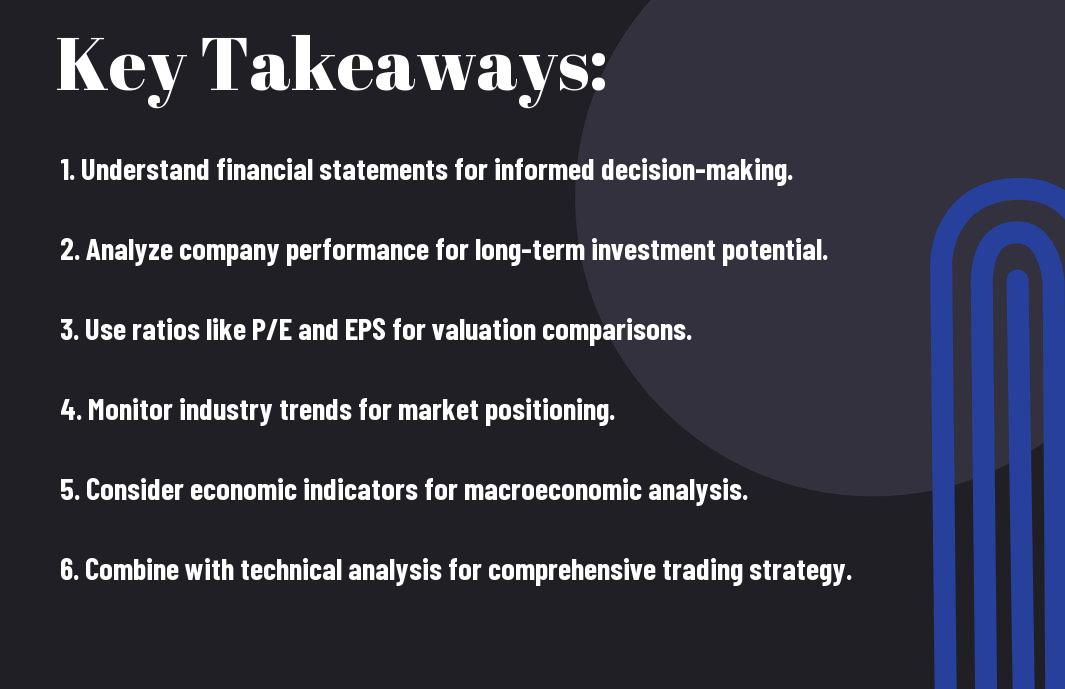
  • Fundamental analysis provides a comprehensive view: Incorporating fundamental analysis into market trading tools enables traders to have a deeper understanding of a company’s financial health, competitive positioning, industry trends, and macroeconomic factors.
  • Integration with technical analysis for decision-making: By combining fundamental analysis with technical analysis, traders can make more informed decisions on entry and exit points, as well as risk management strategies, optimizing their trading outcomes.
  • Regular updating and monitoring are crucial: Market trading tools should include mechanisms for regularly updating fundamental data and monitoring key metrics to adapt to changing market conditions and adjust trading strategies accordingly.

Fundamentals of Fundamental Analysis

Definition and Principles

For a detailed understanding of the fundamentals of fundamental analysis, you can refer to Fundamental Analysis: Principles, Types, and How to Use It. Fundamental analysis involves evaluating the intrinsic value of an asset by examining related economic, financial, and qualitative factors. This analysis seeks to determine the fair value of a security or investment and make investment decisions based on this assessment.

Importance in Market Trading

For market trading, fundamental analysis plays a crucial role in helping you make informed decisions about buying or selling securities. By analyzing financial statements, economic indicators, company performance, and industry trends, you can assess the value of an asset relative to its market price. Understanding the underlying fundamentals can give you a better perspective on market trends and make more strategic trades.

Analysis of fundamental factors allows you to gauge the financial health and growth potential of a company or asset. By considering factors such as earnings, revenue, debt levels, and competitive positioning, you can make more educated predictions about future price movements and identify investment opportunities that align with your financial goals.
Identifying Key Metrics

Financial Statement Analysis

To incorporate fundamental analysis into your market trading tools, you must start by analyzing a company’s financial statements. This involves examining the income statement, balance sheet, and cash flow statement to assess the financial health of the business. By reviewing these documents, you can gain insights into the company’s revenue, expenses, assets, liabilities, and cash flow.

Ratio Analysis

One way to incorporate fundamental analysis into your trading tools is through ratio analysis. Ratios such as price-to-earnings (P/E), debt-to-equity (D/E), and return on equity (ROE) can provide valuable information about a company’s performance and financial health. By comparing these ratios to industry averages or historical data, you can identify potential opportunities or risks in the market.

Financial ratios help you make more informed decisions by providing a deeper understanding of a company’s financial position. They can highlight trends, strengths, and weaknesses that may not be evident from simply looking at the financial statements.

Industry and Market Analysis

Market analysis involves examining broader market trends, such as economic indicators, interest rates, and market momentum. Understanding these factors can help you make more strategic trading decisions and anticipate market movements. Industry analysis, on the other hand, focuses on the specific sector in which a company operates. By assessing industry trends, competition, and regulatory factors, you can better evaluate a company’s position within its industry.

Industry and market analysis provide you with a comprehensive view of the external factors that can impact a company’s performance. By incorporating this analysis into your trading tools, you can enhance your ability to predict market trends and make more informed investment decisions.

Integrating Fundamental Analysis into Trading Tools

Charting and Visualization

One way fundamental analysis can be incorporated into trading tools is through charting and visualization. By including fundamental data points such as earnings, revenue growth, and valuation metrics on price charts, you can gain a more comprehensive understanding of a stock’s performance and potential value.

Algorithmic Trading

Into algorithmic trading systems, fundamental analysis can be integrated to automatically execute trades based on predefined fundamental criteria. These algorithms can be programmed to analyze financial statements, economic indicators, and other fundamental data to make informed trading decisions.

Algorithmic trading is a powerful tool that can help you take advantage of opportunities in the market based on fundamental analysis without emotional bias or human error.

Sentiment Analysis

The incorporation of sentiment analysis into trading tools can also enhance the effectiveness of fundamental analysis. By analyzing social media sentiment, news articles, and other sources of market sentiment, you can better gauge market sentiment towards a particular stock or sector.

To further refine sentiment analysis, natural language processing techniques can be employed to extract and analyze sentiment from news articles, earnings call transcripts, and other textual data sources.

Technical Indicators and Fundamental Analysis

Once again, when it comes to incorporating fundamental analysis into your market trading tools, it’s important to understand how technical indicators can complement this approach. Technical indicators can help you make sense of the data from fundamental analysis and aid in making informed trading decisions.

Moving Averages and Trend Identification

Any successful trader knows the significance of moving averages in trend identification. By incorporating moving averages into your analysis, you can better understand the direction in which a stock or market is moving. This can be particularly useful when combined with fundamental analysis to confirm or contradict trends identified through company data.

Oscillators and Momentum Indicators

Technical traders often rely on oscillators and momentum indicators to gauge the speed and strength of price movements. These tools can be beneficial in confirming potential trend reversals identified through fundamental analysis. By using oscillators such as the Relative Strength Index (RSI) or the Moving Average Convergence Divergence (MACD), you can add a layer of confirmation to your trading decisions.

Technical analysis is not meant to replace fundamental analysis but rather to complement it. Oscillators and momentum indicators can provide valuable insights into the timing of your trades, helping you execute buy or sell orders at optimal entry and exit points.

Volume and Open Interest Analysis

To further enhance your understanding of market trends and investor sentiment, incorporating volume and open interest analysis is vital. Monitoring the volume of trades can indicate the level of market participation and validate trends identified through fundamental analysis. Similarly, analyzing open interest in options contracts can provide insights into potential future price movements.

Interest in Volume and Open Interest Analysis can help you confirm or adjust your trading strategies based on the level of market activity and the number of participants involved.

Risk Management and Position Sizing

Unlike technical analysis, fundamental analysis can help you with risk management and position sizing in your market trading tools. By understanding the intrinsic value of a security, you can make more informed decisions about how much to invest and when to exit a position.

Stop-Loss and Risk-Reward Ratios

The key to successful trading is managing your risks effectively. Setting stop-loss orders based on fundamental analysis can help you limit your losses and protect your capital. Additionally, calculating risk-reward ratios using fundamental data can guide you in identifying profitable opportunities while minimizing potential downside.

Portfolio Optimization and Diversification

Optimization of your portfolio using fundamental analysis involves diversifying across different asset classes, industries, and geographies. By spreading your investments, you can reduce the overall risk of your portfolio while potentially increasing returns.

Furthermore, diversification based on fundamental factors such as company financials, management quality, and industry outlook can help you weather market fluctuations and uncertainties.

Market Timing and Entry/Exit Strategies

One way fundamental analysis can be incorporated into your market trading tools is through market timing and entry/exit strategies. By analyzing economic indicators, industry trends, and company performance, you can better time your trades and optimize your entry and exit points.

This strategic approach can help you capitalize on undervalued opportunities and avoid overvalued assets, enhancing your overall trading performance.

Real-World Applications and Examples

Value Investing and Contrarian Strategies

Examples of incorporating fundamental analysis into market trading tools for value investing and contrarian strategies include analyzing financial statements, cash flow statements, and earnings reports to identify undervalued stocks. By comparing the intrinsic value of a stock with its market price, you can make informed decisions on when to buy or sell. Contrarian investors, on the other hand, use fundamental analysis to identify stocks that are temporarily out of favor with the market but have strong underlying fundamentals.

Growth Investing and Momentum Strategies

Strategies that incorporate fundamental analysis for growth investing and momentum strategies focus on identifying companies with strong earnings growth potential. By analyzing factors such as revenue growth, market share, and industry trends, you can pinpoint stocks that have the potential to outperform the market over time. Momentum strategies, on the other hand, involve identifying stocks that have been trending upward and using fundamental analysis to determine if the momentum is sustainable.

The key to successful growth investing and momentum strategies is to look for companies with solid fundamentals and positive momentum indicators that signal continued growth potential.

Event-Driven and Special Situations Investing

Strategies that utilize fundamental analysis for event-driven and special situations investing involve analyzing corporate events such as mergers, acquisitions, spin-offs, or restructurings. By examining the impact of these events on a company’s financial health and valuation, you can make informed trading decisions. Special situations investing involves identifying undervalued opportunities in companies facing unique circumstances such as regulatory changes or management shake-ups.

Another key aspect of event-driven and special situations investing is evaluating the potential risks and rewards associated with these events and making decisions based on a thorough analysis of the company’s fundamentals.

To wrap up

On the whole, incorporating fundamental analysis into your market trading tools can provide you with a deeper understanding of the companies you are investing in. By focusing on factors such as financial statements, industry trends, and management team, you can make more informed decisions that align with your investment goals. If you are looking to dive deeper into fundamental analysis and its importance in trading, consider exploring the article Fundamental Analysis: Unlocking Investment Value for further insights and guidance.

FAQ

Q: How can fundamental analysis be incorporated into market trading tools?

A: Fundamental analysis can be incorporated into market trading tools by utilizing data on a company’s financial health, management team, competitive advantages, industry outlook, and overall market conditions. This information can be used to make informed decisions about when to buy or sell stocks, bonds, or other assets.

Q: What are some common market trading tools that incorporate fundamental analysis?

A: Some common market trading tools that incorporate fundamental analysis include financial news sources, stock screeners, research reports, economic indicators, earnings reports, and valuation models. These tools provide traders with the information they need to assess the intrinsic value of an asset and make investment decisions accordingly.

Q: How can traders effectively use fundamental analysis in conjunction with technical analysis?

A: Traders can effectively use fundamental analysis in conjunction with technical analysis by combining information about a company’s financial health and market conditions with data on price trends and trading volumes. By using both types of analysis together, traders can gain a more comprehensive understanding of an asset’s true value and make more informed trading decisions.

Are there market trading tools specifically designed for cryptocurrency trading

Cryptocurrency trading can be complex, but with the right tools, you can navigate the market more effectively. In the world of digital assets, there are specialized trading tools designed specifically for cryptocurrency trading. These tools offer unique features tailored to the fast-paced and volatile nature of the crypto market, providing you with the insights and analysis you need to make informed trading decisions. Whether you are a seasoned trader or just starting out, incorporating these specialized tools into your trading strategy can give you a competitive edge in the cryptocurrency market.

Key Takeaways:

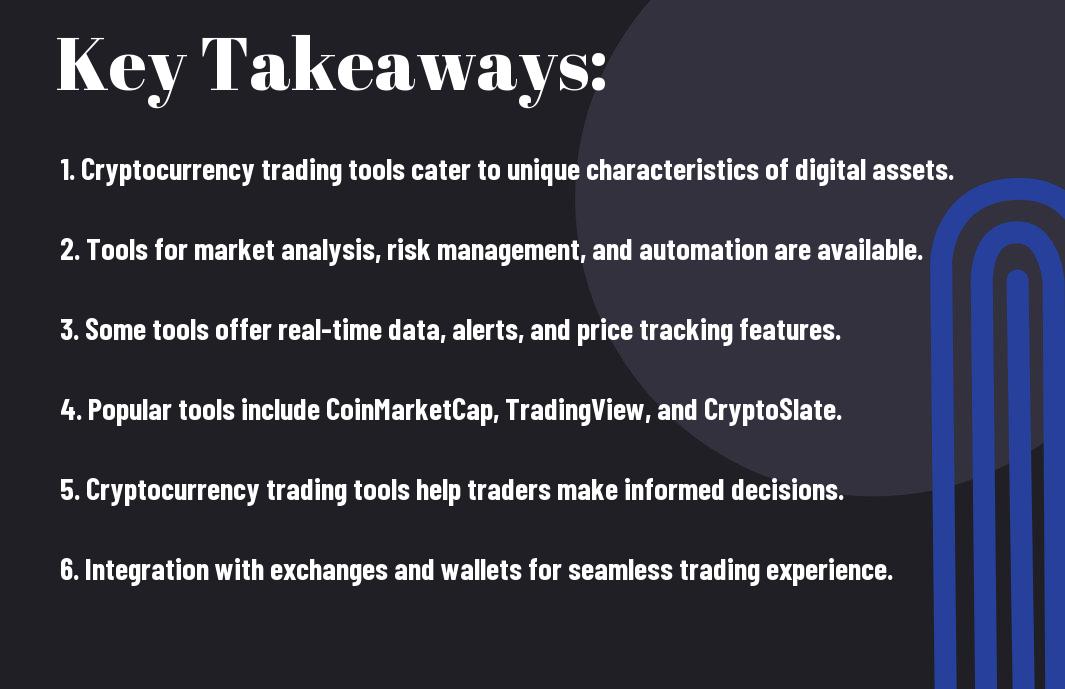
  • Cryptocurrency trading tools: There are market trading tools specifically designed for cryptocurrency trading that can help traders analyze market trends, execute trades, and manage their portfolios.
  • Features: These tools may offer features such as real-time price tracking, technical analysis indicators, trading bots, portfolio management, and risk management tools.
  • Popular tools: Some popular cryptocurrency trading tools include TradingView, Coinigy, and Binance. It’s important for traders to research and choose the tools that best suit their trading strategy and goals.

The Unique Challenges of Cryptocurrency Trading

Volatility and Market Fluctuations

For cryptocurrency traders, one of the biggest challenges you will face is the extreme volatility and market fluctuations that are inherent in this space. Cryptocurrencies are known for their erratic price movements, with values often skyrocketing or plummeting within a short period. This volatility can make it difficult to predict market trends accurately, increasing the risk associated with trading cryptocurrencies.

Regulatory Uncertainty and Security Concerns

Concerns about regulatory uncertainty and security risks are prevalent in the world of cryptocurrency trading. The lack of clear regulations governing the trading of digital assets in many countries can lead to legal complications and ambiguities. Additionally, the risk of cyberattacks and theft is a significant concern for cryptocurrency traders, as digital assets are susceptible to hacking and fraud.

It’s necessary to stay informed about the latest regulatory developments and security measures to protect your investments in the volatile world of cryptocurrency trading. Implementing robust security practices, such as using secure wallets and two-factor authentication, can help mitigate the risks associated with trading digital assets.

Traditional Trading Tools and Their Limitations

Some traditional trading tools used in the financial markets are technical analysis and charting tools. These tools help traders analyze historical price movements and volume data to identify patterns and trends in the market. However, their usefulness in cryptocurrency trading is limited due to the high volatility and relatively young age of the market. Cryptocurrency prices can be influenced by a wide range of factors, making it challenging to rely solely on historical data for making trading decisions.

Technical Analysis and Charting Tools

The use of technical analysis and charting tools in cryptocurrency trading can be helpful in identifying potential entry and exit points based on historical price patterns. However, the rapid price fluctuations and lack of regulation in the cryptocurrency market can render traditional technical analysis less effective. You may find that some tools designed for traditional markets may not work as well when applied to cryptocurrencies.

Fundamental Analysis and News-Based Tools

For fundamental analysis and news-based tools, it’s imperative to keep in mind that the cryptocurrency market is highly influenced by news events and regulatory developments. Factors such as government policies, technological advancements, and market sentiment can all have a significant impact on cryptocurrency prices. Therefore, staying updated with the latest news and developments in the cryptocurrency space is crucial for making informed trading decisions.

This means that you should not only rely on historical price data but also pay close attention to news sources and events that could affect the market. By incorporating fundamental analysis and news-based tools into your trading strategy, you can better navigate the volatile cryptocurrency market and make more informed decisions.

The Emergence of Cryptocurrency-Specific Trading Tools

Blockchain Analytics and On-Chain Data

For cryptocurrency traders, having access to accurate and timely data is crucial for making informed trading decisions. This is where blockchain analytics and on-chain data tools come into play. These tools specialize in tracking transactions on the blockchain and providing valuable insights into market dynamics. By analyzing on-chain data, such as transaction volume, wallet activity, and network fees, you can gain a better understanding of market trends and investor behavior.

Social Media and Sentiment Analysis Tools

Blockchain technology has given rise to a new breed of trading tools that focus on social media and sentiment analysis. These tools scour social media platforms, forums, and news sites to gauge market sentiment and trends. By monitoring discussions and analyzing the sentiment of market participants, these tools can provide valuable insights into market psychology and potential price movements. Incorporating sentiment analysis into your trading strategy can help you stay ahead of the curve and make more informed decisions.

It is fascinating to see how social media and sentiment analysis tools have revolutionized the way cryptocurrency traders approach the market. By leveraging the power of big data and machine learning algorithms, these tools can process vast amounts of information in real-time, giving you a competitive edge in the fast-paced world of cryptocurrency trading.

Advanced Trading Tools for Cryptocurrency

Your journey into cryptocurrency trading can be greatly enhanced by utilizing advanced trading tools. These tools are specifically designed to help you navigate the volatile and fast-paced world of digital assets. To stay ahead of the curve, it’s crucial to leverage the latest technologies and strategies available to crypto traders. Below are some crucial tools that can elevate your trading game:

  1. Must-Have Trading Tools for Crypto Traders –
    Tool Description
    Machine Learning and AI-Powered Trading Bots Automate your trades, analyze market data, and make informed decisions with the help of sophisticated algorithms.
    High-Frequency Trading and Scalping Tools Execute trades at lightning speed and capitalize on small price differentials in the market for quick profits.

    Machine Learning and AI-Powered Trading Bots

    Bots have revolutionized cryptocurrency trading by allowing you to automate your trading strategies and execute trades with precision. Machine learning and AI-powered bots can analyze vast amounts of data in real-time, identify patterns, and make split-second decisions to maximize your profits. By leveraging these advanced tools, you can stay ahead of the market trends and capitalize on opportunities that may otherwise go unnoticed.

    High-Frequency Trading and Scalping Tools

    Any serious cryptocurrency trader knows the importance of high-frequency trading and scalping tools. These tools are designed to help you execute trades at ultra-fast speeds, taking advantage of small price movements in the market. By engaging in high-frequency trading and scalping, you can potentially generate profits on a more frequent basis, capitalizing on even the smallest fluctuations in asset prices. Mastering these tools can give you a competitive edge in the fast-paced world of crypto trading.

    Advanced trading tools for cryptocurrency are crucial for staying competitive in the fast-evolving digital asset market. By leveraging machine learning and AI-powered trading bots, as well as high-frequency trading and scalping tools, you can enhance your trading strategies and maximize your profitability. These tools enable you to make data-driven decisions, automate repetitive tasks, and execute trades with precision, ultimately helping you navigate the complexities of cryptocurrency trading successfully.

    Risk Management and Portfolio Optimization Tools

    Despite the volatility in the cryptocurrency market, you can mitigate risks and optimize your trading portfolio with various tools available. To enhance your trading experience, it is crucial to employ risk management strategies and utilize portfolio optimization tools. For a comprehensive guide on the best tools for crypto trading analysis and research, you can refer to Best Tools for Crypto Trading, Analysis and Research.

    Stop-Loss and Position Sizing Strategies

    Optimization of your trading portfolio involves implementing stop-loss orders to cap potential losses and position sizing strategies to determine the appropriate amount to invest in each trade. By setting stop-loss orders at predetermined price levels, you protect your investment from significant downturns. Position sizing strategies help you allocate the right proportion of your capital to individual trades, ensuring that no single trade significantly impacts your overall portfolio.

    Diversification and Asset Allocation Techniques

    Risk management in cryptocurrency trading also involves diversification and asset allocation techniques. By diversifying your portfolio across different cryptocurrencies and asset classes, you spread risk and reduce exposure to market fluctuations. Asset allocation involves distributing your investment capital among various assets based on factors such as risk tolerance, investment goals, and market conditions.

    The Role of Exchanges and Brokerages in Cryptocurrency Trading

    Not only do cryptocurrency exchanges and brokerages provide a platform for you to buy and sell digital assets, but they also offer a range of trading tools and features to enhance your trading experience.

    Exchange-Traded Funds (ETFs) and Futures Contracts

    Cryptocurrency exchange platforms often offer Exchange-Traded Funds (ETFs) and Futures Contracts, allowing you to trade on the price movements of digital assets without actually owning them. These financial instruments can provide you with additional flexibility in your trading strategy and allow you to diversify your investment portfolio in the crypto market.

    Margin Trading and Leverage Options

    Options for margin trading and leverage are commonly available on cryptocurrency exchanges. This feature allows you to amplify your trading position by borrowing funds from the exchange. While margin trading can increase your potential profits, it also comes with higher risks, as losses can exceed your initial investment. It is necessary to understand how leverage works and to use it cautiously in your trading activities.

    Another important aspect to consider when engaging in margin trading and leverage options is the concept of liquidation. If the value of your position falls below a certain threshold, the exchange may liquidate your assets to cover the borrowed funds. Thus, it is crucial to monitor your positions closely and set appropriate risk management strategies to protect your investments.

    Summing up

    Following this exploration of market trading tools, you now understand that there are indeed specific tools designed for cryptocurrency trading. These tools range from charting platforms like TradingView and Coinigy to automated trading bots like 3Commas and Cryptohopper. By utilizing these tools, you can enhance your cryptocurrency trading experience, improve your analysis, and potentially increase your profits.

    Bear in mind, when selecting trading tools, it is necessary to consider factors such as your trading style, experience level, and budget. By incorporating these tailored tools into your trading strategy, you can navigate the dynamic world of cryptocurrency markets more effectively and make informed trading decisions.

    Q: Are there market trading tools specifically designed for cryptocurrency trading?

    A: Yes, there are several market trading tools that are specifically designed for cryptocurrency trading. These tools often provide features such as real-time market data, advanced charting tools, trading signals, portfolio management, and automated trading strategies tailored for the unique characteristics of the cryptocurrency markets.

    Q: What are some popular market trading tools for cryptocurrency trading?

    A: Some popular market trading tools for cryptocurrency trading include Coinigy, TradingView, Cryptohopper, 3Commas, and CoinMarketCap. These tools offer a wide range of functionalities to help traders analyze market trends, execute trades, and manage their cryptocurrency portfolios effectively.

    Q: How can market trading tools help cryptocurrency traders improve their trading strategies?

    A: Market trading tools can help cryptocurrency traders improve their trading strategies by providing them with valuable insights into market trends, price movements, and trading patterns. These tools can help traders make informed decisions, set up risk management parameters, and automate trading processes to take advantage of potential opportunities in the highly volatile cryptocurrency markets.

What are the benefits of using market scanners in trading

#Opportunities await when you embrace the power of market scanners in your trading endeavors. By utilizing advanced tools like stock scanners and screeners, you can efficiently sort through vast amounts of market data to identify potential trading opportunities. Find out more about the advantages of incorporating market scanners into your trading strategy in this insightful article on Benefits of Using Advanced Stock Scanners and Screeners. Let’s explore how these tools can elevate your trading game.

Key Takeaways:

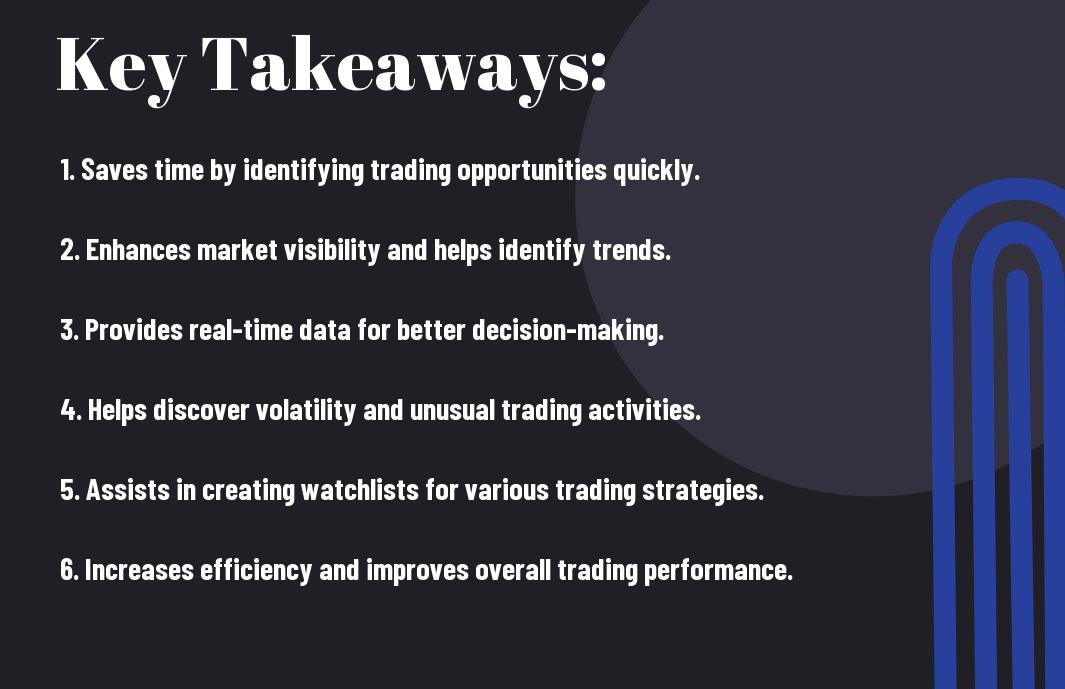
  • Time-saving: Market scanners help traders quickly find potential trading opportunities without the need to manually sift through numerous stocks or assets.
  • Increased efficiency: By scanning the market for specific criteria or customizable filters, traders can identify stocks that align with their trading strategy more efficiently.
  • Enhanced focus: Market scanners allow traders to focus on specific sectors, patterns, or indicators of interest, helping them make informed trading decisions and avoid distractions.

Enhanced Trading Efficiency

Automating Market Analysis

The use of market scanners in trading can significantly enhance your trading efficiency. By automating the process of market analysis, these tools save you valuable time and effort that would otherwise be spent manually scanning through endless amounts of data. This automation allows you to quickly filter and identify potential trading opportunities based on your specific criteria.

Identifying Opportunities Faster

Enhanced trading efficiency through market scanners also means that you can identify opportunities faster than ever before. These tools scan multiple markets simultaneously, alerting you to potential opportunities in real-time. By setting up custom alerts and filters, you can focus on specific asset classes or market conditions that align with your trading strategy, enabling you to seize opportunities swiftly and stay ahead of the market.

Analysis has shown that traders who utilize market scanners are able to make faster and more informed trading decisions, ultimately improving their overall trading performance. By leveraging the power of technology to automate market analysis and identify opportunities quickly, you can maximize your trading efficiency and increase your chances of success in the highly competitive world of trading.

Improved Risk Management

Early Detection of Market Shifts

Risk management is a crucial aspect of successful trading, and market scanners play a vital role in helping you mitigate potential risks. By utilizing market scanners, you can detect market shifts early on, allowing you to adjust your trading strategies accordingly. This early detection gives you a competitive edge by enabling you to make informed decisions and adapt to changing market conditions swiftly.

Minimizing Losses with Real-time Data

Improved risk management through market scanners also involves minimizing losses with real-time data. By receiving up-to-the-minute information on market trends, stock movements, and breaking news, you can make more precise decisions to protect your investments. Real-time data empowers you to act swiftly in volatile situations, cutting potential losses and maximizing your profit potential.

To minimize losses with real-time data, you need access to timely information that keeps you ahead of market fluctuations. Market scanners provide you with a competitive advantage by delivering real-time data straight to your fingertips, allowing you to stay informed and react promptly to changing market conditions. This proactive approach to risk management can significantly enhance your trading performance and help you achieve your financial goals.

Increased Accuracy

Eliminating Human Bias

Increased accuracy in trading is crucial for making informed decisions that can yield profitable results. Market scanners help in this aspect by eliminating human bias. When you solely rely on your judgment or emotions to identify trading opportunities, it’s easy to fall prey to biases that can cloud your decision-making process. Market scanners, on the other hand, analyze vast amounts of data objectively, without being influenced by emotions or personal opinions. This objective approach enhances the accuracy of spotting potential trades.

Relying on Objective Market Data

Eliminating human bias is just one way market scanners increase accuracy in trading. By relying on objective market data, these tools provide you with a more comprehensive and unbiased view of the market. Market scanners sift through various sources of information, including price movements, volume patterns, and technical indicators, to identify trading opportunities based on hard data rather than subjective interpretations. This data-driven approach can help you make more precise trading decisions.

It’s necessary to understand that relying on objective market data doesn’t mean you have to relinquish your expertise or intuition. Instead, it complements your skills by providing a factual foundation for your trading strategies. By incorporating objective market data into your analysis, you can enhance your accuracy and increase your chances of success in the volatile world of trading.

Access to Valuable Insights

Your use of market scanners in trading provides you with access to valuable insights that can help you make informed decisions. By utilizing market scanners, you can uncover hidden patterns in the data that may not be immediately apparent. These patterns can give you a better understanding of market trends and potential opportunities for profitable trades.

Uncovering Hidden Patterns

Valuable insights can be uncovered through the use of market scanners by identifying patterns and trends that are not easily visible to the naked eye. These patterns can help you predict market movements and make more strategic trading decisions. For example, a market scanner may reveal a recurring pattern in stock prices before a company releases its quarterly earnings report, allowing you to take advantage of this information and potentially profit from the stock movement.

Gaining a Competitive Edge

Uncovering hidden patterns and gaining insights that others may overlook can give you a competitive edge in the market. By using market scanners effectively, you can stay ahead of the curve and make trades based on data-driven analysis rather than emotional impulses. This strategic approach can help you outperform other traders and increase your chances of success in the market.

Competitive advantage in trading can be attained by leveraging market scanners to access real-time data and identify opportunities quickly. By staying informed and making decisions based on valuable insights from market scanners, you can improve your trading performance and achieve your financial goals more effectively.

Time-Saving Benefits

Despite the complexity of the stock market, market scanners can help you navigate through it efficiently. By utilizing tools like market scanners, you can save valuable time while still uncovering profitable trading opportunities. If you want to learn more about how to master stock scanning for profitable trading opportunities, you can check out this resource on Mastering Stock Scanning for Profitable Trading Opportunities.

Streamlining Trading Decisions

With market scanners, you can streamline your trading decisions by setting specific criteria that match your trading strategy. These scanners filter through vast amounts of data in seconds, presenting you with potential trades that align with your preferences. This saves you the time and effort of manually sifting through numerous stocks to find the ones that meet your requirements.

Reducing Information Overload

One of the key benefits of using market scanners is the ability to reduce information overload. In the fast-paced world of trading, you are bombarded with data from various sources. Market scanners help you narrow down the information by focusing on specific criteria you set, allowing you to concentrate on the most relevant opportunities. This not only saves you time but also helps you make more informed trading decisions.

The efficient use of market scanners can significantly enhance your trading experience by saving you time and reducing the overwhelming amount of information you need to process. By leveraging these tools effectively, you can streamline your decision-making process and focus on the most promising trading opportunities that align with your goals and strategies.

Cost-Effective Trading

Unlike randomly selecting stocks to trade, using a market scanner can significantly enhance your trading efficiency and profitability. Stock screeners help you quickly pinpoint the best opportunities in the market, saving you valuable time and money. By utilizing a tool like Stock Screeners: Find Top Picks, Save Time, you can streamline your research process and focus on high-potential trades.

Reducing Research Time and Costs

For every successful trader, time is of the essence. With market scanners, you can cut down on hours spent sifting through numerous stocks and analyzing data. This not only reduces your research time but also minimizes the costs associated with manual research efforts. By leveraging the power of technology, you can make more informed trading decisions quickly and cost-effectively.

Optimizing Trading Strategies

Strategies that are based on thorough research and analysis tend to yield better results in trading. Market scanners allow you to optimize your trading strategies by providing real-time data, advanced screening options, and customizable alerts. You can identify patterns, trends, and market opportunities that align with your trading style and risk tolerance. By fine-tuning your strategies with the help of market scanners, you can increase your chances of success in the dynamic world of trading.

Research shows that traders who incorporate market scanners into their trading routines experience improved performance and consistency. By utilizing these tools to analyze market conditions, scan for potential trades, and manage risk effectively, you can stay ahead of the curve and make smarter trading decisions. Whether you are a seasoned trader or just starting out, optimizing your trading strategies with market scanners is a wise investment in your trading journey.

Final Words

Summing up, using market scanners in trading can provide you with a range of benefits. They allow you to efficiently scan multiple markets for opportunities, saving you time and effort. Market scanners can help you identify potential trades, alerts you to market movements, and helps you stay informed about the latest market trends. By utilizing market scanners, you can enhance your trading strategies, make more informed decisions, and ultimately increase your chances of success in the trading world.

FAQ

Q: What are market scanners in trading?

A: Market scanners are tools or software that enable traders to scan and analyze the financial markets for specific criteria and setups. They help traders to identify trading opportunities quickly by filtering through large amounts of market data based on predetermined parameters.

Q: What are the benefits of using market scanners in trading?

A: Market scanners offer several benefits to traders, including:
– Time-saving: Market scanners can scan multiple markets and financial instruments simultaneously, saving traders hours of manual analysis.
– Opportunity identification: They help traders to identify potential trade setups, stocks with unusual volume, or significant price movements.
– Customization: Traders can customize the criteria and filters in market scanners to match their trading strategies and preferences.
– Efficiency: By using market scanners, traders can react quickly to market changes and take advantage of opportunities before they disappear.

Q: How can market scanners improve trading strategies?

A: Market scanners can improve trading strategies in the following ways:
– Data analysis: Market scanners provide traders with valuable insights and data points that can help them make informed trading decisions.
– Pattern recognition: They can help identify patterns and trends in the market, allowing traders to capitalize on predictable market movements.
– Risk management: By using market scanners to filter out high-risk trades or volatile instruments, traders can improve their overall risk management strategies.
– Diversification: Market scanners can help traders diversify their trading portfolios by identifying opportunities in different markets and asset classes.

How can sentiment analysis tools enhance trading decisions

With the rise of technology, leveraging sentiment analysis tools can significantly boost your trading decisions. By harnessing the power of these tools, you can gain valuable insights into market trends and sentiments that impact asset prices. In a recent article on Sentiment analysis tools: Empowering Traders with Sentiment Indicators, you’ll discover how these tools empower traders to make data-driven decisions and stay ahead in the fast-paced world of trading. Explore the possibilities and enhance your trading strategies today!

Key Takeaways:

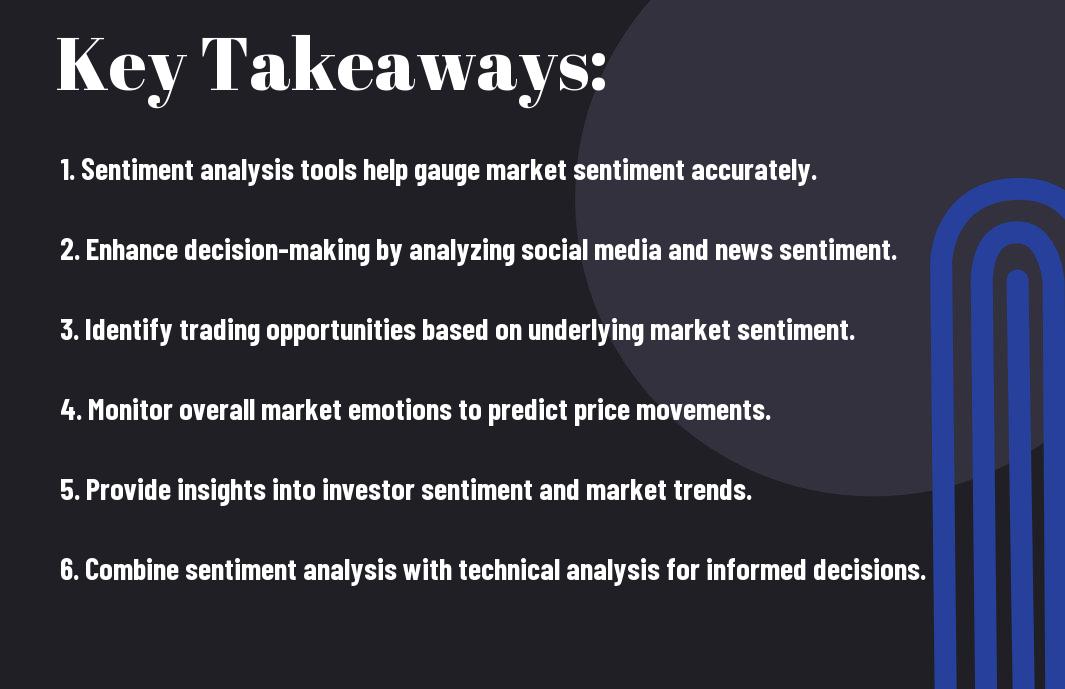
  • Sentiment analysis tools can provide valuable insights into market sentiment and help traders make informed decisions.
  • Utilizing sentiment analysis tools can help traders gauge market perceptions and sentiment towards specific assets or companies.
  • Integrating sentiment analysis into trading strategies can lead to more efficient decisions and potentially higher returns on investments.

The Power of Sentiment Analysis

Defining Sentiment Analysis

To fully understand the power of sentiment analysis tools in enhancing trading decisions, it is crucial to grasp the concept of sentiment analysis. Sentiment analysis, also known as opinion mining, is a technique used to determine the sentiment expressed in a piece of text, whether it is positive, negative, or neutral. By analyzing and interpreting these sentiments, you can gain valuable insights into market trends, investor sentiment, and potential shifts in the market.

The Role of Emotions in Trading Decisions

Analysis has shown that emotions play a significant role in trading decisions. Fear, greed, and euphoria can often cloud judgment and lead to impulsive decision-making, which may not always be in your best interest as a trader. By utilizing sentiment analysis tools, you can effectively gauge the overall market sentiment and factor in these emotional aspects to make more informed and rational trading decisions.

Understanding the emotions behind market movements can give you a competitive edge in the trading world. By incorporating sentiment analysis into your trading strategy, you can adapt to changing market conditions more quickly and make decisions based on data-driven insights rather than emotional reactions.

Power

The power of sentiment analysis lies in its ability to provide you with a deeper understanding of market dynamics and investor behavior. By leveraging sentiment analysis tools, you can stay ahead of market trends, identify potential risks, and seize profitable opportunities before others in the market. This valuable information can give you the confidence to make calculated trading decisions that align with your investment goals and risk tolerance.

Identifying Market Trends

Even in the fast-paced world of trading, it is crucial to identify market trends to make informed decisions. Sentiment analysis tools can play a vital role in helping you spot these trends by analyzing various sources of data.

Analyzing Social Media Sentiment

Trends can be identified by analyzing social media sentiment, where you can gauge public opinion and sentiment towards certain assets or markets. By monitoring platforms like Twitter, Facebook, and Reddit, sentiment analysis tools can help you understand the overall market sentiment and predict potential market movements.

Tracking Online Reviews and Forums

Forums and online reviews can also provide valuable insights into market trends. By tracking discussions on platforms like StockTwits and investment forums, you can gain a deeper understanding of investor sentiment and identify emerging trends before they become mainstream.

To effectively utilize this data, you can employ sentiment analysis tools to analyze the sentiment expressed in these online discussions, helping you make more informed trading decisions based on the collective wisdom of the crowd.

Monitoring News and Media Outlets

Identifying trends in news and media outlets is another important element of tracking market trends. By monitoring financial news websites, blogs, and mainstream media outlets, you can stay informed about the latest developments that may impact markets.

Reviews, opinions, and analyses from trusted sources can provide valuable insights into market trends, helping you stay ahead of the curve and make well-informed trading decisions.

Enhancing Trading Strategies

Now, to enhance your trading strategies, you can leverage sentiment analysis tools to make more informed decisions. By incorporating sentiment analysis and news analytics into your trading routine, you can gain valuable insights into market trends and sentiments. For further guidance on how to effectively use sentiment analysis tools, you can refer to How to Use Sentiment Analysis and News Analytics.

Identifying Buy and Sell Signals

Enhancing your trading strategies involves utilizing sentiment analysis tools to identify potential buy and sell signals. By analyzing social media, news articles, and other sources of information, you can gauge market sentiment and make more timely and accurate trading decisions. These tools can help you pinpoint opportunities for entering or exiting trades based on the prevailing sentiment in the market.

Refining Risk Management Techniques

Management of risk is crucial in trading, and you can enhance your risk management techniques by incorporating sentiment analysis tools. These tools can provide you with insights into market sentiment, helping you to adjust your risk exposure accordingly. By monitoring sentiment trends, you can effectively manage your risk by adjusting position sizes, setting stop-loss orders, and implementing other risk management strategies.

This will allow you to protect your capital and minimize potential losses, ultimately improving your overall trading performance.

Optimizing Portfolio Performance

Risk management is imperative when it comes to optimizing your portfolio performance. By utilizing sentiment analysis tools, you can assess the sentiment surrounding specific assets and adjust your portfolio allocation accordingly. These tools can help you identify undervalued or overvalued assets, allowing you to make strategic adjustments to improve your portfolio’s performance over time.

This strategic approach to portfolio management can help you achieve a better risk-return balance and maximize your returns in the long run.

Overcoming Biases and Emotional Traps

Recognizing Cognitive Biases

To make sound trading decisions, you need to be aware of the cognitive biases that can cloud your judgment. These biases, such as confirmation bias and anchoring bias, can lead you to make irrational choices based on emotions rather than logic. By recognizing these biases in your decision-making process, you can avoid falling into common traps that may negatively impact your trading outcomes.

Mitigating Emotional Influences

Overcoming emotional influences is crucial when it comes to trading, as decisions driven by fear or greed can often result in losses. By incorporating sentiment analysis tools into your trading strategy, you can mitigate the impact of emotions on your decisions. These tools provide you with data-driven insights into market sentiment, helping you make more objective and rational choices based on real-time information rather than emotional reactions.

Emotional trading is a common pitfall that many traders face, but by using sentiment analysis tools, you can take a more disciplined approach to your decision-making process. These tools can help you stay focused on the facts and avoid making impulsive decisions based on momentary emotions, ultimately leading to more consistent and successful trading outcomes.

Cultivating a Data-Driven Mindset

Overcoming biases and emotional traps requires cultivating a data-driven mindset in your trading approach. By relying on sentiment analysis tools to provide you with quantitative data on market sentiment, you can make more informed decisions grounded in facts rather than opinions. This shift towards data-driven decision-making can help you navigate the complexities of the market with more confidence and clarity.

Biases and emotional influences can significantly impact your trading decisions, but by embracing a data-driven mindset, you can overcome these obstacles and enhance your overall trading performance. By leveraging sentiment analysis tools effectively, you can improve your ability to interpret market trends and make strategic decisions that are based on reliable data rather than subjective emotions.

Selecting the Right Sentiment Analysis Tools

After recognizing the importance of sentiment analysis tools in enhancing your trading decisions, it is crucial to select the right tools to meet your specific needs. Evaluating tool features and capabilities is a crucial step in this process.

Evaluating Tool Features and Capabilities

With various sentiment analysis tools available in the market, you must assess the features and capabilities of each tool to determine which align best with your trading strategy. Consider factors such as real-time analysis, sentiment accuracy, language support, and the ability to handle large volumes of data efficiently. Ensure that the tool you choose provides the necessary insights to make informed trading decisions.

Considering Integration and Customization Options

Customization plays a significant role in the effectiveness of sentiment analysis tools for your trading needs. Look for tools that offer integration with your existing trading platforms and provide customization options to tailor the tool to your specific requirements. Customizing the tool to focus on relevant metrics and indicators can significantly enhance its effectiveness in guiding your trading decisions.

Customization options also allow you to adapt the tool as your trading strategy evolves, ensuring that it remains relevant and effective in helping you capitalize on market trends.

Assessing Vendor Credibility and Support

CapabilitiesWhen choosing a sentiment analysis tool, it is crucial to assess the credibility of the vendor and the level of support they provide. Choose a vendor with a proven track record in developing reliable sentiment analysis tools and offering excellent customer support. A reputable vendor will not only provide a high-quality tool but also offer assistance and guidance to help you maximize its potential in improving your trading decisions.

Assessing Vendor Credibility and SupportIt is crucial to consider factors such as vendor reputation, customer reviews, and the level of technical support offered. A vendor with strong credibility and reliable support services will ensure that you have the necessary resources to leverage the full capabilities of the sentiment analysis tool in your trading activities.

Integrating Sentiment Analysis into Trading Workflows

Automating Data Collection and Analysis

Not only can sentiment analysis tools help you make better trading decisions, but they can also streamline the process by automating data collection and analysis. By utilizing these tools, you can gather and analyze vast amounts of data from various sources in real-time, providing you with valuable insights into market sentiment and trends.

Visualizing Insights and Trends

Integrating sentiment analysis into your trading workflows allows you to visualize insights and trends in a more intuitive and easily digestible manner. By representing complex data in visual formats such as charts, graphs, and heatmaps, you can quickly identify patterns and correlations that may impact your trading decisions.

A picture is worth a thousand words, and when it comes to trading, visualizing data can give you a competitive edge. By using sentiment analysis tools to create visual representations of market sentiment and trends, you can spot opportunities and risks at a glance, enabling you to make more informed decisions in real-time.

Streamlining Decision-Making Processes

Streamlining your decision-making processes is crucial in the fast-paced world of trading, and sentiment analysis tools can help you do just that. By integrating these tools into your workflows, you can automate the analysis of market sentiment, allowing you to make quicker and more informed decisions based on real-time data.

Streamlining your decision-making processes with sentiment analysis tools can give you a significant advantage in the market. By cutting down on manual tasks and leveraging automation, you can react faster to market changes and execute trades with more confidence and precision.

Final Words

From above, you can see that sentiment analysis tools play a crucial role in enhancing trading decisions. By analyzing social media posts, news articles, and other sources of data, you can gain valuable insights into market sentiment that can help you make more informed decisions. Utilizing sentiment analysis tools can give you an edge in the highly competitive world of trading, allowing you to stay ahead of market trends and make smarter investment choices.

Recall, however, that sentiment analysis tools are just one part of the equation. It’s imperative to combine these tools with careful research, analysis, and risk management strategies to make the most of their potential benefits. By incorporating sentiment analysis into your trading decisions, you can increase your chances of success and achieve your financial goals.

Q: What is sentiment analysis?

A: Sentiment analysis is the process of analyzing and interpreting public opinions, emotions, and attitudes towards a particular topic, product, or service by using natural language processing and computational techniques.

Q: How can sentiment analysis tools enhance trading decisions?

A: Sentiment analysis tools can provide traders with valuable insights into market sentiment, helping them gauge the overall mood of the market and make more informed trading decisions. By analyzing social media, news articles, and other sources, these tools can help traders identify trends, predict market movements, and anticipate potential price fluctuations.
Q: What are the benefits of using sentiment analysis tools in trading?

A: Some benefits of using sentiment analysis tools in trading include improved risk management, enhanced decision-making, quicker reaction times to market changes, and the ability to identify trading opportunities that may not be apparent from traditional analysis methods. These tools can also help traders stay ahead of the competition and adapt their strategies based on real-time market sentiment.

What are the most effective internet promotion techniques for small businesses

Many small business owners like yourself often wonder how to effectively promote their businesses online to reach a wider audience and drive more sales. If you’re seeking valuable insights on this topic, you’ll find helpful tips and strategies in this blog post. By implementing the right internet promotion techniques, you can boost your online presence and attract potential customers. To dive deeper into digital marketing for small businesses, check out How do you start digital marketing for a small business with ….

Key Takeaways:

  • SEO is crucial: Implementing search engine optimization strategies can help small businesses improve their online visibility and attract more organic traffic.
  • Social media marketing: Engaging with customers on popular social media platforms can help businesses build brand awareness, drive traffic to their websites, and boost sales.
  • Email marketing: Sending personalized and targeted emails to customers can help small businesses nurture relationships, promote products or services, and drive conversions.

Identifying Your Target Audience

Defining Your Niche

Audience identification is crucial for the success of your small business internet promotions. Start by defining your niche – this means identifying a specific segment of the market that you want to target. Think about what makes your product or service unique and who would benefit the most from it.

Understanding your niche allows you to tailor your marketing efforts to reach the right audience. By focusing on a specific target market, you can create more personalized and effective promotional strategies.

Creating Buyer Personas

Buyer personas are fictional representations of your ideal customers based on market research and real data about your existing customers. By creating detailed buyer personas, you can better understand the needs, behaviors, and concerns of your target audience.

With buyer personas, you can tailor your marketing messages and campaigns to resonate with different segments of your target audience. This personalized approach can lead to higher engagement and conversion rates, ultimately helping you achieve your business goals more effectively.

Building a Strong Online Presence

Website Optimization for Small Businesses

The key to building a strong online presence starts with optimizing your website. The design and layout of your website should be clean, professional, and easy to navigate. Make sure your website is mobile-friendly, as more and more users are accessing the internet from their smartphones and tablets. Additionally, optimize your website for search engines by including relevant keywords, meta descriptions, and alt tags for images. This will help improve your site’s visibility and ranking on search engine results pages.

Leveraging Social Media Platforms

One of the most effective ways to build your online presence is by leveraging social media platforms. Social media allows you to connect with your target audience, engage with them in real time, and promote your products or services. By creating a strong presence on platforms like Facebook, Instagram, and Twitter, you can increase brand awareness and drive traffic to your website. You can also use social media to share valuable content, such as blog posts, videos, and infographics, that showcases your expertise and builds credibility with your audience.

Social media is not only a powerful tool for building your online presence, but it also allows you to interact with your customers on a more personal level. By responding to comments, messages, and reviews, you can show your audience that you value their feedback and are committed to providing excellent customer service. This engagement can go a long way in building a loyal customer base and differentiating your small business from competitors.

Content Marketing Strategies

Crafting Compelling Blog Posts

Strategies for crafting compelling blog posts involve understanding your target audience and addressing their needs and interests in a way that is engaging and informative. By focusing on topics that resonate with your audience and providing valuable insights or solutions, you can establish credibility and build a loyal following. Make sure to use a mix of informative content, storytelling, and visuals to keep your readers engaged and coming back for more.

Utilizing Email Newsletters

Posts

This direct form of communication allows you to stay connected with your audience and provide exclusive content, promotions, and updates. By personalizing your newsletters and segmenting your audience based on their interests, you can increase engagement and drive conversions. Remember to include compelling subject lines and a clear call to action to encourage readers to take the next step.

Creating Engaging Video Content

Blog

With the rise of video consumption online, creating engaging video content can significantly boost your small business’s online presence. Whether it’s product demonstrations, behind-the-scenes looks, or how-to guides, video content is a powerful way to connect with your audience on a personal level. Be sure to optimize your videos for search engines and share them across your website and social media platforms to maximize their reach.

Search Engine Optimization (SEO) Techniques

Keyword Research and Analysis

All successful SEO strategies start with keyword research and analysis. By identifying the right keywords for your business, you can attract more qualified traffic to your website. You should focus on relevant keywords that have high search volume and low competition. This will help you rank higher in search engine results and increase your visibility online.

On-Page Optimization Strategies

On-page optimization is crucial for improving your website’s visibility in search engine results. This includes optimizing your titles, meta descriptions, headings, and content with relevant keywords. By creating high-quality, engaging content that is optimized for search engines, you can increase your chances of ranking higher.

Analysis of your on-page optimization efforts is vital to see what’s working and what needs improvement. Monitor your website’s performance regularly, track your keyword rankings, and analyze your traffic sources. By constantly refining your on-page optimization strategies, you can stay ahead of the competition and drive more organic traffic to your site.

Building High-Quality Backlinks

Building high-quality backlinks is another vital SEO technique for small businesses. Backlinks from reputable websites can significantly improve your website’s authority and credibility in the eyes of search engines. You can acquire backlinks through guest posting, partnerships, and creating valuable content that others want to link to.

Building a strong backlink profile takes time and effort, but the payoff is well worth it. Focus on getting backlinks from websites that are relevant to your industry and have a good reputation. By building high-quality backlinks, you can improve your search engine rankings and drive more traffic to your website.

Optimization

Optimizing your website for search engines is a continuous process that requires dedication and effort. By implementing the right SEO techniques, such as keyword research, on-page optimization, and building high-quality backlinks, you can improve your website’s visibility and attract more potential customers. Stay informed about the latest trends in SEO and be willing to adapt your strategies to stay ahead of the competition.

Pay-Per-Click (PPC) Advertising

Unlike organic search strategies, Pay-Per-Click (PPC) advertising allows you to place your small business at the top of search engine results instantly. It is a cost-effective way to drive traffic to your website and increase conversions. To get the most out of your PPC campaigns, you need to set them up effectively.

Setting Up Effective PPC Campaigns

Advertising on platforms like Google Ads requires strategic planning. You need to choose the right keywords, write compelling ad copy, and set a budget that aligns with your business goals. By conducting thorough keyword research and crafting relevant ads, you can increase your chances of reaching your target audience and driving qualified traffic to your site.

Targeting Specific Audiences with AdWords

Effective PPC campaigns utilize tools like Google AdWords to target specific audiences based on factors like location, interests, and online behavior. By tailoring your ads to specific demographics, you can improve the relevance of your campaigns and increase your chances of attracting potential customers. AdWords offers detailed targeting options that allow you to hone in on your ideal audience and maximize the impact of your advertising efforts.

AdWords’ targeting capabilities enable you to refine your audience based on parameters such as age, gender, device, and more. By leveraging these features, you can ensure that your ads are being shown to the right people at the right time, ultimately boosting your chances of converting clicks into sales.

Measuring and Optimizing PPC Performance

For Pay-Per-Click advertising to be truly effective, you must continuously monitor and optimize your campaigns. By analyzing metrics like click-through rate, conversion rate, and cost per acquisition, you can identify opportunities for improvement and make data-driven decisions to enhance your results. Regularly A/B testing different ad variations and landing pages can help you refine your campaigns and increase their overall effectiveness.

PayPerClick platforms provide robust analytics tools that allow you to track the performance of your campaigns in real-time. By leveraging these insights, you can make informed adjustments to your PPC strategies and ensure that you are maximizing your return on investment. Recall, the key to successful PPC advertising lies in continuous optimization and a willingness to adapt to the ever-changing digital landscape.

Influencer Marketing and Partnerships

Despite the rise of social media and digital marketing, traditional forms of advertising such as influencer marketing and partnerships still hold a significant place in promoting small businesses. By collaborating with influencers in your niche or industry, you can leverage their audience and credibility to expand your reach and attract potential customers.

Finding the Right Influencers for Your Business

Influencers play a crucial role in shaping consumer perceptions and driving purchasing decisions. When looking for influencers to partner with, consider factors such as their relevance to your industry, engagement with their audience, and authenticity in promoting products or services. It’s important to choose influencers whose values align with your brand to ensure a genuine connection with their followers.

Building Relationships with Influencers

Right from the start, focus on building authentic and long-lasting relationships with influencers. Engage with their content, offer value, and show genuine interest in their work. By nurturing these relationships, you not only create a strong foundation for collaboration but also cultivate trust and loyalty, leading to more effective partnerships in the long run.

Another important aspect of building relationships with influencers is to respect their creative freedom. Allow influencers to put their unique spin on the content they create for your brand, as their authenticity and voice are what resonate with their audience. By giving them creative control, you empower them to produce content that feels genuine and relatable, resulting in a more impactful marketing campaign.

Measuring the Success of Influencer Partnerships

To gauge the effectiveness of your influencer partnerships, you can track various metrics such as engagement rates, click-through rates, conversion rates, and overall brand visibility. Set clear goals and key performance indicators (KPIs) before collaborating with influencers, and use analytics tools to monitor and evaluate the outcomes of your campaigns. By analyzing these metrics, you can determine the ROI of your influencer partnerships and make informed decisions for future collaborations.

Influencer marketing can be a powerful tool for small businesses to increase brand awareness, drive traffic, and boost sales. By strategically partnering with the right influencers, nurturing strong relationships, and measuring the impact of your collaborations, you can effectively harness the influence of online personalities to elevate your business’s online presence and achieve your marketing goals.

Final Words

Presently, you have learned about various effective internet promotion techniques that can benefit your small business. By implementing a combination of strategies such as search engine optimization, social media marketing, email campaigns, and content marketing, you can increase your online presence and attract more customers to your business. Remember to regularly analyze your results and adjust your tactics to stay ahead of the competition in the ever-evolving digital landscape.

Ultimately, the key to successful internet promotion for small businesses is to be consistent and persistent in your efforts. By dedicating time and resources to your online marketing strategies, you can effectively reach your target audience and drive growth for your business. Stay informed about the latest trends and tools in digital marketing to continually improve your online visibility and increase your brand recognition. With determination and creativity, you can harness the power of the internet to achieve your business goals.

FAQ

Q: What are the most effective internet promotion techniques for small businesses?

A: The most effective internet promotion techniques for small businesses include search engine optimization (SEO), social media marketing, pay-per-click advertising (PPC), email marketing, and content marketing.

Q: How can search engine optimization (SEO) help small businesses with internet promotion?

A: SEO can help small businesses improve their online visibility by optimizing their website to rank higher in search engine results. By targeting relevant keywords and creating high-quality content, small businesses can attract more organic traffic to their website.

Q: What role does social media marketing play in promoting small businesses on the internet?

A: Social media marketing allows small businesses to connect with their target audience, build brand awareness, and drive traffic to their website. By engaging with followers, sharing valuable content, and running targeted ad campaigns, small businesses can effectively promote their products or services on social media platforms.

Skip to content