How do market trading tools help in analyzing stock market trends

Trends in the stock market can be complex and ever-changing, making it challenging to navigate without the right tools. With market trading tools, you can analyze stock market trends with ease and precision. These tools provide you with real-time data, advanced charts, technical indicators, and customizable alerts to help you make informed decisions about your investments. By utilizing these tools, you can stay ahead of market trends and maximize your trading potential. Let’s explore how market trading tools can empower you to analyze stock market trends effectively.

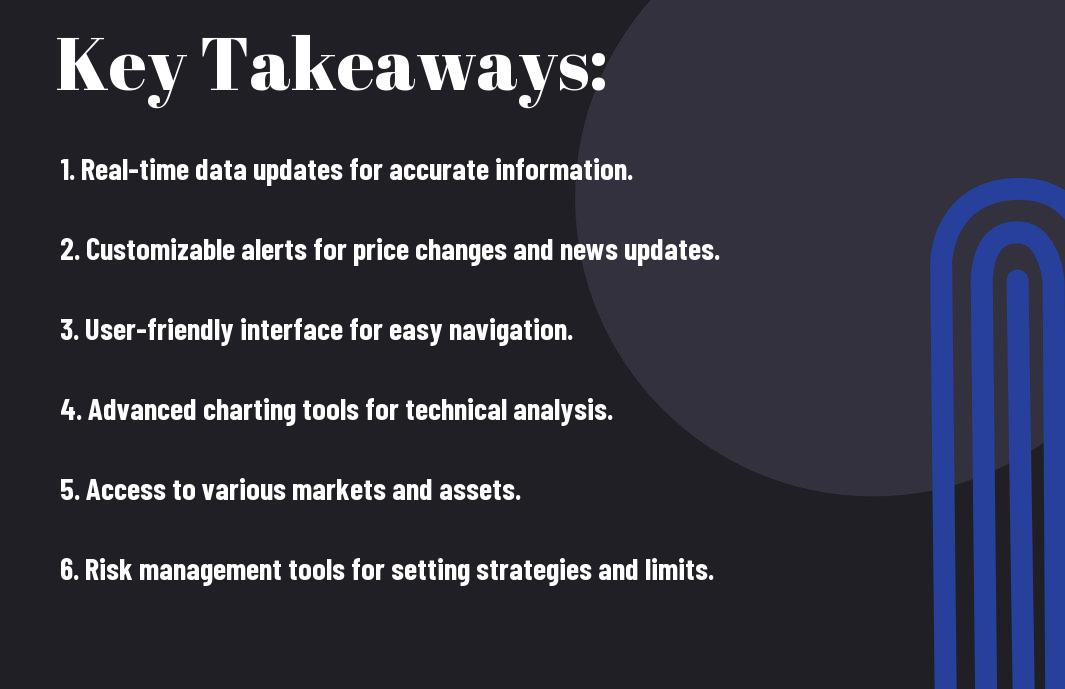
Key Takeaways:

  • Data Visualization: Market trading tools help in analyzing stock market trends by providing data visualization tools that display stock price movements, trends, and patterns in an easy-to-understand format.
  • Technical Analysis: These tools use technical indicators like moving averages, MACD, RSI, and Bollinger Bands to analyze historical price data and predict future price movements based on these patterns.
  • Algorithmic Trading: Market trading tools use algorithms to automate trading decisions based on predefined criteria, helping traders to capitalize on stock market trends and make informed decisions.

The Importance of Analyzing Stock Market Trends

Why Accurate Trend Analysis Matters

To understand the importance of analyzing stock market trends, you must first grasp the essence of accurate trend analysis. By analyzing trends, you can identify potential opportunities for growth or risks that may impact your investments. With the help of market trading tools, you can track patterns and make informed decisions based on reliable data. This allows you to stay ahead of market movements and adjust your strategies accordingly, optimizing your investment outcomes.

The Consequences of Inaccurate Trend Analysis

To probe into the world of stock market trends without accurate analysis is akin to sailing without a compass. Inaccurate trend analysis can lead to detrimental consequences for your investments. Misreading trends may result in poor decision-making, leading to financial losses and missed opportunities. Utilizing market trading tools to analyze trends accurately is paramount to your success in the stock market. It enables you to make well-informed decisions supported by data-driven insights, thereby minimizing risks and maximizing returns.

Analyzing stock market trends is not just a matter of following the crowd or making hasty decisions. It requires a systematic approach and a keen understanding of market dynamics. With accurate trend analysis, you can anticipate market movements, spot emerging patterns, and strategically position your investments for optimal returns.
Overview of Market Trading Tools

Little do many novice investors realize how vital market trading tools are in analyzing stock market trends. These tools provide valuable insights and data that can help you make informed decisions when it comes to buying or selling stocks. Whether you are a seasoned trader or just starting in the market, having access to the right trading tools can give you a significant edge.

Types of Market Trading Tools

Trading tools can be categorized into various types, each serving a specific purpose. Some tools focus on technical analysis, while others provide fundamental data about companies. There are also tools that help you track market sentiment and news that can impact stock prices. The key is to find the right combination of tools that align with your trading strategy and goals.

  • Technical Analysis Tools
  • Financial News Platforms
  • Stock Screeners
  • Trading Platforms
  • Social Trading Networks

The best approach is to experiment with different tools and see which ones work best for you. Do not forget, the goal is to have a comprehensive understanding of the market and make well-informed decisions.

How Market Trading Tools Work

Market trading tools work by aggregating data from various sources and presenting them in a user-friendly format. They allow you to analyze historical price trends, track market indicators, and even automate trading strategies based on predefined parameters. By utilizing these tools, you can save time and effort in conducting research and monitoring the market on your own.

To make the most of market trading tools, it’s vital to stay curious and continuously explore new tools and features. The market is dynamic, and staying ahead requires adapting to new technologies and trends in trading tools.

Identifying Patterns and Trends

Many traders use market trading tools to analyze stock market trends effectively. By utilizing technical analysis software such as Top Technical Analysis Tools for Traders, you can identify patterns and trends that are crucial for making informed trading decisions.

Technical Indicators and Chart Patterns

Chart patterns and technical indicators are crucial tools for market analysis. Chart patterns like head and shoulders, double tops, and flags can signal potential trend reversals or continuations. Technical indicators such as moving averages, Relative Strength Index (RSI), and MACD provide additional insights into market trends by measuring price movements and momentum.

Moving Averages and Momentum Indicators

Averages like simple moving averages (SMA) and exponential moving averages (EMA) help smooth out price data over a specified period, enabling you to identify the direction of the trend. Momentum indicators like the relative strength index (RSI) indicate the strength of a trend and whether a stock is overbought or oversold. By combining moving averages with momentum indicators, you can get a comprehensive view of a stock’s price movements.

On Identifying Trend Reversals and Breakouts

Patterns like head and shoulders, double bottoms, and triangles can help you spot potential trend reversals and breakouts in the stock market. When identified correctly, these patterns can offer lucrative trading opportunities. By paying attention to price patterns and volume levels, you can anticipate when a stock is likely to change direction or experience a breakout. Understanding these patterns can give you a competitive edge in the market.

Analyzing Market Sentiment

The Role of Market Sentiment in Trend Analysis

Market sentiment plays a crucial role in understanding stock market trends. It refers to the overall feeling or attitude of investors towards a particular security or the market as a whole. Emotions such as fear, greed, optimism, and pessimism can heavily influence trading decisions, leading to either bullish (positive) or bearish (negative) market trends.

Measuring Market Sentiment through Tools

Market trading tools help measure market sentiment by analyzing various data points such as social media sentiment, news sentiment, options trading activity, and surveys of investor confidence. These tools use advanced algorithms to aggregate and interpret this data, providing insights into the prevailing market sentiment.

Role: By utilizing market trading tools to measure sentiment, you can gain a more comprehensive understanding of the market dynamics. These tools offer real-time data and analysis, allowing you to stay informed about investor sentiment shifts that can impact stock prices.

Interpreting Market Sentiment Data

To effectively interpret market sentiment data, you need to analyze patterns and trends over time. Positive sentiment can indicate a bullish market trend, suggesting that investors are optimistic about the future performance of a stock. Conversely, negative sentiment may signal a bearish trend, prompting investors to sell off their positions.

Sentiment: By analyzing market sentiment data with the help of trading tools, you can make more informed trading decisions. Understanding the prevailing sentiment can help you anticipate market movements and adjust your strategy accordingly, maximizing your chances of success in the stock market.

Risk Management and Trend Analysis

How Trend Analysis Informs Risk Management

Management of risk in stock trading is crucial to protect your investments. Trend analysis helps you make informed decisions about when to enter or exit a trade. By studying price movements and patterns over time, you can identify potential risks and adjust your trading strategy accordingly.

Setting Stop-Losses and Limit Orders

Orders such as stop-losses and limit orders are necessary tools in managing risk. Stop-loss orders automatically sell a stock when it reaches a certain price, limiting your losses. Limit orders, on the other hand, allow you to set a specific price at which you want to buy or sell a stock. By using these orders effectively, you can protect yourself from unexpected market movements.

Limit orders are especially useful in volatile markets, where prices can change rapidly. By setting a limit order, you can control the price at which your trade gets executed, ensuring that you don’t miss out on potential gains or incur significant losses.

Managing Position Sizing and Leverage

Any successful trader understands the importance of managing position sizing and leverage. Position sizing refers to the amount of capital you allocate to a particular trade, while leverage allows you to control a larger position with a smaller amount of capital. By carefully managing these factors, you can minimize risk and maximize returns.

Sizing your positions appropriately based on your risk tolerance and overall portfolio can help you avoid overexposure to any single stock or market sector. Similarly, controlling leverage ensures that you don’t take on more risk than you can afford, protecting your capital in volatile market conditions.
Advanced Market Trading Tools

Not all market trading tools are created equal. Some are more advanced and sophisticated, offering unique features and capabilities to help you analyze stock market trends effectively. Here are some of the advanced market trading tools that can take your analysis to the next level:

  1. Algorithmic Trading and Machine Learning
  2. News and Event-Driven Trading Tools
  3. Social Media and Sentiment Analysis Tools

Algorithmic Trading and Machine Learning

Any serious investor knows that the stock market moves at a rapid pace, making it challenging to keep up with all the fluctuations. This is where algorithmic trading and machine learning come into play. These advanced tools use complex algorithms and artificial intelligence to analyze market data, identify patterns, and make informed trading decisions on your behalf. By leveraging these tools, you can stay one step ahead of the market and capitalize on profitable opportunities before others do.

News and Event-Driven Trading Tools

An crucial aspect of successful stock market analysis is staying informed about the latest news and events that could impact stock prices. Advanced news and event-driven trading tools aggregate and analyze news articles, social media posts, earnings reports, and other relevant information to help you make well-informed trading decisions. By using these tools, you can quickly react to breaking news and market events, ensuring that you are always on top of your trading game.

Advanced news and event-driven trading tools not only provide real-time updates but also offer sentiment analysis features that help you gauge market sentiment and make data-driven decisions based on the overall mood of the market.

Social Media and Sentiment Analysis Tools

Trading in the stock market is not just about numbers and charts; it’s also about understanding market sentiment and investor behavior. Social media and sentiment analysis tools use advanced algorithms to scour social media platforms, online forums, and news websites for mentions and discussions related to specific stocks. By analyzing this data, these tools can provide valuable insights into market sentiment, helping you gauge market sentiment and make informed trading decisions based on the prevailing mood in the market.

Trading with the help of social media and sentiment analysis tools can give you a competitive edge by allowing you to tap into the collective wisdom and sentiment of the market participants. These tools can help you identify emerging trends, anticipate market movements, and make smarter investment decisions.

To wrap up

Conclusively, market trading tools play a crucial role in analyzing stock market trends by providing you with real-time data, technical analysis, and historical trends to make informed investment decisions. These tools empower you to track market movements, identify patterns, and predict future trends, ultimately helping you stay ahead in the dynamic world of stock trading. By utilizing these tools effectively, you can enhance your understanding of the market, mitigate risks, and optimize your investment strategies for better outcomes.

Q: How do market trading tools assist in analyzing stock market trends?

A: Market trading tools help analyze stock market trends by providing real-time data, technical indicators, and historical price movements. Traders can use these tools to identify patterns, trends, and potential trading opportunities.

Q: What are some common features of market trading tools for analyzing stock market trends?

A: Common features of market trading tools include charting tools, screening capabilities, customizable alerts, backtesting functionality, and access to news and analysis. These features help traders make informed decisions based on data and market trends.

Q: How can market trading tools enhance trading strategies and decision-making?

A: Market trading tools can enhance trading strategies and decision-making by providing insights into market dynamics, helping traders better understand market behavior, and offering tools to manage risk. By using these tools, traders can improve their overall performance and profitability in the stock market.
What features should I look for in a good market trading tool

You want to make the right decisions when it comes to market trading, and having the right tools can make all the difference. In this blog post, we will explore the imperative features you should look for in a market trading tool to help you navigate the complexities of the financial markets with ease and confidence. By understanding these key features, you can enhance your trading strategy and improve your overall success in the market.

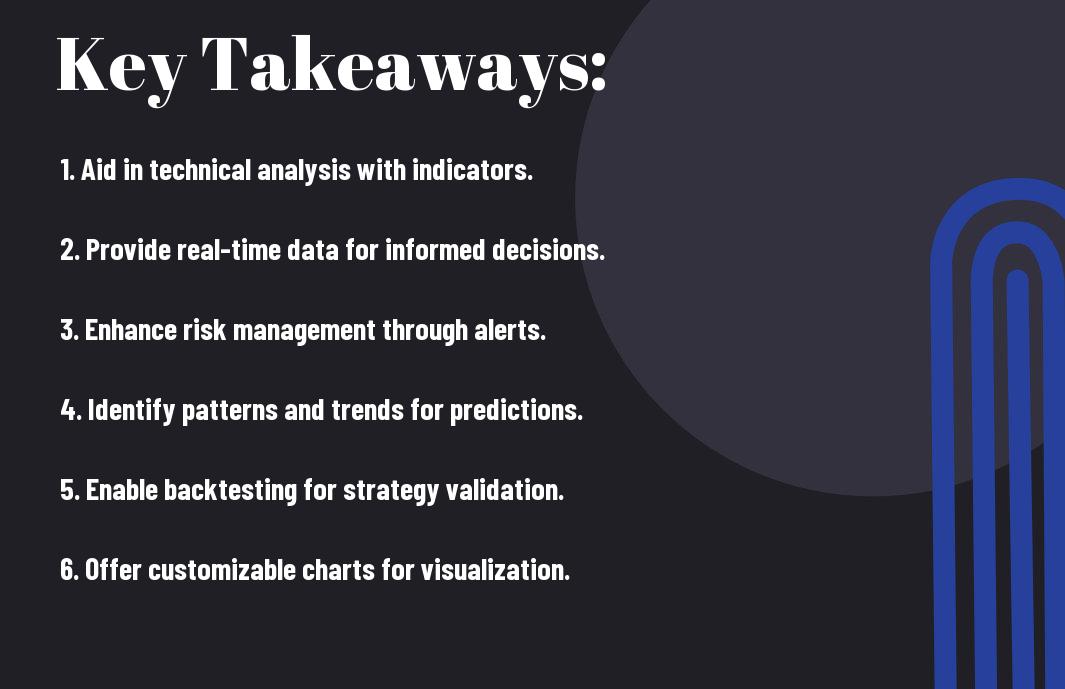
Key Takeaways:

  • User-friendly interface: A good market trading tool should have an intuitive and easy-to-use interface that allows users to navigate and execute trades efficiently.
  • Real-time data and analysis: Make sure the tool provides real-time market data and analysis to help you make informed trading decisions quickly.
  • Diverse range of tools: Look for a trading tool that offers a wide range of features such as charting tools, customizable indicators, and research options to suit your trading style and strategy.

Identifying Your Trading Needs

Defining Your Investment Goals

For an effective market trading tool, it is crucial to begin by defining your investment goals. Consider what you aim to achieve through your trading activities. Are you looking to generate short-term profits or build long-term wealth? By clearly outlining your investment goals, you can better align your trading strategies and select the appropriate tools to help you reach your objectives.

Assessing Your Risk Tolerance

For successful trading, it is important to assess your risk tolerance. Understanding how much risk you are comfortable with can guide your trading decisions and help you choose tools that align with your risk preferences. A good market trading tool should offer features that allow you to manage and mitigate risk effectively while optimizing your potential returns.

Identifying your risk tolerance involves evaluating factors such as your financial situation, investment experience, and psychological attitude towards risk. By gaining clarity on your risk tolerance, you can make informed decisions and select trading tools that are in line with your comfort level.

Data Analysis Capabilities

Real-time Market Data

Some of the key features you should look for in a market trading tool are its real-time market data capabilities. This enables you to make informed decisions by giving you up-to-the-second information on market movements, trends, and prices.

Historical Data Access

Realtime access to historical data is crucial for your analysis. By being able to review past market performance, you can identify patterns, trends, and important price levels that can help you make better trading decisions. Look for a tool that provides easy access to historical data across different time frames.

Understanding the historical data of a particular market can give you valuable insights into how that market has behaved in the past under similar conditions. This knowledge can be a powerful tool in predicting future price movements and adjusting your trading strategy accordingly.

Charting and Visualization Tools

Realtime charting and visualization tools are imperative for effective market analysis. These features allow you to see market data in an easily digestible format, making it easier to identify trends, patterns, and potential entry or exit points for your trades. Look for tools that offer customizable charts and technical indicators to suit your trading style.

Capabilities such as drawing tools, technical analysis indicators, and comparison features can enhance your ability to analyze market data effectively. These tools can help you spot opportunities and make informed decisions based on a comprehensive analysis of the market.

Trade Execution and Management

Many aspects of trade execution and management are crucial when evaluating a market trading tool. One key consideration is the variety of order types available and the speed at which they are executed. Whether you need market orders, limit orders, stop orders, or other advanced order types, a good trading tool should offer a range of options to suit your trading strategy. Additionally, the execution speed of these orders is imperative, as even a slight delay can impact the success of your trades.

Order Types and Execution Speed

  • Market orders
  • Limit orders
  • Stop orders
  • Advanced order types
  • Fast execution speed

This information is imperative to ensure that your trades are executed quickly and accurately to capitalize on market opportunities.

Position Sizing and Risk Management

Sizing your positions correctly and managing risk effectively are crucial components of successful trading. A good trading tool should allow you to easily adjust the size of your positions based on your risk tolerance and overall trading strategy. By setting proper position sizes and implementing risk management techniques such as stop-loss orders, you can protect your capital and maximize your potential profits.

Execution is key when it comes to position sizing and risk management. You need a trading tool that allows you to quickly and accurately enter position sizes and set risk parameters to ensure that you are always in control of your trades and exposure to the market.

Stop-Loss and Take-Profit Features

For effective risk management and trade optimization, stop-loss and take-profit features are imperative in a market trading tool. These features allow you to automatically exit a trade at a predetermined price to limit your losses or lock in profits. By utilizing stop-loss and take-profit orders, you can mitigate risk and remove emotion from your trading decisions.

Execution plays a critical role in utilizing stop-loss and take-profit features effectively. Ensure that your trading tool allows for easy and reliable placement of these orders to safeguard your trades and optimize your trading outcomes.

Technical Indicators and Alerts

Built-in Indicators and Customization Options

After choosing a market trading tool, one vital feature to look for is the availability of built-in technical indicators and the ability to customize them. These indicators, such as moving averages, RSI, MACD, and Bollinger Bands, can provide valuable insights into market trends and potential entry or exit points for your trades.

An ideal trading tool should offer a variety of indicators that you can tailor to your specific trading strategy. Being able to adjust the parameters of these indicators to suit your preferences and trading style can greatly enhance your decision-making process and improve your overall trading performance.

Alert Systems for Market Events and Trends

Alert systems are another crucial feature to consider when evaluating a market trading tool. These systems can notify you of important market events, such as price movements, trend reversals, or the crossing of key technical levels. By setting up alerts for these events, you can stay informed and act quickly when opportunities or risks arise.

Alert systems can be customized to send notifications via email, SMS, or in-app notifications, ensuring that you never miss a critical market development. This real-time information can help you make timely decisions and stay ahead of market trends, giving you a competitive edge in your trading activities.

Market trading tools that offer both comprehensive technical indicators and robust alert systems can significantly improve your trading efficiency and effectiveness. By leveraging these features, you can enhance your market analysis, identify profitable opportunities, and manage risks more proactively. Choose a tool that provides a balance of built-in indicators and customizable options, along with reliable alert systems, to support your trading strategy and help you achieve your financial goals.

Backtesting and Strategy Optimization

Not all market trading tools are created equal. When looking for a good market trading tool, one important feature to consider is the ability to backtest and optimize your trading strategies. According to Top Technical Analysis Tools for Traders, having a tool that allows you to test your strategies against historical data can help you evaluate the effectiveness of your trading approach.

Historical Data Backtesting

Backtesting is a crucial feature that enables you to assess how well your trading strategy would have performed in the past. By utilizing historical data, you can see how your strategy would have fared in different market conditions and make necessary adjustments to improve its performance going forward. A good market trading tool should provide you with the functionality to conduct thorough backtesting to ensure that your strategies are robust and reliable.

Walk-Forward Optimization and Monte Carlo Simulations

For more advanced strategy optimization, you should look for tools that offer walk-forward optimization and Monte Carlo simulations. Walk-forward optimization involves continuously re-optimizing your trading strategy as new data becomes available, helping you adapt to changing market conditions. The Monte Carlo simulation allows you to test your strategy against multiple variations of historical data to assess its stability and reliability under different scenarios. These features can help you fine-tune your strategies and make informed decisions based on realistic simulations of market behavior.

The ability to backtest your strategies against historical data and optimize them using advanced techniques like walk-forward optimization and Monte Carlo simulations can significantly enhance your trading performance and decision-making process. When choosing a market trading tool, make sure to prioritize these features to ensure that you have the necessary tools to succeed in the dynamic world of trading.

User Interface and Customization

Intuitive Design and Navigation

With a good market trading tool, intuitive design and navigation are key features to look for. A clutter-free interface, easy-to-find menus, and quick access to important functions will enhance your trading experience. A well-designed tool should allow you to navigate seamlessly between different sections, analyze data efficiently, and execute trades swiftly.

Personalized Dashboards and Workspaces

To make the most out of your trading activities, personalized dashboards and workspaces are crucial. You should be able to customize your dashboard layout, choose which metrics or tools to display prominently, and save your preferred settings for future use. This level of customization not only makes the tool more user-friendly but also tailors it to suit your individual trading style and preferences.

It is important for a trading tool to offer personalized dashboards and workspaces so that you can arrange the information in a way that makes the most sense to you. This feature allows you to focus on what is important to you, leading to more informed trading decisions and potentially better outcomes.

Mobile Compatibility and Accessibility

Any reliable market trading tool should be compatible with mobile devices and offer accessibility on the go. Whether you are traveling, away from your desktop, or simply prefer to trade on your smartphone or tablet, having mobile compatibility ensures that you can stay connected to the markets at all times. Look for tools with responsive design and user-friendly interfaces optimized for mobile usage.

Mobile compatibility and accessibility allow you to take advantage of trading opportunities even when you are not at your desk. Being able to monitor market trends, execute trades, and manage your portfolio from your mobile device can give you a competitive edge and flexibility in your trading activities.

Customization

Customization is a crucial aspect of a good market trading tool. The ability to tailor the tool to your preferences, trading strategies, and style can significantly improve your overall trading experience. Look for tools that offer a high degree of customization options, allowing you to set up the interface, tools, and features according to your specific needs.

Integration and Compatibility

Brokerage Integration and API Access

One important feature to look for in a good market trading tool is brokerage integration and API access. This allows you to seamlessly connect your trading tool with your brokerage account, enabling quick and efficient trade execution. With API access, you can automate trading strategies and access real-time market data for informed decision-making.

Compatibility with Other Trading Tools and Platforms

Other than brokerage integration, it’s crucial to ensure that the market trading tool you choose is compatible with other trading tools and platforms you use. This compatibility allows you to leverage the strengths of different tools and platforms, creating a more robust trading strategy. Whether you use technical analysis software, charting tools, or algorithmic trading platforms, compatibility ensures smooth integration and enhances your overall trading experience.

Plus, ensuring compatibility with other trading tools and platforms gives you the flexibility to adapt to changing market conditions and experiment with new trading approaches. By seamlessly integrating different tools, you can optimize your trading workflow and stay ahead of the curve in the dynamic world of market trading.

Conclusion

With this in mind, when searching for a good market trading tool, you should look for features that cater to your specific needs and trading style. Consider tools that offer real-time market data, customizable charts, technical analysis indicators, and a user-friendly interface. By utilizing advanced tools like those outlined in the article on Top Trading Tools Traders Should Know, you can enhance your trading experience and potentially improve your overall performance in the market.

Be mindful of, the best trading tool for you is one that aligns with your goals and strategies. Take the time to explore different options, test out various tools, and see which ones work best for you. With the right tools at your disposal, you can make more informed decisions, stay ahead of market trends, and ultimately increase your chances of success in the world of trading.

Q: What features should I look for in a good market trading tool?

A: A good market trading tool should have real-time data updates, technical analysis tools, customizable alerts, and a user-friendly interface.

Q: Why is real-time data important in a market trading tool?

A: Real-time data is crucial for making informed trading decisions as it provides up-to-the-minute information on market trends, prices, and volumes.

Q: How can technical analysis tools benefit my trading strategy?

A: Technical analysis tools help traders analyze past price movements and predict future price trends, enabling them to make more accurate trading decisions.

Can you explain the difference between real-time and delayed market data in trading tools

Delayed by just a few seconds or streaming in real-time, the type of market data you have access to can significantly impact your trading decisions. Understanding the distinction between real-time and delayed market data is crucial for making informed choices in the fast-paced world of trading tools. Let’s look into the nuances of these two types of data and how they can influence your trading strategies.

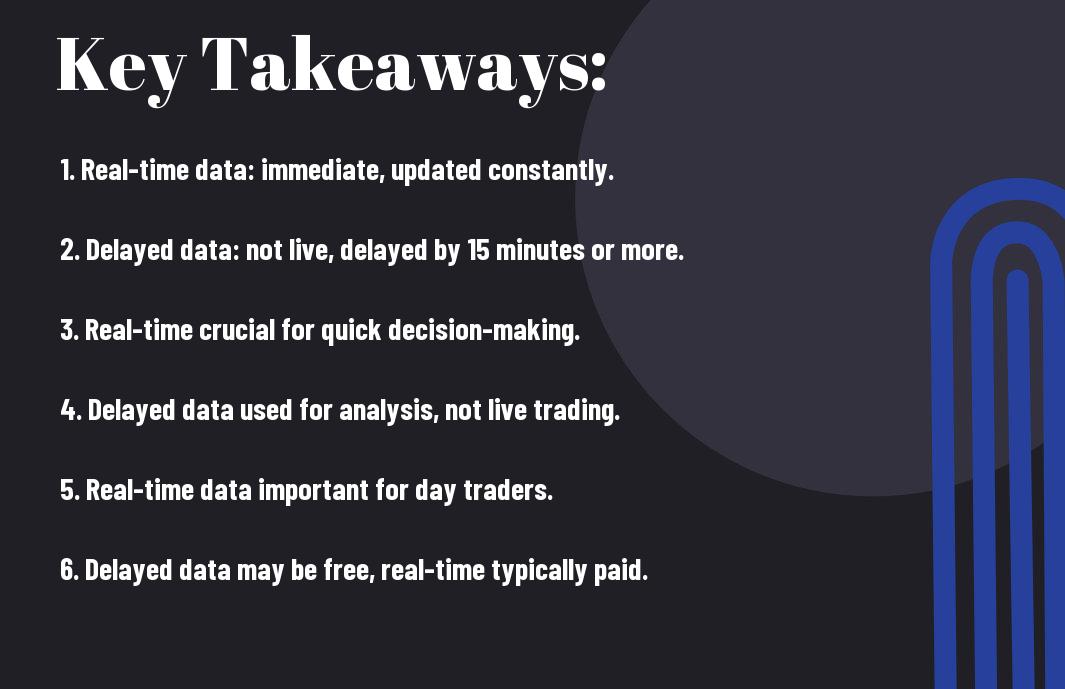
Key Takeaways:

  • Real-time market data: Provides up-to-the-second information on stock prices, trades, and market movements.
  • Delayed market data: Involves a slight time lag before the information is received, usually around 15 minutes.
  • Impact on trading: Traders who rely on real-time data make quicker and more informed decisions, while those using delayed data may experience missed opportunities or inaccurate market readings.

Defining Market Data

Real-Time Market Data

The world of trading moves at lightning speed, and having access to real-time market data is crucial for making informed decisions. An necessary component of trading tools, real-time market data provides you with up-to-the-second information on stock prices, volume, and other market indicators. This instantaneous data allows you to react quickly to market movements and execute trades with precision.

Delayed Market Data

For some traders, delayed market data may be sufficient for their trading strategy. This type of data is slightly older, typically delayed by 15 minutes or more from real-time. While not as immediate as real-time data, delayed market data can still give you a sense of market trends and price movements over a short period. It can be a cost-effective option for traders who do not require instant data and are looking to save on subscription fees.

Another important aspect to consider with delayed market data is that in fast-paced markets or during times of high volatility, even a delay of a few minutes can mean missing out on crucial information that could impact your trading decisions. It’s necessary to evaluate your trading style and goals to determine whether real-time or delayed market data is the right fit for you.

Importance of Timeliness in Trading

Impact on Trading Decisions

One of the most critical aspects of successful trading is making timely decisions based on the most current market information available. Real-time data provides you with up-to-the-second insights into stock prices, trends, and trading volumes, allowing you to react swiftly to market fluctuations. In contrast, delayed market data can hinder your ability to make informed decisions, potentially causing you to miss out on profitable trading opportunities or avoid losses.

Benefits of Real-Time Data

An vital benefit of using real-time data in your trading activities is the ability to capitalize on instantaneous market movements. With real-time data, you can quickly identify emerging trends, detect price fluctuations, and execute trades at the most opportune moments. This immediacy empowers you to react promptly to changing market conditions, giving you a competitive edge over traders relying on delayed information.

Real-time data also enhances your risk management strategies by providing you with a more accurate picture of market dynamics. By staying informed in real-time, you can set stop-loss orders, adjust your trading positions, and implement effective risk mitigation tactics promptly, reducing the likelihood of substantial losses in volatile market conditions.

Characteristics of Real-Time Market Data

Instantaneous Updates

Unlike delayed market data, real-time market data provides you with instantaneous updates on price changes, volume, and other imperative market information. This means that you are receiving the most current data available, allowing you to make informed trading decisions based on up-to-the-second information.

Live Feeds

Characteristics of real-time market data include live feeds that deliver information directly from the exchanges. These live feeds offer you a constant stream of data without any delay, ensuring that you are always informed about the latest market developments.

Plus, real-time market data allows you to see the bid and ask prices in real-time, giving you a more comprehensive view of the market depth and potential price movements.

Accurate Reflection of Market Conditions

One key characteristic of real-time market data is its ability to provide an accurate reflection of current market conditions. With real-time data, you can see price changes as they happen, enabling you to react quickly to market dynamics and seize trading opportunities.

The immediacy of real-time market data gives you a competitive edge in fast-moving markets, where split-second decisions can make a significant difference in your trading results.

Characteristics of Delayed Market Data

All What is Real-Time Market Data & How to Use It – Intrinio trading tools have access to market data, but not all of it is real-time. Delayed market data, as the name suggests, is not updated instantly and comes with its own set of characteristics that you should be aware of.

Time Lag

Characteristics of delayed market data include a time lag between when an event occurs in the market and when the data reflecting that event is delivered to you. This time lag can range from a few seconds to several minutes, depending on the source of the data and the platform you are using. While this data may still be useful for some types of analysis and trading strategies, it is important to understand that you are not receiving real-time information.

Historical Data

Historical data is another key feature of delayed market data. This type of data provides you with information on past price movements, volume, and other market activities. While historical data can be valuable for backtesting strategies and analyzing trends, it is important to remember that this information is based on past market conditions and may not accurately reflect current market dynamics.

Data

Delayed market data can be a cost-effective option for traders who do not require up-to-the-second information or for those who are looking to supplement real-time data with historical insights. It can also be a useful tool for educational purposes, allowing you to learn about market movements and trends without the pressure of real-time decision-making.

Limited Use in Fast-Moving Markets

Characteristics of delayed market data mean that it has limited use in fast-moving markets where split-second decisions can make a significant impact on your trading outcomes. When markets are volatile or experiencing rapid price fluctuations, delayed data may not provide you with the timely information you need to react effectively. In such situations, having access to real-time data becomes crucial for making informed and timely trading decisions.

Plus, it is vital to consider the nature of your trading activities and the level of accuracy and timeliness required for your strategies when choosing between delayed and real-time market data. Understanding the characteristics of both types of data will help you make more informed decisions and maximize your trading potential.

Applications of Real-Time Market Data

High-Frequency Trading

With The Power of Delayed Market Data well understood, the use of real-time market data in high-frequency trading strategies becomes crucial. High-frequency trading involves executing a large number of trades at extremely fast speeds based on pre-programmed algorithms. Real-time market data is necessary for these strategies as even the slightest delay can result in missed opportunities or potential losses. Traders rely on up-to-the-millisecond pricing information to make split-second decisions and capitalize on market movements.

Algorithmic Trading

To take advantage of market inefficiencies, algorithmic trading requires real-time market data to automate trading decisions based on predefined criteria. Algorithms can analyze vast amounts of data at lightning speed, identify patterns, and execute trades accordingly. Real-time data allows these algorithms to react swiftly to changing market conditions, enabling traders to stay competitive in today’s fast-paced markets.

Algorithmic trading has gained popularity due to its ability to remove emotions from trading, minimize human errors, and execute trades with precision and speed. By leveraging real-time market data, algorithmic trading strategies can adapt to market fluctuations and adjust trading positions accordingly to optimize trading outcomes.

Informed Investment Decisions

Trading with the latest real-time market data empowers you to make informed investment decisions based on the most up-to-date information available. Whether you are a day trader looking to capitalize on short-term price movements or a long-term investor assessing market trends, real-time data enhances your ability to react quickly to market developments and make well-informed investment choices.

This heightened level of data transparency can significantly impact your trading decisions, helping you to identify emerging opportunities, mitigate risks, and improve the overall performance of your investment portfolio. By staying informed with real-time market data, you can gain a competitive edge in the dynamic world of trading and investing.

Limitations and Challenges of Real-Time Market Data

Cost and Accessibility

Market data providers often charge a premium for real-time data compared to delayed data. This cost can be a barrier for individual traders, especially those starting out with limited funds. Additionally, accessing real-time market data may require specialized software or connections, which can further add to the expenses.

Information Overload

Real-time market data can overwhelm you with a continuous stream of information, making it challenging to filter out the noise and focus on what truly matters. With price quotes, market news, and various indicators constantly updating, it’s easy to get distracted or make rushed trading decisions based on short-term fluctuations rather than long-term trends.

Overload of information can lead to analysis paralysis, where you become so inundated with data that you struggle to make clear, rational trading choices. It’s vital to develop a strategy that helps you filter out irrelevant information and stay focused on your trading goals.

Technical Requirements

Challenges may arise with real-time market data due to the technical requirements involved in processing and interpreting the data. You need a stable internet connection, reliable hardware, and software that can handle the constant flow of data without lagging or crashing. Moreover, interpreting real-time data requires a certain level of expertise to avoid misinterpreting signals and making costly mistakes.

A solid understanding of the technology and tools used to access real-time market data is crucial for effectively utilizing this information in your trading strategy. It’s vital to stay updated on the latest developments in trading software and technology to ensure you can capitalize on the benefits of real-time data while navigating its challenges.

Summing up

On the whole, understanding the difference between real-time and delayed market data in trading tools is crucial for making informed decisions in the financial markets. Real-time data provides up-to-the-second information on price movements, while delayed data can lag behind by several minutes. This distinction can have a significant impact on the accuracy of your trading strategies and the timing of your trades.

By utilizing real-time data, you can react swiftly to market changes and capitalize on opportunities before they disappear. Alternatively, delayed data may lead to missed opportunities or inaccurate assessments of market conditions. Therefore, it is crucial to choose the right data feed for your trading needs to stay ahead of the curve and maximize your investment potential.

FAQ

Q: What is real-time market data in trading tools?

A: Real-time market data in trading tools refers to the instantaneous and live updating of stock prices, market depth, and other relevant trading information. This data is crucial for making split-second trading decisions based on the most current market conditions.

Q: What is delayed market data in trading tools?

A: Delayed market data in trading tools is information that is not updated in real-time. There is a short delay (usually around 15 minutes) between when the data is generated and when it is displayed to the trader. This can impact the accuracy of the information, especially for highly volatile markets.

Q: What are the differences between real-time and delayed market data in trading tools?

A: The main difference between real-time and delayed market data is the timing of the updates. Real-time data provides up-to-the-second information, allowing traders to react quickly to market changes. On the other hand, delayed data has a lag, which can result in missed trading opportunities or inaccurate decision-making due to outdated information.

How do automated trading tools work, and what are their benefits and risks

Automated trading tools, such as algorithms and bots, revolutionize the way you invest. By executing trades automatically based on pre-set criteria, these tools can help you take advantage of market opportunities 24/7. However, it’s crucial to understand the benefits and risks they entail. Let’s investigate into how these tools work, the advantages they offer, and the potential pitfalls you need to be aware of before incorporating them into your investment strategy.

Key Takeaways:

  • Automated trading tools utilize algorithms and pre-set conditions to execute trades automatically without the need for manual intervention.
  • Benefits:
    • Ability to execute trades at high speeds, reducing human error and enhancing efficiency.
    • 24/7 monitoring of the market to capture trading opportunities as soon as they arise.
    • Elimination of emotional biases in decision-making, leading to more disciplined trading.
  • Risks:
    • Potential for technical glitches or malfunctions that can lead to significant financial losses.
    • Over-optimization of trading strategies that may not perform well in changing market conditions.
    • Lack of human oversight can result in unforeseen consequences during volatile market conditions.

What are Automated Trading Tools

Definition and History

With the rise of technology in the financial world, automated trading tools have become increasingly popular. These tools, also known as algorithmic trading or black-box trading, are computer programs that execute pre-set trading instructions based on a variety of factors such as market conditions, price, and timing.

Types of Automated Trading Tools

Automated trading tools come in various forms, each serving a specific function in the world of trading. Some common types include:

  • Trading Bots: Programs that automatically execute trades on behalf of the user based on predefined strategies.
  • Algorithmic Trading Platforms: Software that allows users to create and backtest their trading algorithms.
  • Copy Trading Platforms: Platforms that enable users to copy the trades of successful traders automatically.
  • High-Frequency Trading (HFT) Tools: Tools that execute a large number of trades at high speeds to take advantage of small price discrepancies.
  • Quantitative Trading Tools: Tools that use mathematical models and statistical analysis to inform trading decisions.

After familiarizing yourself with these types of automated trading tools, you can determine which ones align best with your trading goals and preferences.

How Automated Trading Tools Work

Clearly, automated trading tools operate through a combination of algorithmic strategies, market analysis, data feeds, trade execution, and risk management processes. These tools are designed to make quantitative decisions based on predefined criteria, enabling traders to execute orders at optimal times and prices without human intervention.

Algorithmic Trading Strategies

To start with algorithmic trading strategies, these tools rely on mathematical models and statistical algorithms to identify trading opportunities. They can analyze vast amounts of data, detect patterns, and execute trades at high speeds, far beyond human capacity. By leveraging algorithms, automated tools can capitalize on market inefficiencies and trends to generate profits.

Market Analysis and Data Feeds

To investigate into market analysis and data feeds, automated trading tools gather real-time market data from various sources, including news feeds, social media platforms, and financial databases. These tools use this information to assess market conditions, identify trends, and predict future price movements. For instance, they can analyze market liquidity, volatility, and historical price data to make informed trading decisions.

For instance, automated trading tools can track multiple asset classes simultaneously and execute trades across various markets seamlessly, providing diversification and liquidity benefits. By utilizing data feeds effectively, these tools can adapt to changing market conditions and adjust trading strategies accordingly, helping to mitigate risks and maximize returns.

Trade Execution and Risk Management

For trade execution and risk management, automated trading tools can execute buy or sell orders instantly once predefined conditions are met, helping you capitalize on market opportunities efficiently. These tools can also implement risk management protocols, such as stop-loss orders and position sizing strategies, to protect your capital and minimize potential losses.

Feeds. Moreover, automated trading tools can offer features like back-testing capabilities, which allow you to assess the performance of trading strategies using historical data. This enables you to refine your strategies, optimize your trading approach, and improve your overall profitability in the long run.

Benefits of Automated Trading Tools

Increased Efficiency and Speed

With All About Automated Trading Systems (Strategies), you can experience increased efficiency and speed in executing trades. Automated trading tools can analyze markets and execute trades at a much faster pace than a human trader. They can react to market changes instantly, ensuring that you don’t miss out on profitable opportunities due to delays in decision-making.

Emotionless Trading Decisions

An automated trading system takes emotions out of the trading equation. When you rely on automated tools, you eliminate the potential for making impulsive decisions driven by fear or greed. Emotions often lead to poor trading choices, but automated systems follow predefined criteria without being influenced by emotions, leading to more disciplined and consistent trading.

Benefits: Emotionless trading decisions can prevent costly mistakes and help you stick to your trading strategy even during volatile market conditions. This disciplined approach can lead to more stable and potentially profitable trading results over time.

Diversification and Risk Management

Trading with automated tools allows you to diversify your trading strategies and spread risk across different assets or markets. You can engage in multiple trades simultaneously, managing your risk more effectively than if you were manually executing each trade. Automated systems can also implement risk management parameters automatically, protecting your capital from significant losses.

Trading: Diversification reduces the impact of potential losses in any single investment, helping you maintain a more balanced portfolio and minimizing overall risk exposure in your trading activities.

Scalability and Flexibility

Automated trading tools offer scalability, allowing you to expand your trading activities without being limited by time constraints. As your account grows, you can execute trades across multiple markets efficiently. Additionally, automated systems provide flexibility in adapting to different trading conditions, as they can be programmed to adjust to various market scenarios.

Automated: Scalability and flexibility in automated trading tools enable you to capitalize on a wider range of opportunities and optimize your trading performance according to changing market dynamics.

Risks of Automated Trading Tools

Over-Reliance on Technology

After learning about What is Automated Trading and How Do You Get Started? – IG, you may be tempted to rely entirely on automated trading tools for your investment decisions. However, it’s imperative to remember that these tools are based on algorithms and historical data, which may not always accurately predict future market movements. Automated trading systems can encounter technical glitches or errors that could lead to significant financial losses if you are not vigilant.

Market Volatility and Flash Crashes

Market volatility and sudden flash crashes can pose significant risks when using automated trading tools. These tools operate based on pre-set parameters and can execute trades rapidly in response to market fluctuations. However, during times of extreme volatility or unexpected events, such as flash crashes, these tools may not perform as expected and could lead to substantial losses.

The speed at which automated trading systems operate can exacerbate market volatility during turbulent times. High-frequency trading algorithms can amplify price swings, leading to potential market instability and increased risk for all traders, including those using automated tools.

Security and Cybersecurity Threats

Volatility in the market can also increase the risk of security and cybersecurity threats when using automated trading tools. As these tools rely on internet connectivity and access to trading platforms, they can be vulnerable to cyber attacks or system failures. It’s crucial to ensure that your automated trading system has robust security measures in place to protect your investment accounts and sensitive information from potential breaches.

It is recommended to regularly update and monitor your automated trading tools to detect any suspicious activity or unauthorized access. Additionally, using secure networks and implementing two-factor authentication can help mitigate the risks associated with security and cybersecurity threats in automated trading.

Lack of Human Judgment and Oversight

Tools that automate trading decisions may lack the human element of judgment and oversight. While algorithms can analyze vast amounts of data and execute trades swiftly, they may not always account for nuanced market conditions or unexpected events that human traders could discern. As a result, automated trading tools may overlook crucial factors that could impact your investment strategies and lead to adverse outcomes.

Overreliance on automated trading systems without human oversight can expose you to increased risks, especially during periods of market uncertainty or when navigating unfamiliar market conditions. It’s important to complement the use of automated tools with your own research, analysis, and strategic decision-making to ensure a balanced and informed approach to trading.

Choosing the Right Automated Trading Tool

Evaluating Trading Strategies and Performance

Trading strategies are the backbone of any automated trading tool. When choosing the right tool for you, consider the effectiveness of the strategies it employs. Look for tools that offer diverse and proven strategies to ensure flexibility and adaptability in different market conditions. Additionally, assess the historical performance of these strategies to gauge their success rates and potential risks.

Considering Fees and Commissions

Performance is key when evaluating automated trading tools, but don’t overlook the impact of fees and commissions on your profits. Some tools may have low upfront costs but charge high fees per trade, eating into your returns over time. It’s crucial to calculate the total cost of using a tool based on your trading frequency and investment size to make an informed decision.

With automated trading tools, even seemingly small fee differences can add up significantly over time, affecting your overall profitability. Consider how fees and commissions align with your trading goals and strategies to choose a tool that maximizes your returns.

Assessing Customer Support and Resources

Right

Strategies

Implementing Automated Trading Tools

Despite the complexity of automated trading tools, implementing them can be a straightforward process if you follow the right steps. Here are some key considerations to keep in mind as you set up and configure the tool.

Setting Up and Configuring the Tool

Tools for automated trading typically come with detailed instructions on how to set them up and configure them according to your trading strategy. You will need to input parameters such as entry and exit points, risk tolerance, and trade size to tailor the tool to your preferences. It’s vital to double-check these settings to ensure they align with your trading goals.

Integrating with Existing Trading Platforms

Platforms that offer automated trading tools usually provide integration options with popular trading platforms, making it easier for you to execute trades seamlessly. By connecting your automated tool with your existing trading platform, you can take advantage of its features while leveraging the automation capabilities of the tool.

Monitoring and Adjusting Performance

Once your automated trading tool is up and running, it’s crucial to monitor its performance regularly. You should track its activity, analyze the outcomes of trades executed by the tool, and assess whether it’s meeting your expectations. If necessary, you can adjust the settings or even deactivate the tool if it’s not delivering the desired results.

Conclusion

Considering all points, automated trading tools work by utilizing algorithms to execute trades on your behalf based on preset criteria. Their benefits include increased speed in executing trades, the ability to trade 24/7, and the removal of emotional decision-making. However, there are risks involved such as technical failures, incorrect algorithms, and the potential for market manipulation.

It is crucial to thoroughly research and understand automated trading tools before incorporating them into your trading strategy. By being aware of both their benefits and risks, you can make informed decisions to potentially improve your trading performance while minimizing the chances of unforeseen consequences.

FAQ

Q: How do automated trading tools work?

A: Automated trading tools work by using predefined rules and algorithms to automatically execute trades on behalf of the trader. These tools analyze market data, such as price movements and volume, to identify trading opportunities and then place trades without the need for manual intervention. Traders can set their desired parameters, risk tolerance, and trading strategies, and the automated trading tool will execute trades based on these settings.

Q: What are the benefits of using automated trading tools?

A: The benefits of using automated trading tools include:

  • Efficiency: Automated trading tools can execute trades much faster than a human trader, enabling them to take advantage of market opportunities in real-time.
  • Emotionless trading: Automated trading tools eliminate the psychological aspect of trading, such as fear and greed, which can lead to inconsistent decision-making.
  • Diversification: Automated trading tools can trade across multiple markets, assets, and strategies simultaneously, allowing for better diversification of investment capital.
  • Backtesting: Automated trading tools can be backtested using historical data to evaluate the effectiveness of a trading strategy before risking real money.

Q: What are the risks associated with using automated trading tools?

A: The risks associated with using automated trading tools include:

  • Technical failures: Automated trading tools are susceptible to technical glitches, connectivity issues, and system failures that can result in missed opportunities or erroneous trades.
  • Over-optimization: Traders may fall into the trap of over-optimizing their trading strategies based on past performance, which may not necessarily translate to future success in a dynamic market environment.
  • Market risks: Automated trading tools are exposed to market risks, such as sudden price movements, volatility, and geopolitical events, which can result in substantial losses if not properly managed.
  • Dependency on algorithms: Traders may become overly reliant on automated trading tools and neglect to monitor market conditions or adapt to changing trends, leading to losses in unfavourable market conditions.

What are some of the best technical analysis tools available for traders

With a plethora of options to choose from, navigating the world of technical analysis tools can be overwhelming. However, fear not, as we examine into trading tools to illuminate the path ahead. By arming yourself with the right instruments, you can effectively analyze market trends, identify patterns, and make informed trading decisions. From moving averages and relative strength index (RSI) to Fibonacci retracements and Bollinger Bands, discover the powerful arsenal at your disposal in the dynamic world of trading.

Key Takeaways:

  • Moving Averages: Moving averages are popular tools for identifying trends and potential trend reversals in the market. Traders often use simple, exponential, or weighted moving averages to make informed trading decisions.
  • RSI (Relative Strength Index): The RSI is a momentum oscillator that measures the speed and change of price movements. It helps traders determine overbought or oversold conditions in a market, indicating potential reversal points.
  • Bollinger Bands: Bollinger Bands consist of a simple moving average and two standard deviations plotted above and below it. They help traders identify volatility and potential price breakouts or pullbacks based on the width of the bands.

Identifying Trends

One popular way to identify trends in the market is by using technical analysis tools such as moving averages.

Moving Averages

One tool that traders often use to identify trends is the moving average. A moving average smooths out price data to create a single flowing line, making it easier to identify the direction of the trend. The most common types of moving averages are simple moving averages (SMA) and exponential moving averages (EMA). SMAs give equal weight to each data point, while EMAs give more weight to recent data points. By analyzing how the current price compares to the moving average, you can determine whether the trend is bullish (upward) or bearish (downward).

Relative Strength Index (RSI)

Relative Strength Index (RSI) is another popular tool for identifying trends and potential reversal points. RSI measures the speed and change of price movements and ranges from 0 to 100. A reading above 70 indicates that a stock is overbought and may be due for a trend reversal, while a reading below 30 indicates that a stock is oversold and may be due for a bounce back. By using RSI in conjunction with other technical indicators, you can confirm trends and make more informed trading decisions.

With Relative Strength Index (RSI), you can also spot divergences between the indicator and price action, which can be a powerful signal of an impending trend reversal. For example, if the price is making higher highs while the RSI is making lower highs, it could indicate that the current trend is losing steam and a reversal may be on the horizon. Paying attention to these subtle signals can help you stay ahead of the market and make more profitable trades.

Chart Patterns

Clearly, chart patterns are vital tools for technical analysis, helping you identify potential trend reversals or continuations in the market. By recognizing patterns in price movements, you can make more informed trading decisions.

Head and Shoulders

Shoulders, one of the most widely recognized chart patterns, consists of three peaks: a higher peak (head) flanked by two lower peaks (shoulders). This pattern indicates a potential trend reversal from bullish to bearish.

Inverse Head and Shoulders

Head, on the other hand, is the inverse of the Head and Shoulders pattern, signaling a possible trend reversal from bearish to bullish. This pattern is formed by three lows, with the lowest low (head) between two higher lows (shoulders).

The Inverse Head and Shoulders pattern is a bullish reversal pattern that suggests a shift from a downward trend to an upward trend. It typically indicates a buying opportunity as prices are expected to rise after the pattern is confirmed.

Triangles

The Triangles pattern is another commonly used chart pattern that can help you predict potential breakouts or breakdowns in the market. This pattern is formed by converging trendlines, indicating a period of consolidation before the price moves in the direction of the breakout.

Inverse Triangles, on the other hand, suggest a potential reversal in the current trend. These patterns are characterized by converging trendlines, with the price expected to break out in the opposite direction from the previous trend.

Indicators

Keep 9 Best Tools For Trading (Technical Analysis … in mind as you explore different technical analysis tools. Indicators are crucial for traders as they help in analyzing market trends and making informed decisions.

Bollinger Bands

Bollinger Bands are a popular indicator used by traders to analyze volatility and identify potential buy or sell signals in the market. These bands consist of a simple moving average line and two standard deviation lines placed above and below it. When the price touches or crosses the outer bands, it suggests overbought or oversold conditions, signaling a possible reversal in the trend.

Stochastic Oscillator

Stochastic Oscillator is another widely used momentum indicator that helps you determine overbought or oversold conditions in the market. This indicator compares the closing price of a security to its price range over a specific period, indicating the speed and direction of price movements. Stochastic Oscillator values range from 0 to 100, with readings above 80 considered overbought and readings below 20 considered oversold.

This tool helps you gauge the strength of a trend and potential reversal points, allowing you to make more informed trading decisions.

MACD (Moving Average Convergence Divergence)

The MACD is a versatile indicator that combines moving averages to provide signals for trend direction, momentum, and potential trade entry and exit points. It consists of two lines – the MACD line and the signal line. When the MACD line crosses above the signal line, it indicates a bullish trend, while a crossover below suggests a bearish trend.

A deeper understanding of how the MACD works can help you identify trends early and capitalize on profitable trading opportunities.

Volume Analysis

Many technical analysis tools rely on volume data to provide valuable insights into market trends and price movements. Volume analysis can help you gauge the strength of a price move and confirm the validity of a trend. By using volume indicators, you can make more informed trading decisions and improve your overall trading strategy.

On Balance Volume (OBV)

An imperative volume indicator is the On Balance Volume (OBV), which measures buying and selling pressure. OBV adds the volume on up days and subtracts the volume on down days. By analyzing the OBV line, you can see the cumulative volume flow, which can confirm price trends. If the OBV line is trending in the same direction as the price, it suggests a strong trend.

Accumulation/Distribution Line

With the Accumulation/Distribution Line, you can see the flow of money into or out of a security. The indicator takes into account both price and volume to provide a more comprehensive picture of market activity. The line trending up indicates accumulation (buying pressure), while a downward trend suggests distribution (selling pressure).

Plus,

Money Flow Index (MFI)

To gauge the momentum of price movements, you can use the Money Flow Index (MFI). This oscillator combines price and volume data to measure the buying and selling pressure in a security. The MFI ranges from 0 to 100 and is often used to identify overbought or oversold conditions. A high MFI value suggests an overbought market, while a low value indicates an oversold market.

Understanding volume analysis tools is crucial for assessing market trends and making informed trading decisions. By incorporating volume indicators like OBV, Accumulation/Distribution Line, and MFI into your technical analysis, you can gain a deeper understanding of market dynamics and improve your trading strategy.

Candlestick Patterns

After conducting technical analysis, you may come across various candlestick patterns that can provide insights into market trends. These patterns are formed by the open, high, low, and close prices of an asset over a specific period. By understanding these patterns, you can make more informed trading decisions.

Hammer

For the Hammer candlestick pattern, the opening and closing prices are near the high of the day, while the asset traded lower during the day before buyers pushed the price back up. This pattern suggests a potential bullish reversal, indicating that the market may be shifting from a downtrend to an uptrend.

Shooting Star

One common candlestick pattern you may encounter is the Shooting Star. This pattern occurs when the price moves significantly higher after the open but closes near the open. It looks like an inverted hammer and is a bearish signal, indicating a potential trend reversal from an uptrend to a downtrend.

For instance, if you spot a Shooting Star pattern after a prolonged uptrend in the market, it could be a sign that the uptrend is losing momentum, and a potential reversal may be on the horizon.

Engulfing Patterns

Any trader familiar with candlestick patterns should be aware of Engulfing Patterns. These consist of two candles where the body of the second candle completely engulfs the body of the first candle. A bullish engulfing pattern forms at the end of a downtrend and signals a potential reversal to the upside. Conversely, a bearish engulfing pattern at the end of an uptrend suggests a possible trend reversal to the downside.

With a good understanding of Engulfing Patterns, you can identify key reversal points in the market and adjust your trading strategy accordingly.

Advanced Tools

All traders looking to enhance their technical analysis skills should explore advanced tools that can provide deeper insights into market movements. For a comprehensive overview of some of the best technical analysis tools available, you can refer to What Are Technical Analysis Tools For Trading?.

Fibonacci Retracement

Any trader familiar with technical analysis must have come across Fibonacci retracement levels. This tool is based on the idea that markets tend to retrace a portion of a previous trend before continuing in the same direction. By plotting key Fibonacci levels, you can identify potential support and resistance levels where price may stall or reverse.

Pros Cons
Helps identify potential reversal points Subjective nature of selecting swing points
Provides clear levels for setting stop-loss and take-profit orders Not always precise in predicting price movements

Elliott Wave Theory

On your journey to mastering technical analysis, you may encounter Elliott Wave Theory, which posits that market prices unfold in repetitive patterns attributed to investor psychology. This tool divides price movements into impulsive waves (trend) and corrective waves (counter-trend), offering a framework to analyze market cycles and predict future price action.

Elliott Wave Theory can be a powerful tool for identifying potential turning points and forecasting price targets based on the wave count and structure. By understanding the psychology behind market cycles, you can gain a deeper insight into market dynamics and make more informed trading decisions.

Harmonic Patterns

For traders seeking advanced technical analysis tools, harmonic patterns present a unique way to predict future price movements based on geometric price patterns and Fibonacci levels. These patterns, such as the Gartley, Butterfly, and Bat patterns, offer a systematic approach to identifying potential reversal zones with high probability trading opportunities.

Understanding harmonic patterns involves recognizing specific price formations that indicate potential trend reversals or continuation patterns. By combining Fibonacci ratios with geometric patterns, you can pinpoint areas where price is likely to reverse, allowing you to enter trades with favorable risk-reward ratios.

Conclusion

With these considerations in mind, you now have a better understanding of some of the best technical analysis tools available for traders. Each tool has its unique features and benefits, so it’s crucial to experiment with different ones to find the ones that suit your trading style and preferences. Recall, technical analysis is just one aspect of trading, so it’s crucial to use these tools in conjunction with fundamental analysis and risk management strategies for successful trading.

By incorporating these technical analysis tools into your trading routine, you can enhance your decision-making process and potentially improve your trading outcomes. Stay curious and keep learning about new tools and techniques to stay ahead in the dynamic and ever-evolving world of trading.

FAQ

Q: What are technical analysis tools?

A: Technical analysis tools are instruments or charts used by traders to analyze historical price movements and make informed decisions about future price movements. These tools help traders identify trends, patterns, and potential entry or exit points in the market.

Q: What are some popular technical analysis tools used by traders?

A: Some popular technical analysis tools used by traders include moving averages, Relative Strength Index (RSI), MACD (Moving Average Convergence Divergence), Bollinger Bands, Fibonacci retracement levels, and Ichimoku Cloud. Each of these tools provides unique insights into price movements and can be used in conjunction to form a comprehensive trading strategy.

Q: How can traders benefit from using technical analysis tools?

A: Traders can benefit from using technical analysis tools in several ways, such as identifying potential entry and exit points, determining trend directions, setting stop-loss levels, and managing risk effectively. By utilizing these tools, traders can make more informed and strategic trading decisions, ultimately improving their chances of success in the market.

Skip to content