What are the advantages of using marketing automation tools

Just imagine having a marketing assistant that works tirelessly to streamline your campaigns, nurture leads, and boost your sales productivity. By incorporating marketing automation tools into your strategy, you can do just that and more. These tools offer a plethora of benefits to help you reach your target audience more effectively and efficiently. Find out why using marketing automation for your business can be a game-changer by clicking Why Use Marketing Automation For Your Business?.

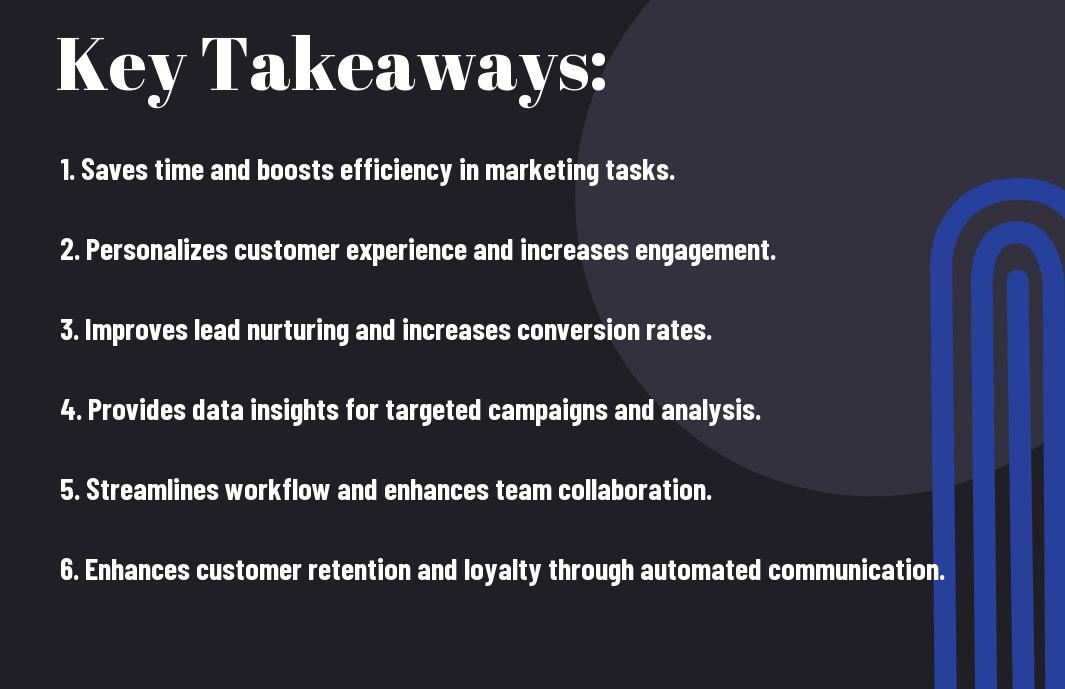
Key Takeaways:

  • Efficiency: Marketing automation tools streamline tasks, save time, and increase efficiency by automating repetitive processes.
  • Personalization: These tools enable businesses to create targeted and personalized marketing campaigns based on customer behavior and interactions, leading to higher engagement and conversions.
  • Data-driven decisions: Marketing automation tools provide valuable insights and analytics, allowing businesses to make informed decisions, optimize strategies, and improve overall performance.

Increased Efficiency

The use of marketing automation tools can significantly increase your efficiency in various ways. By automating repetitive tasks, you can focus on more strategic aspects of your marketing efforts. If you want to dive deeper into how marketing automation can benefit your business, check out What Is Marketing Automation? – Strategies, Benefits, and ….

Automation of Repetitive Tasks

An vital advantage of marketing automation tools is the ability to streamline and automate repetitive tasks such as sending out emails, posting on social media, and lead nurturing. This automation saves you time and ensures that these routine activities are carried out consistently and without errors, ultimately improving your overall efficiency.

Reduced Manual Labor

On top of automating repetitive tasks, marketing automation tools also help reduce manual labor by allowing you to set up workflows and triggers that automatically respond to customer actions or events. For instance, you can create automated email campaigns that are triggered based on specific actions taken by leads on your website or responses to previous emails. This eliminates the need for manual intervention in every step of the customer journey, saving you valuable time and resources.

Enhanced Personalization

You may have heard that using marketing automation tools can significantly enhance personalization in your marketing efforts. This means tailoring your messaging and content to individual customers based on their behavior, preferences, and interactions with your brand. Let’s explore how this enhanced personalization can benefit your marketing strategy.

Tailored Customer Experiences

On your end, utilizing marketing automation tools allows you to create targeted campaigns that speak directly to the needs and interests of your customers. By analyzing data such as purchase history, website visits, and email engagement, you can segment your audience and deliver personalized messages that resonate with each group. This tailored approach not only increases customer engagement but also fosters a sense of loyalty and connection to your brand.

Dynamic Content Generation

One of the key features of marketing automation tools is the ability to generate dynamic content that adapts to each individual customer. By setting up rules and triggers, you can deliver unique content to different segments of your audience based on their behavior. This could include personalized product recommendations, targeted promotions, or relevant blog articles. The dynamic nature of this content ensures that your customers receive information that is timely and valuable to them, increasing the likelihood of conversion.

The dynamic content generation aspect of marketing automation tools is especially powerful in lead nurturing campaigns. By delivering the right content to the right person at the right time, you can guide potential customers through the sales funnel, ultimately leading to increased conversions and revenue for your business.

Improved Lead Generation

For a business, lead generation is crucial for driving growth and increasing sales. Marketing automation tools can significantly improve your lead generation efforts by helping you target leads more effectively, nurture them through the sales funnel, and qualify them based on their behaviors and interests.

Targeted Lead Nurturing

To enhance your lead generation process, marketing automation tools allow you to create targeted lead nurturing campaigns that deliver personalized content to your leads based on their interactions with your website, emails, and other marketing channels. By analyzing your leads’ behavior and interests, you can send them relevant and timely information that guides them towards making a purchase decision.

Qualification and Scoring

An necessary feature of marketing automation tools for lead generation is the ability to qualify and score leads automatically. By setting criteria for lead scoring based on demographics, online behaviors, and engagement levels, you can prioritize and focus on leads that are more likely to convert into customers. This not only saves you time and resources but also ensures that you are targeting the right prospects for your business.

Automating the qualification and scoring process helps you identify high-quality leads efficiently, allowing your sales team to follow up with them promptly and with the right information. By streamlining this process, you can increase the conversion rate of your leads and ultimately drive more revenue for your business.

Better Data Analysis

All 14 Benefits of Marketing Automation You Need to Know can greatly enhance your marketing efforts, and one of the key advantages is the ability to engage in better data analysis. With marketing automation tools, you have access to a wealth of data that can provide invaluable insights into your audience’s behavior, preferences, and interactions with your brand.

Real-time Performance Tracking

On your marketing automation platform, you can track the performance of your campaigns in real time. This means that you can see how your emails, social media posts, and other marketing initiatives are performing as soon as they are launched. By analyzing this data in real time, you can quickly identify what is working well and what may need adjustments, allowing you to optimize your marketing strategies on the go.

Data-Driven Decision Making

The data provided by marketing automation tools empowers you to make data-driven decisions. The insights gathered from your campaigns allow you to understand your audience better, tailor your messaging to their preferences, and personalize your marketing efforts. By leveraging this data, you can make informed decisions that are more likely to resonate with your target audience and drive meaningful results for your business.

It enables you to create more targeted and personalized marketing campaigns that are tailored to the specific needs and preferences of your audience. By analyzing the data generated by your automation tools, you can gain a deeper understanding of your customers’ behaviors, preferences, and interests. This information allows you to craft more effective marketing campaigns that are more likely to engage your audience and drive conversions.

Cost Savings

Despite the initial investment, using marketing automation tools can result in significant cost savings for your business. Let’s explore into how these tools can help you reduce costs and optimize your resources effectively.

Reduced Labor Costs

Any marketing campaign requires time and effort to execute effectively. By using automation tools, you can streamline repetitive tasks such as email marketing, social media posting, and lead nurturing. This automation significantly reduces the need for manual intervention, saving your team valuable time that can be redirected to more strategic and creative tasks. As a result, you can achieve more with a leaner team, ultimately cutting down on labor costs.

Optimized Resource Allocation

An optimized allocation of resources is important for the success of any marketing campaign. With automation tools, you can analyze data more efficiently, gain insights into customer behavior, and track the performance of your campaigns in real time. This visibility allows you to allocate your budget and resources more effectively, focusing on strategies and channels that deliver the best results. By optimizing your resource allocation, you can maximize the impact of your marketing efforts while minimizing unnecessary spending.

With strategic planning and the right automation tools in place, you can achieve cost savings while improving the efficiency and effectiveness of your marketing campaigns. By leveraging these tools to reduce labor costs and optimize your resource allocation, you can propel your business towards greater success in the competitive digital landscape.

Scalability and Flexibility

Easy Adaptation to Changing Markets

To stay competitive in today’s ever-evolving business landscape, you must be able to adapt quickly to changing market conditions. Marketing automation tools provide you with the flexibility to adjust your strategies in real-time based on market trends and consumer behaviors. This agility allows you to target your audience more effectively and stay ahead of the curve in a fast-paced environment.

Seamless Integration with Existing Systems

With marketing automation tools, you can seamlessly integrate your existing systems and technologies, streamlining processes and increasing efficiency. Whether you use customer relationship management (CRM) software, social media platforms, or email marketing tools, automation solutions can work in harmony with your current setups. This integration not only saves you time and resources but also ensures a smooth transition to automated marketing workflows.

Integration with your existing systems is crucial for maximizing the benefits of marketing automation tools. By connecting all your technology platforms, you can create a unified and cohesive marketing strategy that delivers consistent messaging across all channels. This level of integration not only enhances your overall marketing efforts but also helps you achieve a higher return on investment (ROI) by leveraging the data and insights from various systems.

Final Words

As a reminder, using marketing automation tools can significantly benefit your business by saving you time and resources, improving customer engagement, and increasing overall efficiency. By automating repetitive tasks, you can focus on developing more effective marketing strategies and building stronger relationships with your customers. This can lead to higher conversion rates, increased revenue, and long-term business growth.

So, if you haven’t already explored the world of marketing automation tools, now is the time to consider incorporating them into your marketing strategy. Embracing these tools can give you a competitive edge in today’s fast-paced digital landscape, allowing you to achieve your marketing goals more effectively and efficiently. Take the first step towards streamlining your marketing processes and maximizing your business potential with the power of automation.

Q: What are the advantages of using marketing automation tools?

A: Marketing automation tools offer several advantages including time savings, increased efficiency, and improved targeting. These tools allow businesses to automate repetitive marketing tasks, such as email campaigns and social media posting, saving time and resources.

Q: How do marketing automation tools help improve efficiency?

A: Marketing automation tools streamline the marketing process by automating tasks that would otherwise require manual intervention. By setting up workflows and triggers, businesses can ensure that the right message is delivered to the right audience at the right time, resulting in improved efficiency and effectiveness.

Q: In what ways do marketing automation tools enhance targeting?

A: Marketing automation tools use data and analytics to segment audiences based on behaviors, preferences, and demographics. This enables businesses to deliver personalized messages to specific segments, resulting in higher engagement and conversions. Additionally, these tools often include lead scoring and nurturing features to help businesses identify and prioritize high-quality leads.
How can online reviews and testimonials impact a business's reputation

There’s a powerful tool that can make or break your business’s reputation – online reviews and testimonials. As explored in The Impact of Customer Reviews on Small Businesses, these digital word-of-mouth opinions hold significant weight in the eyes of potential customers. Find out how positive reviews can boost your credibility, while negative ones can tarnish your brand image. Discover the strategies to harness this influential force to your advantage.

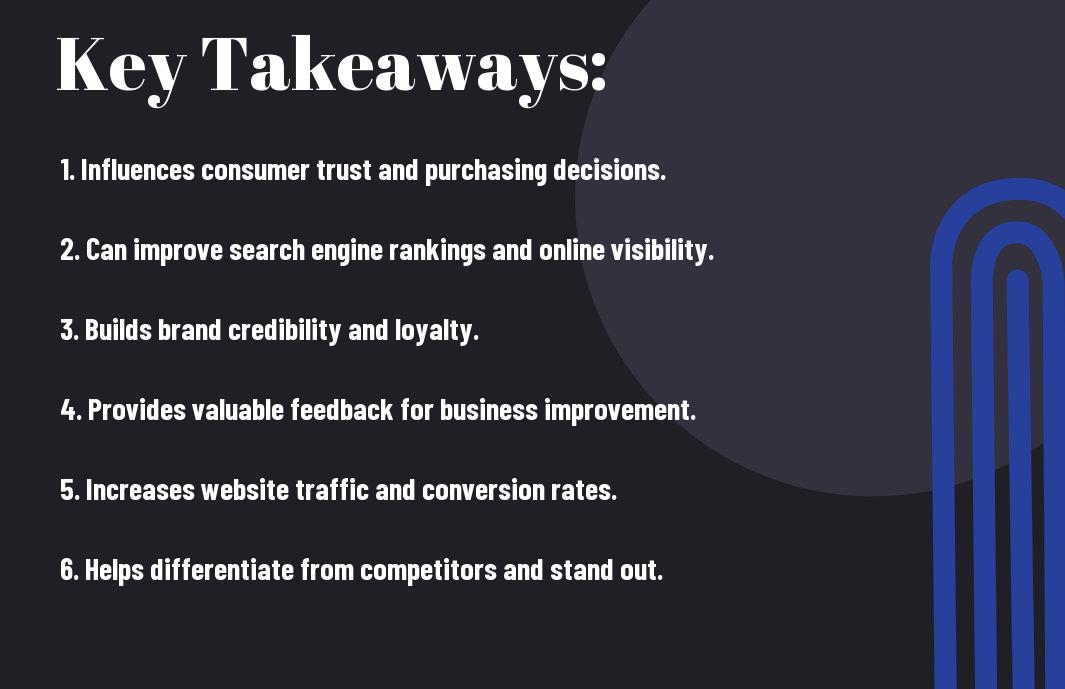
Key Takeaways:

  • Build Trust: Online reviews and testimonials can help build trust with potential customers by providing social proof of a business’s products or services.
  • Influence Purchase Decisions: Positive reviews and testimonials can influence potential customers’ purchase decisions, leading to higher conversion rates and increased sales.
  • Improve Reputation: Maintaining a positive online reputation through reviews and testimonials can enhance a business’s overall reputation, attracting more customers and fostering loyalty.

The Power of Social Proof

Before delving into the impact online reviews and testimonials can have on a business’s reputation, it’s crucial to understand the power of social proof. In a digital world where consumers increasingly rely on the experiences and opinions of others to make purchasing decisions, social proof plays a significant role in shaping perceptions of a brand.

The Psychology Behind Online Reviews

Behind the scenes, the psychology behind online reviews is fascinating. Studies show that when you see numerous positive reviews about a product or service, it triggers a cognitive bias known as social proof. This phenomenon leads you to believe that since so many others have had a positive experience, you are likely to have a similar outcome. Essentially, your brain interprets these reviews as a form of validation, making you more inclined to trust the business.

How Testimonials Build Trust

Reviews and testimonials go hand in hand in building trust with potential customers. While reviews provide an overall picture of what the majority thinks about a business, testimonials offer a more personal touch. When you read a detailed account of someone else’s positive experience with a company, it creates a sense of authenticity and credibility. This personalized storytelling resonates with you on a deeper level, establishing an emotional connection and solidifying your trust in the brand.

Power of social proof lies in its ability to humanize a business and create a sense of transparency. When you see real people sharing their genuine experiences and satisfaction with a product or service, it reinforces your belief that the company is trustworthy and reliable. Testimonials serve as powerful tools in influencing your perception and ultimately, your decision-making process.

The Impact on Reputation

Clearly, online reviews and testimonials can greatly influence your business’s reputation. According to 9 Ways Online Reviews Affect Your Business’ Reputation, positive reviews play a crucial role in boosting credibility. When potential customers see glowing testimonials about your products or services, they are more likely to trust your brand. Positive reviews not only enhance your reputation but also increase the likelihood of converting leads into loyal customers. Encouraging satisfied customers to leave positive feedback can significantly impact how others perceive your business.

Positive Reviews: Boosting Credibility

Positive online reviews have the power to enhance your credibility and build trust with your target audience. When customers see positive feedback from others, they are more likely to view your business as reputable and reliable. These glowing testimonials can help set you apart from competitors and attract new customers who are looking for social proof before making a purchase decision.

Negative Reviews: Mitigating Damage

The impact of negative reviews on your business’s reputation can be detrimental if not handled properly. When potential customers come across negative feedback, they may question the quality of your products or services. However, the way you respond to negative reviews can make a significant difference.

It’s important to address negative reviews promptly and professionally. By acknowledging the issue, offering a solution, and showing empathy towards the unhappy customer, you can demonstrate to both the reviewer and potential customers that you care about customer satisfaction. Handling negative reviews with transparency and integrity can help mitigate the damage to your reputation and even turn a negative experience into a positive one.

The Role of Online Platforms

Once again, the digital landscape proves to be a powerful arena for shaping a business’s reputation. Online platforms play a crucial role in amplifying customer feedback and influencing public perception. These platforms serve as virtual stages where your business can shine or stumble based on how customers rate and review their experiences with your products or services.

Review Websites: Yelp, Google, and Beyond

Websites like Yelp and Google have become go-to destinations for consumers seeking insights into businesses before making purchasing decisions. These platforms aggregate reviews from a wide range of customers, providing an overview of the collective sentiment towards your business. Positive reviews can boost your credibility and attract new customers, while negative reviews can raise red flags and deter potential clients.

Social Media: Where Reviews Meet Conversations

On social media platforms like Facebook, Twitter, and Instagram, reviews transcend the traditional one-way communication style seen on review websites. Here, reviews are not just statements but entry points for conversations. Customers can share their experiences, ask questions, and engage with your business in real-time. This dynamic interaction humanizes your brand and allows you to address feedback promptly, demonstrating your commitment to customer satisfaction.

Social media platforms also enable user-generated content like photos and videos, adding a personalized touch to reviews. When customers see their peers endorsing your business or sharing positive experiences, it can create a powerful ripple effect, influencing their purchasing decisions and amplifying the reach of your brand.

Managing Online Reviews

Responding to Negative Feedback

Not all online reviews will be glowing testimonials of your business. Negative feedback can be disheartening but how you respond to it can make a significant impact on your reputation. Bear in mind, potential customers are watching how you handle criticism. It’s crucial to address negative reviews promptly and professionally.

Encouraging Happy Customers to Share

Happy customers are your best advocates, and their positive reviews can strengthen your online reputation. Encourage satisfied customers to share their experiences online by making it easy for them to leave reviews. You can send follow-up emails thanking them for their business and kindly requesting feedback. Bear in mind, word-of-mouth advertising is powerful, and online reviews are the modern version of it.

The more positive reviews you have, the more credibility you will build with potential customers. Consider offering incentives for customers to leave reviews, such as discounts on future purchases or entry into a giveaway. Just ensure that the incentives do not compromise the authenticity of the reviews.

The Authenticity Factor

Unlike traditional marketing strategies, online reviews and testimonials have the power to establish the authenticity of a business in the eyes of potential customers. Regarding building trust and credibility, authenticity is key. Customers today are savvier than ever and can easily spot fake reviews or testimonials that seem too good to be true.

Genuine Testimonials vs. Fake Reviews

Fake reviews can significantly damage a business’s reputation. In an attempt to boost their ratings artificially, some businesses resort to creating fake reviews or testimonials. However, these deceptive practices can backfire and lead to distrust among consumers. Genuine testimonials, on the other hand, serve as a powerful tool to showcase positive customer experiences and build credibility for your business.

Transparency in Review Collection

Review platforms that prioritize transparency in their review collection process are valuable for both businesses and consumers. By providing a clear and unbiased platform for customers to share their feedback, these platforms ensure that the reviews are authentic and trustworthy. When you are looking for reviews to inform your purchasing decisions, opt for platforms that have strict measures in place to prevent fake reviews.

A transparent review collection process not only benefits consumers but also helps businesses in improving their products and services based on genuine feedback. By encouraging honest and unbiased reviews, businesses can foster trust with their customer base and demonstrate their commitment to providing quality products or services.

Measuring the Effectiveness

Quantifying the Impact on Sales

The key to measuring the effectiveness of online reviews and testimonials on your business’s reputation lies in quantifying their impact on sales. The data you gather from analyzing the correlation between positive reviews and an increase in sales can provide valuable insights into the direct influence these reviews have on consumer behavior.

Analyzing Review Sentiment and Trends

For a deeper understanding of how online reviews and testimonials shape your business’s reputation, you can research into analyzing the sentiment and trends within the feedback. By examining the language used in reviews and tracking patterns over time, you can uncover valuable information about customer perceptions and preferences.

Review sentiment analysis tools can help you categorize feedback as positive, negative, or neutral, allowing you to identify areas for improvement and capitalize on strengths. Additionally, by monitoring trends in the types of feedback you receive, you can adapt your business strategies to better meet customer expectations and enhance your reputation.

Conclusion

On the whole, online reviews and testimonials can have a significant impact on your business’s reputation. Positive reviews can enhance your credibility and attract new customers, while negative reviews can deter potential clients and damage your brand image. It is crucial to actively monitor and manage your online reputation by responding to reviews, addressing any concerns, and proactively seeking feedback to continuously improve your products and services. Remember that in the digital age, a strong online reputation can be a powerful asset for your business.

FAQ

Q: How can online reviews affect a business’s reputation?

A: Online reviews can significantly impact a business’s reputation as they provide valuable insights into the quality of products or services offered. Positive reviews can enhance credibility, attract new customers, and build trust, while negative reviews can deter potential customers and damage the brand’s image.

Q: Why are customer testimonials important for a business’s reputation?

A: Customer testimonials offer social proof and authenticity to a business’s reputation. They showcase real experiences from satisfied customers, which can influence others to choose your business over competitors. Testimonials act as powerful endorsements that validate the quality and trustworthiness of your products or services.

Q: How can businesses leverage online reviews and testimonials to enhance their reputation?

A: Businesses can leverage online reviews and testimonials by actively monitoring and responding to feedback, encouraging satisfied customers to leave positive reviews, and displaying testimonials prominently on their website or marketing materials. By showcasing authentic and positive experiences from customers, businesses can strengthen their reputation and attract new clientele.

What strategies can be used to increase website conversion rates

Most businesses strive to improve their website conversion rates, as it directly impacts their success online. To achieve this, you need to implement strategic tactics that engage and persuade your visitors effectively. In this blog post, we will explore various proven strategies that you can utilize to optimize your website for higher conversion rates. By implementing these tips, you can enhance your online presence and maximize your website’s potential for success.

Key Takeaways:

  • User Experience Optimization: Improving website usability, navigation, and overall user experience can lead to higher conversion rates.
  • Call-to-Action Optimization: Clear, compelling, and strategically placed call-to-action buttons can prompt visitors to take desired actions on the website.
  • A/B Testing: Testing different website elements, such as headlines, images, and layouts, can help identify what resonates best with the target audience and improve conversion rates.

Identifying Conversion Rate Obstacles

Analyzing Website Analytics

Obstacles can arise from various factors that hinder your website’s conversion rates. One crucial step in identifying these obstacles is analyzing your website analytics. By delving into metrics such as bounce rates, time spent on each page, and conversion funnels, you can pinpoint where potential barriers lie in the user journey.

Conducting User Experience Research

With respect to understanding why your website may not be converting as expected, conducting user experience research is important. This can involve usability testing, surveys, and user interviews to gain valuable insights into how visitors interact with your site. By observing firsthand how users navigate your website and identifying pain points they encounter, you can effectively address these obstacles and optimize the overall user experience.

Understanding the behavior and preferences of your website visitors is key to improving conversion rates. By actively engaging with users and seeking their feedback, you can uncover valuable insights that will help you tailor your website to better meet their needs. Ultimately, by addressing the obstacles that are inhibiting conversions, you can create a more user-friendly and engaging experience that encourages visitors to take desired actions.

Optimizing Website Design

Now, when it comes to increasing website conversion rates, optimizing your website design is key. A well-designed website not only attracts visitors but also converts them into customers. Let’s explore some strategies to enhance your website design for better conversion rates.

Streamlining Navigation and Information Architecture

An important aspect of optimizing your website design is streamlining navigation and information architecture. Confusing navigation and a cluttered layout can frustrate visitors and cause them to leave your site without taking any action. By organizing your content logically, simplifying menus, and providing clear calls-to-action, you can guide visitors through your site effectively and improve conversion rates.

Enhancing Visual Appeal and Branding

One way to increase website conversion rates is by enhancing the visual appeal and branding of your site. A visually appealing website can capture visitors’ attention and make a strong impression. Consistent branding, including your logo, color scheme, and typography, helps build credibility and trust with your audience. Additionally, using high-quality images and videos can further engage visitors and encourage them to explore your products or services.

One effective strategy to enhance visual appeal and branding is to ensure that your website reflects your company’s identity and values. Your website should visually communicate who you are as a brand and what you stand for. This cohesive branding will help create a memorable user experience and establish a connection with your audience.

Improving Mobile Responsiveness

One critical aspect of optimizing your website for better conversion rates is improving mobile responsiveness. With the increasing use of smartphones and tablets, it’s crucial to ensure that your website is fully responsive and displays correctly on all devices. A mobile-friendly website not only provides a better user experience but also boosts your site’s visibility on search engines.

Mobile responsiveness plays a significant role in conversion rates as more and more people are accessing websites on their mobile devices. By optimizing your site for mobile users, you can reach a wider audience and provide a seamless browsing experience regardless of the device being used.

Crafting Compelling Content

Not only is the design of your website necessary for capturing visitors’ attention, but the content you present plays a crucial role in converting them into customers. Crafting compelling content that resonates with your audience is key to increasing conversion rates.

Developing Clear and Concise Messaging

On your website, it’s vital to convey your message clearly and concisely. Visitors should understand the value your product or service offers them within seconds of landing on your page. Avoid jargon or long-winded explanations; instead, focus on highlighting the benefits that your offering provides and how it can solve their problems.

Using Social Proof and Customer Testimonials

To build trust and credibility with your audience, incorporating social proof and customer testimonials on your website can significantly impact conversion rates. When visitors see that others have had positive experiences with your brand, they are more likely to feel confident in making a purchase or taking the desired action.

The power of social proof lies in its ability to alleviate doubts and reassure potential customers that they are making the right decision by choosing your product or service.

Creating Engaging Headlines and CTAs

The headlines and calls-to-action (CTAs) on your website are what prompt visitors to take the next step in their customer journey. Engaging headlines that grab attention and CTAs that are compelling and action-oriented can significantly influence conversion rates. Make sure your headlines are clear, concise, and intriguing, drawing visitors in to learn more. Your CTAs should be strategically placed and use persuasive language to encourage visitors to act.

Customer engagement is crucial to keeping visitors on your site and ultimately converting them into customers. With attention-grabbing headlines and persuasive CTAs, you can guide visitors through your website and lead them towards making a purchase or inquiry.

Leveraging Psychology and Neuroscience

Applying Principles of Persuasion and Influence

To increase your website conversion rates, you can leverage principles of persuasion and influence. By understanding psychological triggers, such as social proof, reciprocity, and authority, you can tailor your website’s messaging and design to encourage visitors to take action. For example, displaying testimonials or trust badges can enhance credibility and persuade visitors to trust your brand and make a purchase.

Using Scarcity and Urgency Tactics

The use of scarcity and urgency tactics can create a sense of FOMO (fear of missing out) and drive visitors to make quick decisions. Limited-time offers, countdown timers, or low stock alerts can prompt visitors to act swiftly to avoid missing out on a valuable opportunity. By creating a sense of urgency, you can motivate visitors to convert before the opportunity expires.

The principle behind using scarcity and urgency tactics is to tap into the innate human desire to gain something valuable and avoid losses. By highlighting limited availability or time-bound offers, you can compel visitors to act promptly to secure the benefits, thus increasing your website conversion rates.

Incorporating Emotional Triggers and Storytelling

Leveraging emotional triggers and storytelling on your website can significantly impact conversion rates. By crafting compelling narratives that resonate with your audience’s emotions, you can create a connection that drives them to take action. Emotions play a crucial role in decision-making, and by evoking the right feelings through storytelling, you can influence visitors to engage with your brand and convert.

Triggers such as nostalgia, empathy, or aspiration can elicit strong emotional responses from visitors, making them more likely to form a bond with your brand and ultimately convert. By incorporating emotional triggers and storytelling into your website content, you can create a memorable and impactful experience that drives conversions.

Enhancing User Experience

Improving Page Load Times and Performance

After attracting users to your website, the next step is to ensure they have a seamless and enjoyable experience. One crucial aspect of enhancing user experience is to improve page load times and overall performance. For users, waiting for a slow-loading website can be frustrating and lead to high bounce rates. Therefore, optimizing your website to load quickly and efficiently is imperative to keep users engaged.

Factors that can affect page load times include large image files, excessive scripts, or hosting server issues. By optimizing images, minimizing scripts, and investing in reliable hosting, you can significantly improve your website’s performance. Additionally, implementing techniques like lazy loading and caching can further enhance user experience by reducing loading times.

Implementing Intuitive Search and Filtering

User experience is greatly influenced by the ease of finding desired products or information on a website. Implementing an intuitive search and filtering system can make navigation seamless and enhance user satisfaction. Users should be able to quickly search for products or content using keywords and apply various filters to narrow down their options.

By incorporating features like autocomplete suggestions, filter options by price range, brand, or category, you can help users find what they are looking for efficiently. Additionally, displaying relevant search results and providing clear navigation paths can enhance the overall user experience and increase the likelihood of conversion.

User experience can be enhanced through intuitive search and filtering methods that make navigation easier and more efficient for users. By implementing features such as autocomplete suggestions, filter options, and relevant search results, you can guide users to their desired products or information effectively. This not only improves user satisfaction but also increases the chances of conversion on your website.

Providing Personalized Recommendations

For a more tailored user experience, providing personalized product recommendations can significantly impact conversion rates. By analyzing user behavior and preferences, you can offer relevant suggestions that match their interests and increase the likelihood of making a purchase. Personalized recommendations can help users discover new products, cross-sell or up-sell items, and ultimately boost engagement on your website.

Implementing algorithms that track user activity, such as previous purchases or browsing history, can generate personalized recommendations. By displaying these recommendations prominently on your website, you can catch the user’s attention and encourage them to explore additional products or services, ultimately leading to higher conversion rates.

Search performance can be enhanced by providing personalized recommendations based on user behavior and preferences. By utilizing algorithms to track user activity and suggest relevant products or content, you can create a more engaging experience that increases the likelihood of conversion. Personalized recommendations not only help users discover new items but also foster a sense of connection with your brand, leading to long-term customer loyalty.

Effective Call-to-Actions and Forms

Despite the importance of having a visually appealing website, it is often the call-to-actions (CTAs) and forms that determine whether a visitor converts into a customer. Designing clear and prominent CTAs is crucial in guiding your website visitors towards the desired action.

Designing Clear and Prominent CTAs

Call-to-actions should stand out on your website, making it clear to visitors what action you want them to take. Use contrasting colors, compelling copy, and strategic placement to draw attention to your CTAs. Make sure they are easily clickable on both desktop and mobile devices.

Simplifying Form Submission and Reducing Friction

For an increase in conversion rates, forms should be optimized for simplicity and ease of use. Minimize the number of required fields to only important information. Utilize inline validation to provide real-time feedback and reduce user errors. Additionally, consider using auto-fill options to make the form-filling process quicker for your visitors.

With a streamlined and user-friendly form submission process, you can significantly reduce friction and increase the likelihood of visitors completing the desired action. Implementing these improvements can lead to a higher conversion rate and a more positive user experience on your website.

Using A/B Testing to Optimize CTAs and Forms

Clear and effective CTAs and forms can be further optimized through A/B testing. By creating variations of your CTAs and forms and testing them with different segments of your audience, you can gather valuable data on which designs and messaging resonate best with your visitors.

Simplifying the decision-making process for your visitors by testing different CTAs and form designs can help you identify the most effective elements to increase your website’s conversion rates. Regularly testing and refining your CTAs and forms based on the data collected will lead to continuous improvements in your conversion optimization strategies.

Summing up

Considering all points discussed in this article, implementing strategies to increase website conversion rates is crucial for the success of your online business. By utilizing techniques such as A/B testing, improving website speed, enhancing user experience, and utilizing persuasive copywriting, you can significantly boost your conversion rates. To explore more strategies on this topic, you can refer to 13 Key Strategies to Improve Your Conversion Rate.

FAQ

Q: What strategies can be used to increase website conversion rates?

A: There are several strategies that can be employed to increase website conversion rates:

  • Optimizing landing pages for better user experience
  • Utilizing targeted CTAs and compelling visuals
  • Implementing A/B testing to understand user preferences
  • Improving website loading speed
  • Utilizing social proof and customer testimonials

Q: How important is it to have a responsive website for increasing conversion rates?

A: A responsive website is crucial for increasing conversion rates as it ensures a seamless user experience across devices. With the rise of mobile usage, having a responsive website can lead to higher engagement and better conversion rates.

Q: Why is it important to analyze website analytics when trying to increase conversion rates?

A: Website analytics provide valuable insights into user behavior, traffic sources, and conversion funnels. By analyzing these metrics, businesses can identify areas for improvement, understand user preferences, and make data-driven decisions to optimize their website for better conversion rates.

How important is mobile optimization in internet promotion strategies

Optimization plays a pivotal role in ensuring your internet promotion strategies are effective and reach the right audience. In today’s digital era, you simply can’t ignore the significance of mobile optimization in your online endeavors. Your potential customers are constantly engaging with content on their mobile devices, and if your website or promotional materials are not optimized for mobile, you could be missing out on valuable leads and conversions. Let’s research into why mobile optimization is a non-negotiable aspect of successful internet promotion strategies.

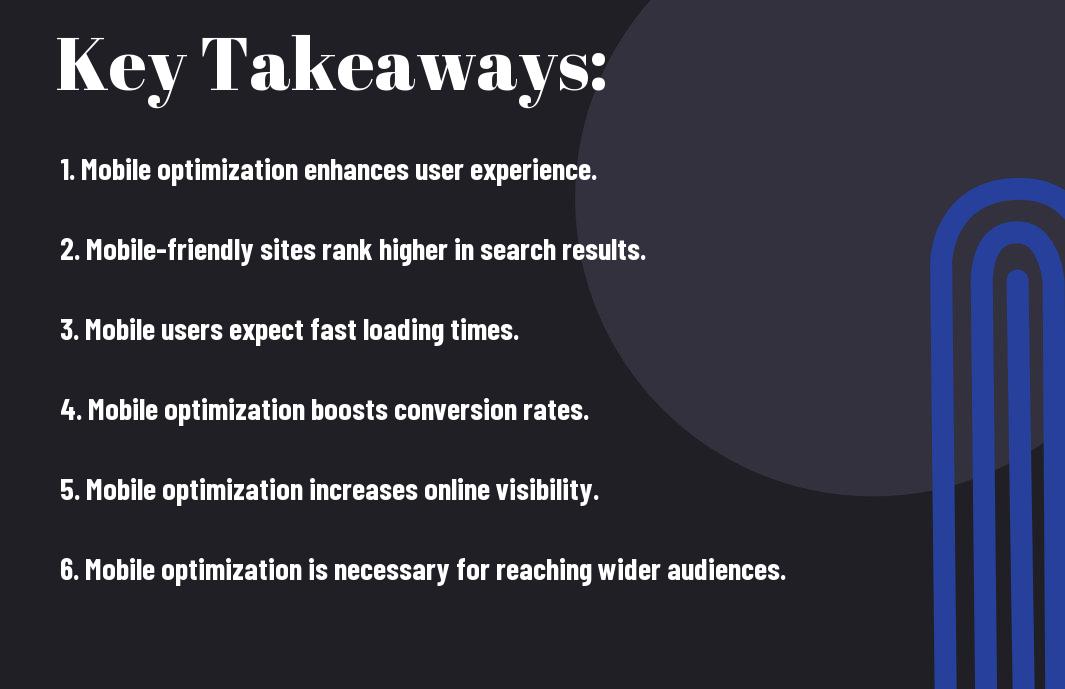
Key Takeaways:

  • Significant impact: Mobile optimization is crucial for internet promotion strategies as a large portion of online users access websites through mobile devices.
  • Improved user experience: By optimizing for mobile, businesses can enhance user experience resulting in increased engagement, lower bounce rates, and higher conversion rates.
  • SEO benefits: Mobile-friendly websites receive a boost in search engine rankings, making mobile optimization an crucial aspect of SEO strategies.

The Rise of Mobile Internet

Mobile internet usage statistics

For your internet promotion strategies, it’s crucial to consider the rise of mobile internet usage. According to recent statistics, more than half of all internet traffic comes from mobile devices. This trend is only projected to increase in the coming years as smartphones become more prevalent and affordable. By optimizing your online presence for mobile users, you can tap into this vast audience and stay ahead of the competition.

The shift from desktop to mobile

The shift from desktop to mobile devices signifies a significant change in how people access information and interact online. Gone are the days when desktop computers were the primary way to browse the internet. Today, people rely on their smartphones for everything from social media browsing to online shopping. By adapting your internet promotion strategies to the mobile landscape, you can ensure that your brand remains visible and accessible to a wide range of potential customers.

Mobile optimization is not just a trend but a necessity in today’s digital world. As more and more users turn to their smartphones for online activities, businesses that fail to prioritize mobile optimization risk being left behind. By embracing mobile-friendly design and tailored content for mobile users, you can enhance user experience and drive more traffic to your website or online platforms.

Why Mobile Optimization Matters

Clearly, mobile optimization is a crucial aspect of your internet promotion strategy. If you’re wondering just how important it is, you can find insightful discussions on how critical mobile optimization is in digital marketing and the strategies that businesses can employ to ensure a seamless mobile experience for users. Let’s research into why focusing on mobile optimization matters.

User Experience and Engagement

One of the key reasons mobile optimization is imperative is to enhance user experience and boost engagement. When your website is optimized for mobile, it loads faster, functions smoothly, and provides a seamless experience for users regardless of the device they are using. This leads to higher user satisfaction, longer visit duration, and increased chances of conversion.

Search Engine Ranking and Visibility

Ranking higher on search engine results pages is crucial for your online visibility. Mobile optimization significantly impacts your website’s ranking on search engines. Search engines like Google prioritize mobile-friendly websites in their ranking algorithms, making it easier for users to find your site. For instance, Google’s Mobile-first Indexing means that your site’s mobile version is considered the primary one for ranking and indexing.

Conversion Rates and Revenue Impact

To maximize your conversion rates and revenue, mobile optimization is non-negotiable. A seamless mobile experience can lead to higher conversion rates as it eliminates barriers that may deter users from completing a purchase or filling out a form on your website. Additionally, with the increasing number of mobile users, neglecting mobile optimization could mean missing out on significant revenue opportunities.

Understanding the importance of mobile optimization in enhancing user experience, boosting search engine visibility, and driving conversion rates is crucial for the success of your internet promotion strategies. By prioritizing mobile optimization, you can ensure that your website is user-friendly, easily discoverable, and optimized for driving conversions on all devices.

Key Elements of Mobile Optimization

Despite the rise of mobile devices, many websites are still not optimized for mobile users. To ensure your website is reaching its full potential, it’s crucial to focus on key elements of mobile optimization.

Responsive web design

Designing your website with a responsive layout is imperative for providing a seamless user experience across all devices. With a responsive design, your website will automatically adjust to fit different screen sizes, ensuring that your content is easily accessible and visually appealing on mobile devices.

Page loading speed and performance

An efficient page loading speed is critical for keeping mobile users engaged. Slow-loading pages can lead to high bounce rates and negatively impact your SEO rankings. By optimizing your site’s performance, you can provide a smoother browsing experience for your mobile visitors.

Another aspect to consider for page loading speed and performance is optimizing images and videos for mobile viewing. Compressing images and utilizing modern video formats can help reduce load times and improve overall performance on mobile devices.

Mobile-friendly content and layout

Ensuring that your content is suitable for mobile viewing is key to engaging and retaining mobile users. Keep your paragraphs short and concise, use bullet points for easy scanning, and include clear and compelling calls-to-action to guide users through your site.

Additionally, a mobile-friendly layout is imperative for easy navigation on smaller screens. Opt for a simple menu structure, ample white space, and large clickable buttons to enhance the user experience on mobile devices.

Mobile Optimization for SEO

Mobile-first indexing and crawling

All your efforts to optimize your website for search engines will go to waste if your website is not mobile-friendly. With Google’s shift to mobile-first indexing, where the mobile version of your site becomes the starting point for what Google includes in their index and the baseline for how they determine rankings, having a mobile-optimized site is crucial. Any delays in loading time, errors in rendering, or inaccessible content on your mobile site can significantly impact your SEO performance.

Optimizing for local search and voice search

Local search and voice search are becoming increasingly popular, especially among mobile users. When you optimize your website for local search, you make it easier for potential customers in your area to find you. By incorporating location-based keywords, creating local content, and ensuring your business information is consistent across online directories, you can improve your visibility in local search results. Another aspect to consider is optimizing your website for voice search. With the rise of virtual assistants like Siri and Alexa, more people are using voice search to find information online. By tailoring your content to answer conversational queries and using long-tail keywords that mimic natural language, you can increase your chances of appearing in voice search results.

When optimizing for local search and voice search, keep in mind the user’s intent and context when they are conducting a search. Think about what terms they are likely to use when searching for a business like yours and incorporate those terms naturally into your content. By focusing on providing valuable, relevant information that addresses the user’s needs, you can improve your chances of ranking well in local and voice search results.

Mobile-specific keyword research and optimization

Mobile-specific keyword research and optimization are imperative to ensure that your website ranks well in mobile search results. Mobile users often use different search queries than desktop users, so it’s crucial to understand the unique keywords and phrases they use when searching for information. By conducting mobile-specific keyword research, you can identify high-volume, low-competition keywords that will help drive traffic to your mobile site. Mobile keyword optimization involves incorporating these keywords naturally into your content, meta tags, and headings to improve your visibility in mobile search results.

When optimizing your site for mobile-specific keywords, consider the user’s intent and the context in which they are conducting the search. Focus on providing relevant, concise, and easily accessible information that caters to the needs of mobile users. By optimizing your site for mobile-specific keywords, you can increase your chances of ranking well in mobile search results and attract more mobile traffic to your website.

Mobile Optimization for Conversion Rate Optimization

Streamlining the user journey

An necessary aspect of mobile optimization for conversion rate optimization is streamlining the user journey. Keep your user’s experience in mind and ensure that navigating your site on a mobile device is seamless. An intuitive layout, easy-to-click buttons, and fast loading times are crucial to keep users engaged and moving smoothly through the conversion funnel.

Optimizing forms and CTAs for mobile

Forms and CTAs play a significant role in converting visitors into customers on your mobile site. Ensure that your forms are mobile-friendly and easy to fill out on smaller screens. Make your CTAs prominent and easy to tap for a better user experience. This will help in reducing friction and encouraging users to take the desired action.

This includes using autofill options, minimizing the number of fields in forms, and using large, bold CTAs that stand out on the screen. By optimizing these elements for mobile, you can significantly improve your conversion rates and overall user satisfaction.

Mobile-specific A/B testing and experimentation

CTAs and forms can have a significant impact on your conversion rates, so it’s necessary to test different variations to see what works best on mobile devices. By conducting mobile-specific A/B testing and experimentation, you can gather valuable insights into what resonates with your mobile audience. This data-driven approach allows you to make informed decisions on how to optimize your mobile site further for better conversion rates.

Conversion rate optimization is an ongoing process, and by regularly testing different elements on your mobile site, you can continue to improve and refine the user experience. Mobile-specific A/B testing allows you to tailor your site specifically for mobile users, maximizing conversions and ultimately boosting your business success.

Common Mobile Optimization Mistakes

Ignoring mobile-specific design principles

Now, when it comes to mobile optimization, it’s crucial to remember the importance of mobile-specific design principles. If you overlook these principles, you risk alienating users and losing out on valuable conversions. To dive deeper into this topic, check out The Importance of Mobile Optimization in Digital Marketing!

Failing to test and iterate

To optimize your mobile strategy successfully, you need to test and iterate continually. Failing to do so can lead to missed opportunities for improvement and growth. By regularly analyzing data, user behavior, and feedback, you can fine-tune your mobile optimization efforts for maximum impact.

This subsection underscores the importance of testing and iterating in mobile optimization. Without ongoing testing and refinement, you may overlook critical insights that could enhance your mobile performance.

Overlooking mobile-specific technical issues

mobilespecific
Optimization of your website for mobile devices involves more than just responsive design. It also requires paying attention to mobile-specific technical issues like page speed, image optimization, and usability on various devices and operating systems. Ignoring these factors can result in a subpar mobile experience for users, leading to high bounce rates and low engagement levels.

Optimization is not just about design; it encompasses technical aspects crucial for a seamless mobile experience. By addressing mobile-specific technical issues, you can ensure that your website performs well on all types of mobile devices, providing users with a smooth and enjoyable browsing experience.

To wrap up

On the whole, mobile optimization is important in internet promotion strategies because it ensures that your website is easily accessible and user-friendly on mobile devices. With the increasing use of smartphones and tablets, having a mobile-friendly website can significantly impact your online visibility and user experience. By optimizing your website for mobile, you can attract more mobile users, improve your search engine rankings, and ultimately drive more traffic and conversions for your business.

As you continue to develop your internet promotion strategies, remember to prioritize mobile optimization to stay competitive in today’s digital landscape. By investing in a mobile-friendly website, you can create a seamless and enjoyable browsing experience for your visitors, leading to higher engagement and better results for your online marketing efforts. So, don’t overlook the importance of mobile optimization and make it a key part of your internet promotion strategy moving forward.

FAQ

Q: Why is mobile optimization important in internet promotion strategies?

A: Mobile optimization is important because a significant portion of internet users access websites through their mobile devices. Failure to optimize for mobile can result in a poor user experience, higher bounce rates, and lower conversion rates.

Q: How does mobile optimization impact search engine rankings?

A: Search engines like Google prioritize mobile-friendly websites in their search results. Websites that are not optimized for mobile may receive lower rankings, reducing their visibility and organic traffic.

Q: What are some key elements of mobile optimization for internet promotion strategies?

A: Key elements of mobile optimization include responsive design, fast loading times, easy navigation, clear calls to action, and compatibility across different mobile devices and screen sizes.

Skip to content