Business Investing

Can market trading tools be customized to fit individual trading strategies

Most traders aim to enhance their trading strategies by leveraging market trading tools. Have you ever wondered if these tools can be tailored to suit your unique approach to trading? In this post, we explore how customization of market trading tools can align with your individual trading strategies, allowing you to optimize your trading performance. If you’re looking to further improve your trading techniques, check out these 10 Tips for Using AI in Your Stock Trading Strategy and take your investment game to the next level.

Key Takeaways:

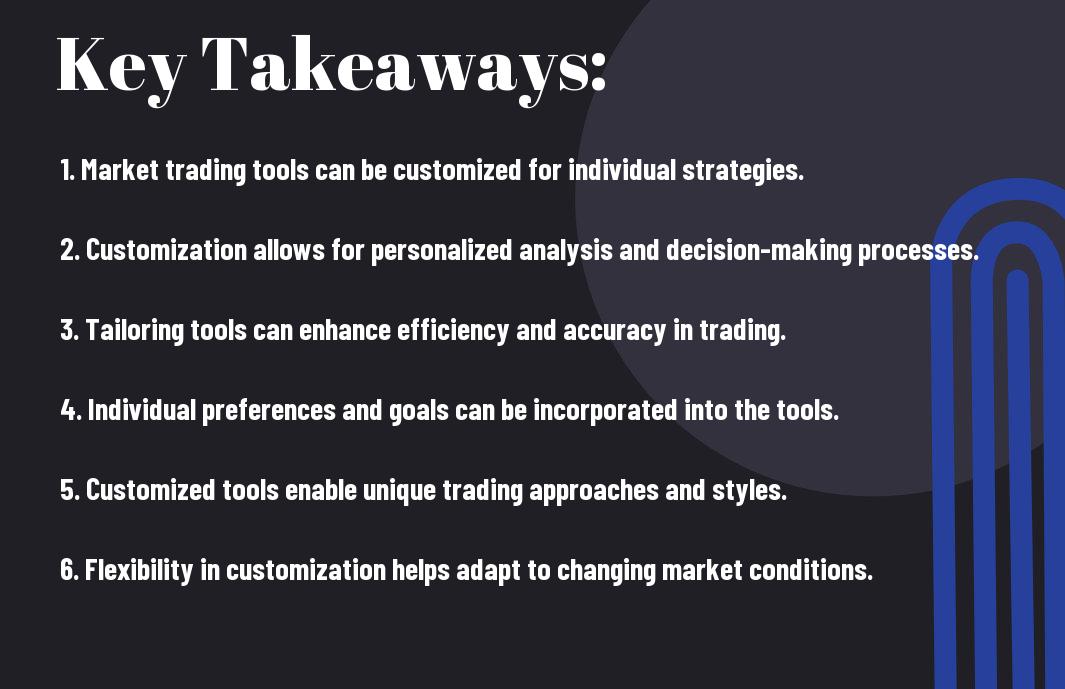
  • Flexibility: Market trading tools can be customized to fit individual trading strategies as they offer flexibility to tailor the tools according to specific needs.
  • Personalization: Traders can personalize their trading tools by adding or removing features, adjusting parameters, and integrating new tools to suit their unique trading styles.
  • Efficiency: Customized trading tools can enhance efficiency by streamlining the trading process, providing relevant data, and automating repetitive tasks, leading to better decision-making and improved performance.

The Need for Customization

A market trading tool can provide you with imperative assistance in executing trades effectively. However, not all trading tools are created equal. While off-the-shelf solutions can offer convenience and basic functionalities, they might not fully align with your unique trading approach and preferences. This misalignment can potentially limit your trading success and hinder your ability to capitalize on opportunities.

Limitations of One-Size-Fits-All Trading Tools

Need to understand that generic trading tools are designed to cater to a broad range of traders with varied strategies. Consequently, these tools may not fully accommodate the specific indicators, timeframes, or risk management techniques that are integral to your trading style. When your tools do not align with your strategy, you may find yourself making suboptimal trading decisions or missing out on profitable opportunities.

The Importance of Tailoring Tools to Individual Strategies

With customizing your trading tools to fit your individual strategy, you can enhance your ability to execute trades in line with your unique approach. Tailoring indicators, charting tools, and order types to mirror your preferences can provide you with a distinct advantage in navigating the markets. By aligning your tools with your strategy, you can streamline your decision-making process and capitalize on opportunities more effectively.

Limitations arise when your tools do not adapt to your specific trading approach. By customizing your trading tools, you can bridge this gap and create a more conducive trading environment that complements your strategy. This customization empowers you to trade with greater precision, consistency, and confidence, ultimately enhancing your overall trading performance.
Types of Customizable Trading Tools

The market offers a range of customizable trading tools that can be tailored to suit your individual trading strategies. Here are some types of customizable trading tools you can consider:

Charting Software Algorithmic Trading Platforms
Trading Bots Technical Indicators
Screeners Order Management Systems
Risk Management Tools Data Analytics Platforms
Backtesting Software Execution Platforms

Charting Software

Tools like charting software allow you to visualize market data and analyze price movements. You can customize the charts based on your preferred technical indicators, timeframes, and other variables to help make more informed trading decisions.

Assume that you can adjust the chart settings to align with your trading strategy and easily switch between different chart types to find what works best for you.

Algorithmic Trading Platforms

Types of algorithmic trading platforms include trading bots that can automate your trades based on preset criteria. These platforms can be customized to execute trades automatically, manage risk, and capture opportunities in the market.

Trading with algorithmic platforms allows you to backtest strategies, optimize parameters, and adapt to changing market conditions by adjusting the algorithms accordingly.

Technical Indicators

With technical indicators, you can overlay analytical tools on your charts to help identify potential price trends and patterns. These indicators can be customized based on your trading style and preferences, providing additional insights to support your decisions.

Trading with technical indicators enables you to combine different signals to confirm trade entries or exits, giving you a more comprehensive view of the market dynamics.

Benefits of Customization

Improved Trading Performance

Benefits of customizing market trading tools are numerous. Unlike generic tools that offer a one-size-fits-all approach, tailored tools can significantly improve your trading performance. By customizing tools to fit your specific trading style and strategy, you can execute trades more efficiently and effectively.

Enhanced Risk Management

Enhanced risk management is another key benefit of customizing market trading tools. By customizing tools to include risk management features that align with your risk tolerance and preferences, you can better protect your investments and minimize potential losses.

For instance, you can set up custom alerts and triggers to help identify and respond to potential risks in real-time, allowing you to make more informed decisions and mitigate risk effectively.

Increased Confidence in Trading Decisions

Customization of market trading tools can also lead to increased confidence in your trading decisions. By tailoring tools to provide the specific data and insights you need, you can make more informed and strategic decisions, boosting your overall confidence in your trading abilities.

Performance tracking features can help you analyze your trading history and identify patterns or areas for improvement, further enhancing your confidence in your trading decisions.

Challenges of Customization

Complexity of Trading Strategies

Once again, when attempting to customize market trading tools to fit your individual trading strategies, you may encounter challenges due to the complexity of those strategies. Trading strategies can vary widely, from simple trend-following approaches to complex algorithms that consider multiple factors simultaneously.

Limited Technical Expertise

With the customization of market trading tools, another challenge you might face is the limitation of technical expertise. Trading tools often require a certain level of technical knowledge to customize effectively, including understanding coding languages or trading platform APIs.

A lack of technical expertise can hinder your ability to fully optimize and tailor trading tools to your specific strategy, potentially resulting in suboptimal performance.

Balancing Customization with Standardization

Standardization

Strategies
Best Practices for Customizing Trading Tools

Defining Clear Trading Objectives

To effectively customize your trading tools, it is crucial to first define clear trading objectives. You must identify what you aim to achieve with your trading strategy, whether it is capital growth, risk management, or a combination of both. By setting specific goals, you can tailor your tools to align with your objectives and optimize your trading performance.

Selecting the Right Tools for the Job

One of the best practices for customizing trading tools is selecting the right tools for the job. With a plethora of trading software and platforms available, it can be overwhelming to choose the most suitable ones for your strategy. Consider factors such as your trading style, asset classes you trade, technical analysis preferences, and risk tolerance when selecting tools.

Tools such as charting software, order execution platforms, and market scanning tools are necessary for executing your trading strategy effectively. Ensure that the tools you choose provide the necessary features and functionalities to support your specific trading approach.

Continuously Monitoring and Refining Tools

Trading tools should not be set in stone after customization. Continuous monitoring and refinement are necessary for adapting to changing market conditions and improving your trading performance. Regularly assess how well your tools are aligning with your objectives and making adjustments as needed.

By monitoring key performance indicators and analyzing the impact of your tools on your trading results, you can identify areas for improvement and refine your customized tools to enhance your trading strategy. Stay proactive in optimizing your tools to stay ahead in the dynamic world of trading.
Real-World Examples of Customized Trading Tools

Successful Implementations in Various Markets

Many traders have found success in customizing their trading tools to fit their specific strategies. One notable example is a day trader who developed a customized algorithmic trading tool that identified patterns in stock movements based on his unique technical analysis indicators. By tailoring the tool to his specific trading signals, he was able to execute trades more efficiently and accurately, leading to significant profits in the volatile market.

Lessons Learned from Failed Customization Attempts

One crucial lesson learned from failed customization attempts is the importance of not overfitting trading tools to historical data. Customization can lead to excessive optimization for past market conditions, resulting in poor performance when market dynamics change. It’s crucial to strike a balance between tailoring tools to your strategy and ensuring they remain adaptable to evolving market trends.

Customization should aim to enhance, not constrain, your trading strategy. It’s crucial to regularly reassess and refine your customized tools to ensure they continue to align with your trading goals and the current market environment. By learning from unsuccessful customization attempts, you can refine your approach and develop more effective trading tools tailored to your unique style and objectives.

Final Words

From above, you have learned about the importance of customizing market trading tools to fit your individual trading strategies. As you strive to optimize your trading performance, consider exploring the customization options available in your stock trading app. By tailoring various features to align with your unique approach and goals, you can empower yourself to make more informed decisions and potentially enhance your trading outcomes. To research deeper into this topic, you can read about Empower Users with Customization Options in Your Stock Trading App.

Q: Can market trading tools be customized to fit individual trading strategies?

A: Yes, many market trading tools offer customization options to fit individual trading strategies. Traders can often adjust indicators, chart settings, trade alerts, and other features to align with their specific trading goals and risk tolerance.

Q: How can traders benefit from customizing market trading tools?

A: By customizing market trading tools, traders can tailor the tools to their unique trading style, preferences, and objectives. This can help enhance decision-making, improve trading efficiency, and potentially increase profitability by aligning the tools with their individual strategies.

Q: What are some common customization options available in market trading tools?

A: Some common customization options in market trading tools include the ability to adjust technical indicators, set specific parameters for trade alerts or signals, customize chart layouts and timeframes, personalize risk management settings, and integrate third-party tools or APIs to enhance functionality.


How do social trading platforms and tools work

You might find yourself intrigued by social trading platforms and tools, wondering how they operate. Social trading platforms allow you to interact with other traders, get insights, and even automatically copy their trades. These platforms harness the power of collective intelligence, letting you benefit from the expertise of the crowd. By using these tools, you can access a wealth of trading information and make more informed decisions based on the actions of others in the community. Let’s investigate into how these platforms and tools function to elevate your trading strategies.

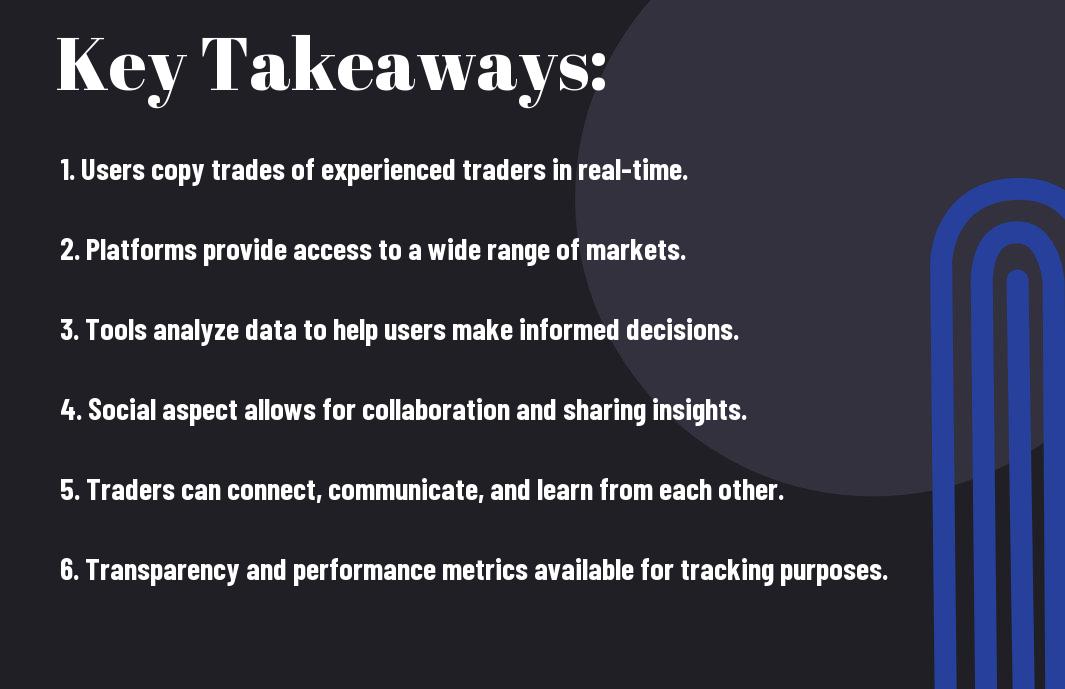
Key Takeaways:

  • Social Trading Platforms: Social trading platforms allow users to follow, copy, and interact with other traders in a community setting.
  • Copy Trading: Users can automatically copy the trades of successful traders on social trading platforms, eliminating the need for manual decision-making.
  • Tools and Features: Social trading platforms offer tools such as performance metrics, risk management tools, and social feeds to help users make informed trading decisions.

What are Social Trading Platforms

An

Definition and History

A social trading platform is an online service that allows you to connect with other traders, share trading ideas, and even automatically copy the trades of successful investors in real-time. These platforms combine social networking with trading, creating a community where you can interact, learn from others, and potentially profit from their expertise. The concept of social trading dates back to the early 2000s when the first platforms started to emerge, revolutionizing the way people approach investing.

Key Features and Benefits

Platforms with social trading capabilities offer a range of features and benefits that can enhance your trading experience. Some key features include:

  • Copy trading: Automatically replicate the trades of successful traders
  • Social networking: Connect with other traders, share strategies, and learn from each other
  • Transparency: Access to real-time performance data of top traders

These platforms can help you improve your trading skills, diversify your portfolio, and potentially increase your profits. Assume that you are a novice trader, social trading platforms can provide you with valuable insights and guidance to kickstart your investment journey.

An

Understanding the Key Features and Benefits

Social trading platforms offer a unique opportunity to engage with a community of traders, share knowledge, and benefit from collective wisdom. By participating in these platforms, you can access a wealth of information, strategies, and trading opportunities that you might not have discovered on your own. Some additional key features include:

  • Risk management tools: Set limits on how much you are willing to invest or risk
  • Performance tracking: Monitor the success of your trades and adjust your strategy accordingly

Assume that you are looking to enhance your trading skills and stay informed about the latest market trends, social trading platforms can be a valuable resource for you.

How Social Trading Platforms Work

There’s a reason why social trading platforms are gaining popularity among investors and traders. These platforms work by leveraging network effects and community building to create a collaborative environment where users can share insights, strategies, and trades with each other in real-time.

Network Effects and Community Building

Network effects occur when the value of a platform increases as more users join and engage with the community. Social trading platforms tap into this phenomenon by connecting traders from around the world, allowing them to follow each other, communicate, and learn from one another. As the community grows, so does the pool of knowledge, expertise, and trading opportunities available to you.

Real-time Market Data and Analytics

Work on social trading platforms is facilitated by providing real-time market data and analytics to help you make informed trading decisions. These platforms offer a variety of tools and resources such as live price feeds, technical analysis charts, market news updates, and performance statistics of top traders. By having access to up-to-date information, you can stay on top of market trends and react quickly to changes in the market.

To fully take advantage of real-time market data and analytics, you can set up custom alerts and notifications to receive updates on specific assets or trading signals that match your preferences. This feature allows you to stay informed even when you’re not actively monitoring the platform, ensuring that you never miss out on important market movements.

Copy Trading and Risk Management

One of the key features of social trading platforms is copy trading, which allows you to replicate the trades of successful and experienced traders in real-time. By following and copying the trades of top performers, you can benefit from their expertise and potentially generate profits without having to make trading decisions on your own. Additionally, these platforms often provide tools for risk management, such as stop-loss orders and risk allocation settings, to help you protect your capital and manage your overall portfolio risk.

The ability to automatically replicate trades from expert traders while implementing risk management strategies can help you diversify your portfolio, reduce the impact of emotional decision-making, and potentially improve your overall trading performance.

Types of Social Trading Platforms

All social trading platforms can be categorized into three main types: manual trading platforms, automated trading platforms, and hybrid trading platforms. Each type has its unique features and benefits that cater to different trading styles and preferences. Below is a breakdown of these types:

  • Manual Trading Platforms
  • Automated Trading Platforms
  • Hybrid Trading Platforms

Manual Trading Platforms

Any trading platform falls under the manual category when you have full control over the trading decisions. You can analyze the market trends, study various indicators, and execute trades manually based on your strategy. These platforms often provide a range of tools and resources to assist you in making informed decisions, but the ultimate choice of when to buy or sell rests with you.

Automated Trading Platforms

Automated trading platforms, on the other hand, rely on algorithms and software programs to execute trades on your behalf. These programs are designed to follow predefined rules and criteria, allowing you to set parameters for when to enter or exit trades. By automating the trading process, you can take advantage of market opportunities 24/7 without constantly monitoring the markets yourself.

Another crucial aspect of automated trading platforms is that they can backtest strategies using historical data to assess their performance before risking real capital. This helps you fine-tune your trading strategy and optimize it for better results in live trading conditions.

Hybrid Trading Platforms

Social trading platforms that fall under the hybrid category combine manual and automated features, offering you the flexibility to switch between the two based on your preferences. These platforms typically allow you to copy other traders’ strategies while also giving you the option to execute trades manually or through automation.

Social trading platforms provide a diverse range of tools and functionalities to cater to various trading styles and preferences, making it easier for you to participate in the financial markets and potentially grow your investment portfolio.

Plus, these platforms often foster a community of traders where you can interact, share insights, and learn from others to improve your trading skills and strategies. They create a collaborative environment that can enhance your trading experience and help you achieve your financial goals more effectively.

Assume that you are interested in learning more about the different types of social trading platforms, you can check out the guide on What Is Social Trading and How Does It Work for additional information.

Tools and Features of Social Trading Platforms

After reading more about social trading on Social Trading: Everything You Need To Know, you may realize the importance of performance metrics and rankings on social trading platforms.

Metrics

These tools allow you to assess the track record and success rates of different traders. Performance metrics such as win ratio, average profit/loss per trade, and maximum drawdown can help you make informed decisions about which traders to follow. Rankings often highlight the top-performing traders on the platform, giving you a starting point to identify potential leaders to follow.

Sentiment Analysis and Market Insights

Platforms offering sentiment analysis and market insights provide valuable information on market trends, trader sentiment, and popular trading assets. The tools analyze social media, news, and other sources to gauge market sentiment and provide insights into potential trading opportunities. By staying informed about market sentiment and trends, you can make more educated trading decisions and adjust your strategy accordingly.

Risk Management and Stop-Loss Tools

Platforms with risk management and stop-loss tools help you mitigate potential losses and manage risk effectively. These tools allow you to set predefined risk levels, stop-loss orders, and take-profit levels for your trades. By utilizing these tools, you can establish clear risk parameters and protect your investment capital. Furthermore, risk management tools enable you to automate certain risk management tasks, providing additional peace of mind while trading.

The performance metrics, sentiment analysis, and risk management tools available on social trading platforms are designed to empower you to make informed trading decisions, manage risk effectively, and optimize your trading strategy. By utilizing these tools, you can enhance your trading experience and potentially improve your trading performance.

Benefits of Social Trading Platforms

Despite the risks involved in trading, social trading platforms offer several benefits that can help you navigate the markets more efficiently and effectively.

Access to Diverse Trading Strategies

Access to diverse trading strategies is one of the key benefits of using social trading platforms. By connecting with other traders on these platforms, you have the opportunity to learn about and follow a wide range of trading strategies used by experienced investors. This access can help you diversify your trading portfolio and potentially improve your overall trading performance.

Real-time Market Information and Analysis

To make informed decisions in the fast-paced world of trading, having access to real-time market information and analysis is crucial. Social trading platforms provide you with up-to-date data, market news, and expert analysis that you can use to stay on top of market trends and make timely trading decisions.

By leveraging real-time market information and analysis available on social trading platforms, you can seize profitable trading opportunities quickly and adjust your strategies in response to market developments.

Community Support and Learning Opportunities

For those new to trading or looking to enhance their skills, community support and learning opportunities offered by social trading platforms can be invaluable. By engaging with a community of like-minded traders, you can seek advice, share insights, and learn from others’ experiences in the markets.

A supportive trading community can help you stay motivated, gain new perspectives on trading strategies, and access educational resources to deepen your understanding of the markets.

Risks and Challenges of Social Trading Platforms

Market Volatility and Risk Exposure

For those engaging in social trading, market volatility and risk exposure are primary concerns. Since social trading involves copying the trades of others, you are exposed to the same market risks as the traders you follow. This means that if the market experiences sudden fluctuations or downturns, your investment may be at risk. It is important to carefully consider the risk level of the traders you choose to follow and diversify your portfolio to mitigate exposure to any single trader’s decisions.

Information Overload and Analysis Paralysis

To successfully navigate the world of social trading, you must learn to manage the vast amount of information available to you. With numerous traders sharing insights, tips, and strategies, it can be easy to suffer from information overload and analysis paralysis. You may find yourself overwhelmed by conflicting advice or unsure about whose trades to follow. Developing a clear strategy, setting specific goals, and filtering information based on your trading style can help you make more informed decisions.

The key is to strike a balance between staying informed and avoiding information overload. Focus on filtering and prioritizing information that is relevant to your trading goals and risk tolerance. By doing so, you can enhance your decision-making process and avoid feeling overwhelmed by the sheer volume of information available on social trading platforms.

Dependence on Platform Performance

With social trading platforms, your success is closely tied to the platform’s performance and reliability. Since your trades are executed through the platform, any technical glitches or downtime could potentially impact your ability to enter or exit trades promptly. It is crucial to choose a reputable and stable platform with robust security measures to safeguard your investments and ensure a seamless trading experience.

It is recommended to regularly monitor the platform’s performance and stay informed about any updates or changes that may affect your trading activities. By staying vigilant and proactive, you can minimize the risks associated with dependence on platform performance and make informed decisions about your investment strategies.

Another Title

Text for another subsection…

Summing up

On the whole, social trading platforms and tools work by allowing you to connect with other traders, share insights, and learn from each other’s strategies. These platforms feature a variety of tools such as copy trading, social news feeds, and performance metrics to help you make informed decisions. By leveraging the wisdom of the crowd, you can potentially improve your trading skills and outcomes.

Q: What is a social trading platform?

A: A social trading platform is an online service that allows investors to follow, interact, and copy the trading activities of other traders. Users can view the trades and performance of top traders on the platform and choose to replicate their strategies.

Q: How do social trading tools work?

A: Social trading tools provide users with access to a community of traders where they can share insights, analysis, and trading ideas. These tools also offer features such as copy trading, where users can automatically copy the trades of successful traders in real-time.

Q: What are the benefits of using social trading platforms and tools?

A: Some benefits of using social trading platforms and tools include access to a network of experienced traders, the opportunity to learn from their strategies, the ability to diversify investment portfolios, and the convenience of automated trading through copy trading features.

What are the costs associated with using advanced market trading tools

There’s a world of possibilities when it comes to using Advanced Trading Tools and Features, but have you considered the costs that come with them? By delving into advanced market trading tools, you open yourself up to a range of expenses that can impact your overall trading strategy. From subscription fees and commissions to potential data fees and platform costs, understanding the full scope of expenses is crucial in making informed decisions about utilizing these powerful tools in your trading endeavors.

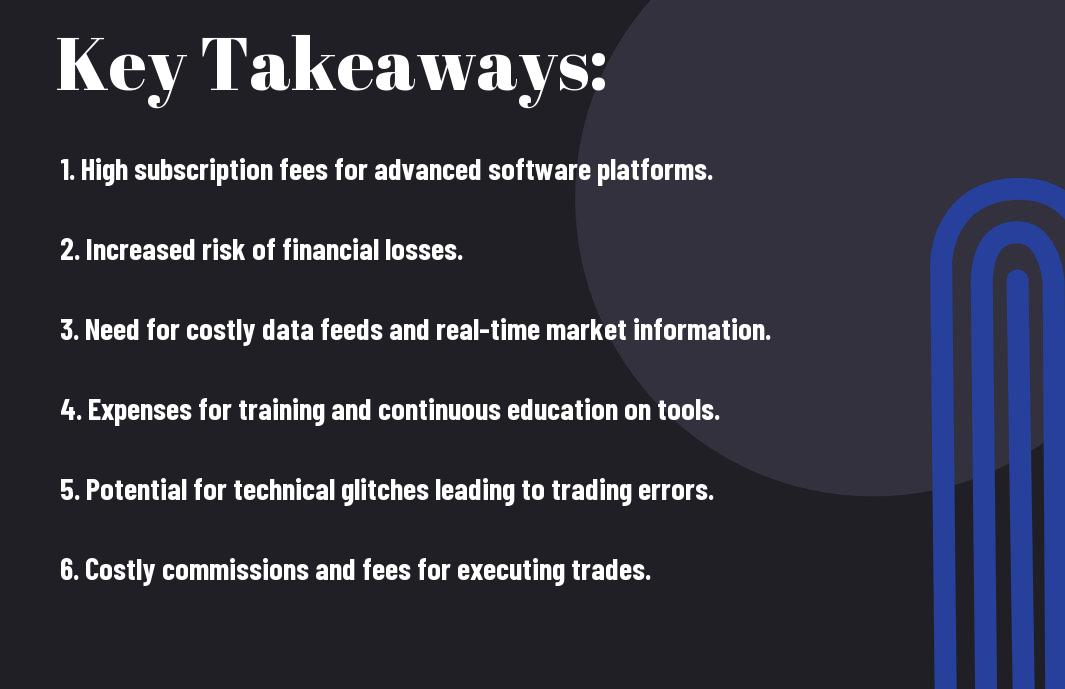
Key Takeaways:

  • Initial Investment: Advanced market trading tools often require a significant upfront cost to purchase and implement.
  • Subscription Fees: Many advanced market trading tools come with monthly or annual subscription fees, adding to the ongoing costs of using these tools.
  • Training and Support: Users may need to invest time and resources in training and support to fully utilize the capabilities of advanced market trading tools.

Types of Advanced Market Trading Tools

While using advanced market trading tools, it’s necessary to understand the different types available to investors.

  1. Algorithmic Trading Platforms
  2. High-Frequency Trading Systems
  3. Artificial Intelligence-Based Trading Tools

Algorithmic Trading Platforms

Trading through algorithmic platforms involves using computer programs to execute trading strategies automatically. These platforms are programmed to follow specific instructions, such as timing, price, and quantity, to make trades on your behalf.

Pros Cons
Provides rapid order placement Requires advanced programming knowledge
Executes trades at best possible prices Subject to technical glitches or system failures
Minimizes emotional trading decisions May not adapt well to sudden market changes

High-Frequency Trading Systems

Any trading system that uses powerful computers to transact a large number of orders at extremely high speeds falls under high-frequency trading. These systems can analyze market data and execute trades within milliseconds, taking advantage of small price discrepancies in the market.

Market conditions and regulatory changes can significantly impact the effectiveness of high-frequency trading systems. They require substantial initial investments in technology and infrastructure to gain a competitive edge and may face increased scrutiny due to their rapid trading nature.

Artificial Intelligence-Based Trading Tools

Types of AI-based trading tools utilize machine learning algorithms to analyze vast amounts of data and identify potential trading opportunities. These tools can adapt to changing market conditions and make predictions based on historical patterns and real-time information.

This advanced technology can enhance trading efficiency and potentially improve trading outcomes by identifying trends or anomalies that human traders might overlook. However, the effectiveness of AI-based tools heavily relies on the quality of data inputs and the complexity of algorithms used.

Direct Costs

Assuming you are considering using advanced market trading tools, it’s important to be aware of the direct costs associated with these tools. These costs can vary depending on the type of tool and the provider you choose.

Subscription Fees

One direct cost you may encounter is subscription fees. Many advanced market trading tools require a subscription for access to their features and analysis. These fees can range from monthly to annual payments, and the cost can add up over time. It’s imperative to factor in these recurring expenses when considering the overall cost of using these tools.

Licensing Fees

Subscription-based tools may also come with licensing fees, which grant you the right to use the software for a specific period. These fees are typically one-time payments, but they can be significant, especially for tools with advanced capabilities. To make an informed decision, consider the licensing fees along with the subscription costs to determine the total investment required.

To help manage licensing fees, some providers offer tiered pricing plans based on the features you need. It’s imperative to assess your trading requirements to select a package that aligns with your goals and budget.

Maintenance and Support Costs

On top of subscription and licensing fees, you should also consider maintenance and support costs. These expenses cover updates, technical assistance, and troubleshooting to ensure the smooth operation of the trading tools. While these costs may seem secondary, they are crucial for ongoing usability and performance of the tools.

Support services can vary in quality and responsiveness among providers. Opting for a provider with robust support can save you time and frustration when facing technical issues or needing guidance on using the advanced features effectively.

Indirect Costs

Many Low fees. Powerful trading. associated with using advanced market trading tools go beyond just the direct fees you may see. These indirect costs can add up and impact your overall investment outcomes. Here are some indirect costs to consider:

Infrastructure and Hardware Expenses

Expenses related to infrastructure and hardware can be significant when using advanced trading tools. Investing in high-speed internet, powerful computers, and backup systems is necessary for executing trades efficiently and securely. Additionally, you may need to consider costs for maintaining and upgrading these systems regularly to ensure optimal performance.

Data Feed and API Costs

Costs associated with accessing real-time market data feeds and APIs can also add to your overall expenses when using advanced trading tools. These costs can vary depending on the frequency and depth of the data you require. Subscribing to premium data services or API access can provide you with a competitive edge but at an additional cost.

To effectively leverage advanced market trading tools, you must have reliable data sources and seamless API connections. While these services enhance your trading capabilities, they come with a price tag that you need to consider when calculating your overall trading costs.

Training and Education Expenses

An necessary but often overlooked aspect of using advanced market trading tools is investing in your training and education. Understanding complex trading algorithms, technical analysis tools, and risk management strategies requires time and effort. You may need to enroll in courses, attend workshops, or hire a mentor to deepen your knowledge and skills in utilizing these tools effectively.

Costs associated with training and education are investments in your long-term success as a trader. By continuously improving your knowledge and skills, you can make informed decisions and adapt to the dynamic nature of the financial markets effectively.

Hidden Costs

Once again, while advanced market trading tools can offer numerous benefits, there are also hidden costs that you need to be aware of. These costs may not be as obvious as commission fees or subscription charges, but they can still impact your overall trading experience and financial outcomes.

Opportunity Costs of Over-Reliance on Technology

To maximize your trading success, it’s crucial to strike a balance between leveraging advanced tools and maintaining a clear understanding of market dynamics. Over-relying on technology can lead to missed opportunities or delayed decision-making, as you may become detached from the fundamental aspects of trading. Keep in mind, markets are influenced by various factors, and being overly dependent on automated systems may hinder your ability to adapt swiftly to changes and capitalize on emerging trends.

Risks of Over-Trading and Market Volatility

Volatility in financial markets is a common occurrence, and over-trading due to excessive use of advanced tools can amplify the risks associated with market fluctuations. When you engage in frequent trades driven solely by technology-generated signals, you may expose yourself to increased market volatility and potential financial losses. It’s necessary to exercise caution and not let the speed and convenience of trading platforms lure you into making impulsive decisions that could jeopardize your investment portfolio.

Costs

Compliance and Regulatory Costs

Market regulations are designed to ensure fairness, transparency, and investor protection. However, using advanced market trading tools may increase your exposure to compliance and regulatory costs. As technology evolves, regulators continuously adapt rules to address new trading practices and safeguard the integrity of the financial system. Failing to comply with these regulations can result in penalties, legal repercussions, or restrictions on your trading activities, which could ultimately outweigh the benefits of advanced tools if not managed effectively.

Understanding these hidden costs associated with advanced market trading tools is necessary for making informed decisions and optimizing your trading strategies. By maintaining a holistic perspective on the potential drawbacks and expenses involved, you can navigate the complexities of the financial markets more effectively and enhance your long-term trading performance.

Costs Associated with Data Quality

All advanced market trading tools rely heavily on high-quality data to make informed decisions and generate accurate insights. This data comes at a cost, not only in terms of monetary expenses but also in terms of the resources required to acquire, integrate, store, manage, analyze, and visualize it effectively.

Data Acquisition and Integration Costs

Any data-driven trading strategy starts with sourcing and integrating data from various providers. This process can be time-consuming and requires specialized skills to ensure data accuracy and consistency. Moreover, integrating data from multiple sources often involves additional costs, such as subscription fees or licensing fees.

Data Storage and Management Expenses

The storage and management of large volumes of market data can be another significant cost associated with using advanced trading tools. This includes expenses related to maintaining servers, cloud storage services, data warehouses, and other infrastructure needed to store and manage data securely. Ensuring data security and compliance with regulations also adds to these expenses.

The efficiency of your data storage and management practices can impact the performance and scalability of your trading tools. This is why investing in robust data storage solutions and implementing efficient data management processes is crucial for optimizing the costs associated with data quality.

Data Analytics and Visualization Costs

This aspect of data quality costs is related to the tools and technologies used to analyze and visualize market data. Advanced analytics tools, machine learning algorithms, and visualization software often come with licensing fees or subscription costs. Additionally, training personnel to use these tools effectively can also be a significant expense.

Any delays or inaccuracies in data analytics and visualization can impact your trading decisions and results. Therefore, investing in the right tools and technologies, along with proper training for your team, is crucial to ensure the quality and accuracy of your data analysis and visualization processes.

Storage costs can vary depending on the type and volume of data you need to store. Cloud storage solutions offer scalability and flexibility but come with monthly fees based on usage. On the other hand, setting up and maintaining an on-premise data warehouse can involve higher initial costs but may be more cost-effective in the long run for larger datasets.

Costs of Human Capital

Hiring and Training Traders and Analysts

Analysts play a crucial role in utilizing advanced market trading tools effectively. Hiring and training these professionals can be a significant cost for your organization. Finding skilled traders and analysts who understand the complexities of the financial markets and can leverage the advanced tools at their disposal requires a substantial investment of time and resources.

Salaries and Benefits for IT and Support Staff

Support staff and IT professionals are necessary for ensuring the smooth operation of advanced market trading tools. These individuals handle the technical aspects of the tools, troubleshoot any issues that arise, and provide support to traders and analysts. Salaries and benefits for IT and support staff can represent a sizable portion of your overall costs when using advanced trading tools.

Furthermore, providing competitive salaries and attractive benefits to retain top IT and support talent is crucial in this competitive industry. Investing in your IT and support staff ensures that your advanced market trading tools operate efficiently and effectively, ultimately contributing to the success of your trading strategies.

Consulting and Outsourcing Fees

Any organization using advanced market trading tools may incur consulting and outsourcing fees. These costs can come from external consultants who provide expertise in implementing, optimizing, or customizing the trading tools. Outsourcing certain functions, such as data analysis or software development, can also lead to additional expenses.

It is necessary to carefully evaluate the benefits of consulting and outsourcing services against the associated costs. While these services can provide valuable expertise and support, they can also contribute to the overall expenses of utilizing advanced market trading tools.

Training

Training your traders and analysts to effectively use advanced market trading tools is crucial for maximizing the tools’ potential and ensuring accurate decision-making. Investing in ongoing training programs can also aid in keeping your team up-to-date with the latest trends and technologies in the financial markets, ultimately enhancing your organization’s competitive edge.

Final Words

Presently, you should have a better understanding of the costs associated with using advanced market trading tools. While these tools can provide you with valuable insights and help enhance your trading strategies, it’s crucial to consider the financial aspects involved. Be mindful of the subscription fees, data fees, and potential costs of making trades through these platforms. By carefully weighing the benefits and costs, you can make informed decisions on whether these tools are worth incorporating into your trading routine.

Q: What are the costs associated with using advanced market trading tools?

A: The costs associated with using advanced market trading tools can vary depending on the platform or software you choose. Some common costs to consider include:

  • Subscription fees: Many advanced trading tools require a subscription fee to access their platform and features. These fees can range from a monthly to an annual basis.
  • Commission fees: Some platforms charge commission fees for each trade executed using their tools. These fees are generally a percentage of the trade value.
  • Data fees: Real-time market data and research tools may come at an additional cost. These fees are typically charged by data providers and can add to the overall expense of using advanced trading tools.

Q: Are there any hidden costs associated with using advanced market trading tools?

A: While most platforms are transparent about their fees, there can be hidden costs associated with using advanced market trading tools. Some potential hidden costs to watch out for include:

  • Inactivity fees: Some platforms may charge inactivity fees if you do not use the trading tools for a certain period of time. Be sure to check the platform’s terms and conditions to avoid any unexpected charges.
  • Advanced features fees: Certain advanced trading tools may offer additional features or services that come at an extra cost. Make sure to review the platform’s pricing structure to understand what is included in your subscription.
  • Transaction fees: While commission fees are common, some platforms may also charge additional transaction fees for specific types of trades or transactions. It’s important to be aware of all potential fees before using advanced trading tools.

Q: How can I minimize the costs associated with using advanced market trading tools?

A: To minimize costs when using advanced market trading tools, consider the following tips:

  • Compare pricing: Research and compare the subscription fees, commission rates, and data fees of different platforms to find the most cost-effective option for your trading needs.
  • Utilize free trials: Take advantage of free trials offered by trading platforms to test out their tools and features before committing to a subscription.
  • Avoid unnecessary features: Be selective about the advanced features and services you require, as additional features often come with extra costs. Focus on the tools that are necessary for your trading strategy to keep costs down.

How do market trading tools integrate with brokerage accounts

Brokerage accounts serve as the gateway to the world of market trading, allowing you to buy and sell securities. Integrating market trading tools with your brokerage account can enhance your trading experience by providing real-time data, analytical tools, and automated trading capabilities. By linking these tools to your account, you can make more informed decisions and execute trades with greater efficiency. Let’s probe into how these integrations work and the benefits they offer for your trading portfolio.

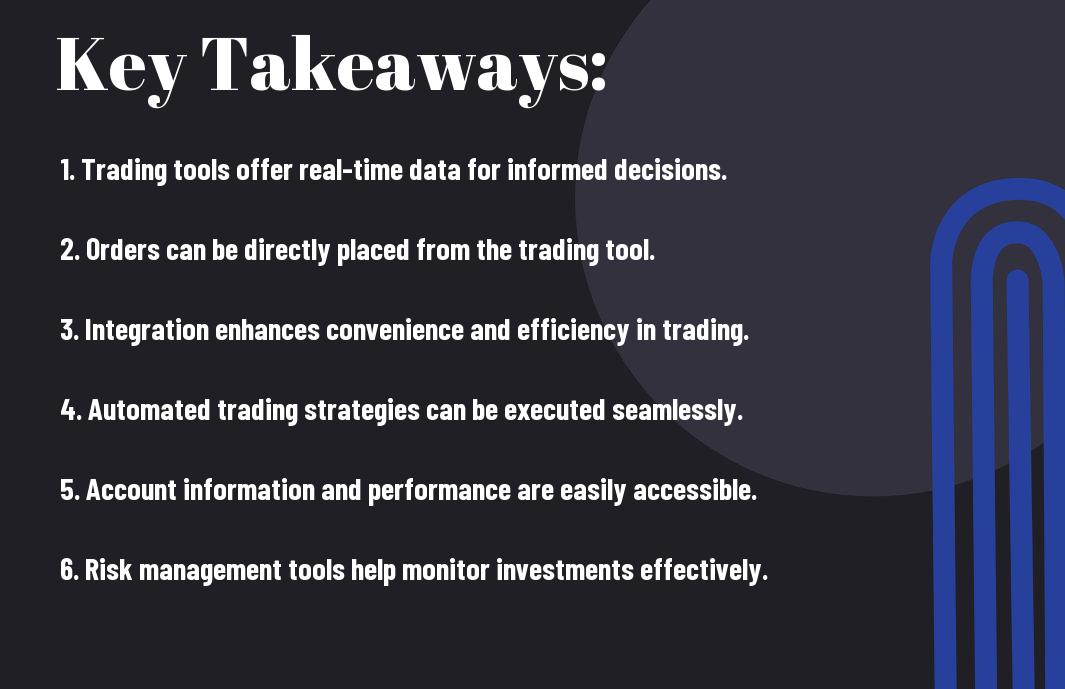
Key Takeaways:

  • Efficient Trading: Market trading tools integrated with brokerage accounts allow traders to execute trades quickly and efficiently, maximizing opportunities in the market.
  • Real-time Data: These tools provide real-time market data and analytics, empowering traders to make informed decisions and stay ahead of market trends.
  • Streamlined Process: Integration of trading tools with brokerage accounts streamlines the trading process by centralizing all trading activities in one platform, enhancing user convenience and experience.

What are Market Trading Tools?

Definition and Types of Trading Tools

As a trader, market trading tools are necessary resources that help you analyze market data, make informed decisions, and execute trades efficiently. These tools come in various forms and cater to different trading styles and strategies. Some common types of market trading tools include:

  • Charting platforms
  • Technical analysis tools
  • Algorithmic trading platforms
  • Market scanners
  • Trading journals

Any of these tools can be used alone or in combination to enhance your trading performance, depending on your specific goals and preferences.

Importance of Trading Tools in Market Analysis

To effectively analyze the financial markets and make informed decisions, you need access to the right tools. Market trading tools provide you with real-time data, historical price movements, technical indicators, and analytical features that can help you identify trading opportunities and risks. Utilizing these tools can significantly improve your decision-making process and increase your chances of success in the markets.

What are Brokerage Accounts?

One crucial component of market trading tools is the integration with brokerage accounts. Brokerage accounts are specialized financial accounts that allow you to buy and sell various investments, such as stocks, bonds, mutual funds, and exchange-traded funds (ETFs). These accounts are offered by brokerage firms, which act as intermediaries between you and the securities markets.

Definition and Types of Brokerage Accounts

  • Types: Traditional, Margin, Retirement, Managed, Online

Any investments you make through a brokerage account are held and managed by the brokerage firm on your behalf. The type of brokerage account you choose will depend on your investment goals, risk tolerance, and trading preferences. Below is a breakdown of the different types of brokerage accounts and their key characteristics in a table:

| Type | Description |
|————-|———————————————————————————————————————-|
| Traditional | Basic brokerage account with no special features or restrictions |
| Margin | Allows you to borrow money from the brokerage firm to buy securities, increasing your buying power |
| Retirement | Specialized accounts, such as IRAs and 401(k) rollovers, designed for retirement savings |
| Managed | Account where investment decisions are made by a professional portfolio manager or robo-advisor |
| Online | Digital platforms that offer self-directed trading, usually with lower fees and no need for a human broker intermediary |

Key Features of Brokerage Accounts

  • Buying and selling securities
  • Access to market research and data
  • Portfolio tracking and management tools
  • Customer support and educational resources
  • Security measures to protect your account

Thou can choose a brokerage account that aligns with your financial goals and provides the tools and resources you need to make informed investment decisions. It’s crucial to consider factors such as account fees, minimum investment requirements, and available investment options when selecting a brokerage account that suits your needs.

Understanding Key Features of Brokerage Accounts

Brokerage accounts offer a range of features that can help you effectively manage your investments and navigate the complexities of the financial markets. From buying and selling securities to accessing research tools and educational resources, brokerage accounts provide the necessary infrastructure for successful trading.

  • Real-time quotes and market data
  • Customizable watchlists and alerts
  • Trading platforms for different levels of expertise
  • Automatic dividend reinvestment
  • Tax-efficient trading strategies

Thou can leverage these features to build a diversified investment portfolio, track your performance, and make well-informed decisions based on market trends and analysis.

Integration of Market Trading Tools with Brokerage Accounts

Despite the complexities of the financial markets, integrating market trading tools with your brokerage accounts can make the trading process more seamless and efficient. If you’re new to stock trading, you may wonder how these tools work in conjunction with your brokerage account. To dive deeper into this topic, you can refer to resources like Stock Trading: What It Is and How It Works for a comprehensive overview.

API Integration: How it Works

API integration is a key component that allows market trading tools to communicate with your brokerage account. Application Programming Interfaces (APIs) enable the transfer of data and instructions between different software applications. When you use trading tools that integrate APIs with your brokerage account, you can access real-time market data, execute trades, and manage your portfolio seamlessly.

Benefits of Integrated Trading Tools and Brokerage Accounts

When your market trading tools are integrated with your brokerage account, you gain several advantages. One of the main benefits is the ability to streamline your trading activities. With integrated tools, you can quickly analyze market trends, place trades, and monitor your investments all in one platform. This convenience can help you make faster decisions and react promptly to market changes.

Accounts

Types of Integrations

To effectively use market trading tools, you must understand how they integrate with your brokerage account. There are two main types of integrations: manual and automated. Each type has its own set of advantages and disadvantages. Let’s explore into each to help you choose the right integration for your trading needs.

Manual Integration: Pros and Cons

Pros Cons
Allows for more control over your trades Requires more time and effort for manual input
Helps you better understand the trading process Higher potential for human error
Can be cost-effective for smaller investors Not suitable for high-frequency trading
May offer more customization options Limited efficiency and scalability
Allows for flexibility in making trading decisions Could result in missed trading opportunities

This breakdown should give you a clearer understanding of the benefits and drawbacks of manual integration. Remember to consider your trading style and preferences when deciding on the integration type that suits you best.

Automated Integration: Advantages and Disadvantages

Pros Cons
Speeds up the execution of trades Limited control over individual trades
Reduces emotional trading decisions Potential for technical glitches or errors
Allows for backtesting of trading strategies Costlier compared to manual trading
Enables round-the-clock trading Dependency on technology and connectivity

Plus, using automated integration can streamline your trading process and help you take advantage of market opportunities more efficiently. Keep these advantages and disadvantages in mind as you explore integrating market trading tools with your brokerage account.

Key Features of Integrated Market Trading Tools

For efficient trading, integrated market trading tools offer a range of key features that enhance your trading experience. Some of the prominent features include:

  • Real-time data feeds for quick decision-making
  • Advanced charting and analytics tools for in-depth market analysis
  • Automated trade execution for timely transactions

Assume that you want to explore the best online brokers and stock trading platforms for 2024. You can refer to the 14 Best Online Brokers and Stock Trading Platforms 2024 for more information.

Real-time Data Feeds

Market trading tools equipped with real-time data feeds provide you with up-to-the-minute information on stock prices, market trends, and economic indicators. This feature enables you to make informed decisions quickly, helping you seize profitable opportunities and mitigate risks effectively.

Advanced Charting and Analytics

Data visualization plays a crucial role in understanding market trends and patterns. With advanced charting and analytics tools, you can create complex charts, apply technical indicators, and perform in-depth analysis of securities. This feature empowers you to develop trading strategies based on reliable data and insights.

  1. Data – Real-time data feeds for quick decision-making
  2. Analysis – Advanced charting and analytics tools for in-depth market analysis

Plus, trading tools with integrated market features offer:

Automated Trade Execution

The automated trade execution feature allows you to set predefined trading criteria and automatically execute trades based on your strategy. By eliminating manual intervention, this feature helps you capitalize on market opportunities even when you’re not actively monitoring the markets.

The seamless integration of trading tools with brokerage accounts streamlines your trading process, making it more efficient and convenient. With automated trade execution, you can execute your trading plan consistently and take advantage of market movements without delays or missed opportunities.

Benefits of Integrated Market Trading Tools

Enhanced Trading Experience

Unlike traditional trading methods, integrated market trading tools offer you an enhanced trading experience by providing real-time data, advanced charting capabilities, and customizable alerts. These tools allow you to make informed decisions quickly, react to market changes promptly, and execute trades efficiently.

Improved Risk Management

One benefit of integrated market trading tools is the improved risk management they offer. By setting up stop-loss orders, setting profit targets, and utilizing risk management tools, you can protect your investments and minimize potential losses.

On top of that, integrated tools often offer risk assessment features that analyze your trading strategies and provide insights on how to mitigate risks effectively. This proactive approach to risk management can help you navigate volatile market conditions with confidence.

Increased Efficiency

Another advantage of using integrated market trading tools is the increased efficiency they bring to your trading activities. These tools streamline the trading process by providing all the necessary functionalities in one platform, eliminating the need to switch between multiple applications.

Market scanning tools, automated trading algorithms, and portfolio management features help you optimize your trading strategies and make the most of market opportunities. By leveraging these tools, you can execute trades more efficiently and stay ahead of the competition.

Trading

Summing up

With these considerations in mind, you now understand how market trading tools integrate with brokerage accounts. By selecting the right tools that provide seamless integration with your chosen brokerage account, you can access real-time data, analyze market trends, and execute trades efficiently. It’s crucial to ensure compatibility between your trading tools and brokerage platform to maximize your trading experience and achieve your financial goals.

Q: What is the purpose of integrating market trading tools with brokerage accounts?

A: Integrating market trading tools with brokerage accounts allows traders to access real-time market data, execute trades, manage their portfolios, and conduct in-depth analysis all within a single platform. This integration streamlines the trading process, providing convenience and efficiency for investors.

Q: How do market trading tools typically integrate with brokerage accounts?

A: Market trading tools usually integrate with brokerage accounts through APIs (Application Programming Interfaces) provided by the broker. Traders can then connect their trading tools to their brokerage accounts via these APIs, enabling seamless communication and data sharing between the platforms.

Q: What are the benefits of integrating market trading tools with brokerage accounts?

A: Some benefits of integrating market trading tools with brokerage accounts include faster trade execution, access to advanced charting and technical analysis tools, real-time portfolio management, customizable notifications and alerts, and the ability to backtest trading strategies. These integrations provide traders with a comprehensive set of features to make informed investment decisions.

What security measures should be considered when using market trading tools

There’s a world of opportunities when using market trading tools, but it’s imperative to prioritize your security. Familiarize yourself with the necessary security measures to safeguard your investments and personal data. To learn more about the latest security practices in modern trading software, check out Security Measures in Modern Day Trading Software.

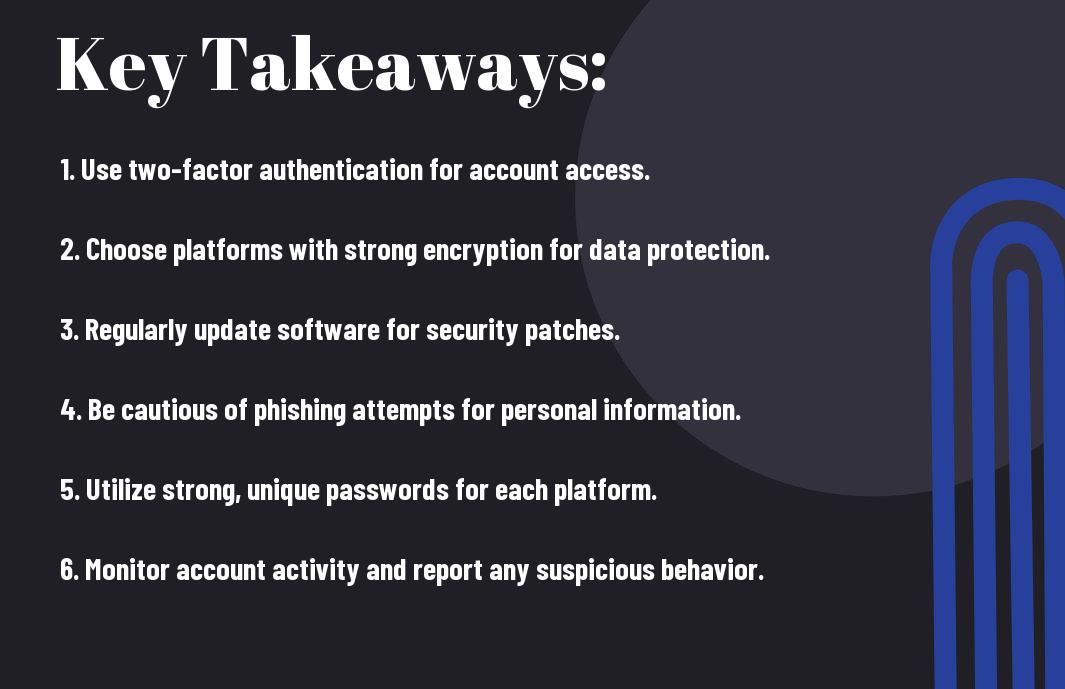
Key Takeaways:

  • Use secure and reputable trading platforms: Ensure the platform you use has robust security measures in place to protect your personal and financial information.
  • Enable two-factor authentication: Add an extra layer of security to your trading account by using two-factor authentication, which requires a code or confirmation from a separate device.
  • Monitor your accounts regularly: Keep a close eye on your trading accounts for any suspicious activity or unauthorized transactions, and report any issues immediately to your platform provider.

Identifying Risks

Cybersecurity Threats

Your use of market trading tools may expose you to various cybersecurity threats. An important risk to consider is the potential for hackers to gain unauthorized access to your trading accounts or personal information. Cybercriminals may use techniques such as phishing or malware to steal your login credentials or compromise your security.

Data Breaches

Risks of data breaches are a significant concern when using market trading tools. Your personal and financial information stored on these platforms could be at risk if there is a breach in the system’s security. This sensitive data falling into the wrong hands could lead to identity theft, financial loss, or other fraudulent activities.

With the increasing number of cyberattacks targeting financial institutions and trading platforms, it is crucial to be vigilant and implement robust security measures to protect your data and investments.

Authentication and Authorization

You must ensure secure authentication and authorization measures when using market trading tools. This is crucial to protect your investment and personal information from unauthorized access.

Two-Factor Authentication

An important security measure to consider is implementing two-factor authentication (2FA) on your trading accounts. 2FA adds an extra layer of security by requiring not only a password and username but also something that only the user has on them, i.e., a piece of information only they should know or have, such as a fingerprint or a one-time code sent to their mobile device.

Strong Password Policies

Two-factor authentication provides added security, but it is equally important to have strong password policies in place. This includes using unique passwords for each trading account, regularly updating passwords, and ensuring they are complex with a mix of letters, numbers, and special characters.

This will help prevent brute force attacks and unauthorized access to your accounts, reducing the risk of potential security breaches.

Secure Communication

For What safety measures should I consider when evaluating an exchange to trade or store my crypto assets, secure communication is crucial when using market trading tools. Encryption methods and Secure Sockets Layer (SSL) are vital components to ensure the confidentiality and integrity of your data.

Encryption Methods

On encryption methods, it is vital to use strong encryption algorithms such as AES (Advanced Encryption Standard) to protect your sensitive information. By encrypting your data, you make it unreadable to unauthorized users, adding an extra layer of security to your communication with trading platforms.

Secure Sockets Layer (SSL)

One way to enhance secure communication is by utilizing Secure Sockets Layer (SSL) technology. SSL certificates help establish a secure connection between your web browser and the trading platform, ensuring that your data is encrypted during transit. This encryption protocol is widely used to safeguard online transactions and protect sensitive information from potential eavesdroppers.

Another aspect to consider with Secure Sockets Layer (SSL) is to verify that the website you are interacting with has a valid SSL certificate. You can easily identify this by looking for the padlock icon in the browser’s address bar or checking if the URL begins with “https://”. These visual cues indicate that the connection is secure, giving you peace of mind when conducting trades or transferring funds.

Data Protection

Despite the potential risks involved in using market trading tools, it is vital to prioritize data protection. Implementing Risk Management Techniques for Active Traders is crucial to safeguard your sensitive information and financial data from any unauthorized access or cyber threats.

Secure Storage Solutions

Data security starts with how you store your sensitive trading information. Utilizing secure storage solutions such as encrypted external hard drives or password-protected cloud services can help safeguard your data against unauthorized access. It is vital to regularly back up your data and ensure that all storage solutions are updated with the latest security patches to mitigate any potential vulnerabilities.

Access Control Measures

Any access control measures you put in place are crucial in protecting your trading tools and data. Implementing strong password policies, multi-factor authentication, and limiting access to only authorized personnel can help prevent unauthorized individuals from gaining entry to your trading accounts or tools. Regularly reviewing and updating access permissions is also vital in maintaining a secure trading environment.

Storage solutions like encrypted USB drives or secure cloud storage can add an extra layer of protection to your sensitive trading data. By encrypting your data at rest and in transit, you can ensure that even if a breach occurs, your information remains secure and inaccessible to unauthorized parties.

Third-Party Integration Risks

Due Diligence on Vendors

Risks can arise when integrating third-party tools into your market trading system. It is crucial to conduct thorough due diligence on vendors before integrating their tools. Make sure you research the reputation, reliability, and security measures of the vendors you are considering. Look for reviews and feedback from other users to gauge their satisfaction and experience with the tools.

Contractual Agreements

Vendors often provide contractual agreements that outline the terms and conditions of using their tools. It is imperative to carefully review and understand these agreements before integrating any third-party tools into your trading system. Pay close attention to clauses related to data security, confidentiality, and liability. Ensure that the agreement aligns with your security requirements and that the vendor can meet your expectations.

Understanding the contractual agreements can help you mitigate risks and protect your trading system from potential vulnerabilities. If there are any ambiguities or concerns in the agreement, do not hesitate to seek clarification from the vendor or consult with legal counsel to ensure that your interests are safeguarded.

Monitoring and Incident Response

Now, when using market trading tools, it is necessary to have robust monitoring and incident response measures in place. By proactively monitoring your trading activities, you can quickly identify any unusual behavior or potential security threats.

Regular Security Audits

Any market trader should regularly conduct security audits to assess the effectiveness of their security measures. These audits can help you identify vulnerabilities in your trading tools and practices, allowing you to address them before they are exploited by malicious actors. By keeping your security measures up to date, you can better protect your assets and investments.

Emergency Response Plans

Regularly reviewing and updating your emergency response plans is crucial to effectively managing and minimizing the impact of security incidents. Ensuring that you have clear procedures in place for responding to incidents such as data breaches or unauthorized access can help you mitigate potential damages and prevent further harm to your trading activities.

Incident response plans should outline the steps you will take in the event of a security incident, including who to contact, how to contain the situation, and how to recover from the incident. By having a well-defined and rehearsed emergency response plan, you can act swiftly and decisively to protect your trading operations from potential threats.

Conclusion

Conclusively, when using market trading tools, it is crucial to prioritize security measures to protect your investments and personal information. By utilizing strong passwords, enabling two-factor authentication, and being cautious of phishing attempts, you can significantly reduce the risk of unauthorized access to your trading accounts.

Remember that staying vigilant and informed about cybersecurity best practices is vital in the digital age. Regularly updating your software, avoiding public Wi-Fi for trading activities, and monitoring your accounts for any suspicious activity are all proactive steps you can take to safeguard your financial assets. By implementing these security measures, you can trade with confidence and peace of mind.

Q: What security measures should be considered when using market trading tools?

A: When using market trading tools, it is important to consider the following security measures:

Q: How can I ensure the security of my trading account when using market trading tools?

A: To ensure the security of your trading account, make sure to use strong and unique passwords, enable two-factor authentication, regularly update your software, be cautious of phishing attempts, and use a secure internet connection when accessing your account.

Q: What steps can I take to protect my personal and financial information while using market trading tools?

A: To protect your personal and financial information, avoid sharing sensitive information online or with unknown individuals, use secure and encrypted platforms for trading, regularly monitor your accounts for any suspicious activities, and consider using a virtual private network (VPN) for added security.

Skip to content